
Tips for how to plan the perfect itinerary for 4 days in North Cornwall. What to do, where to eat, where to stay, and how to get around to make the most of your time in this beautiful stretch of Cornish coast.
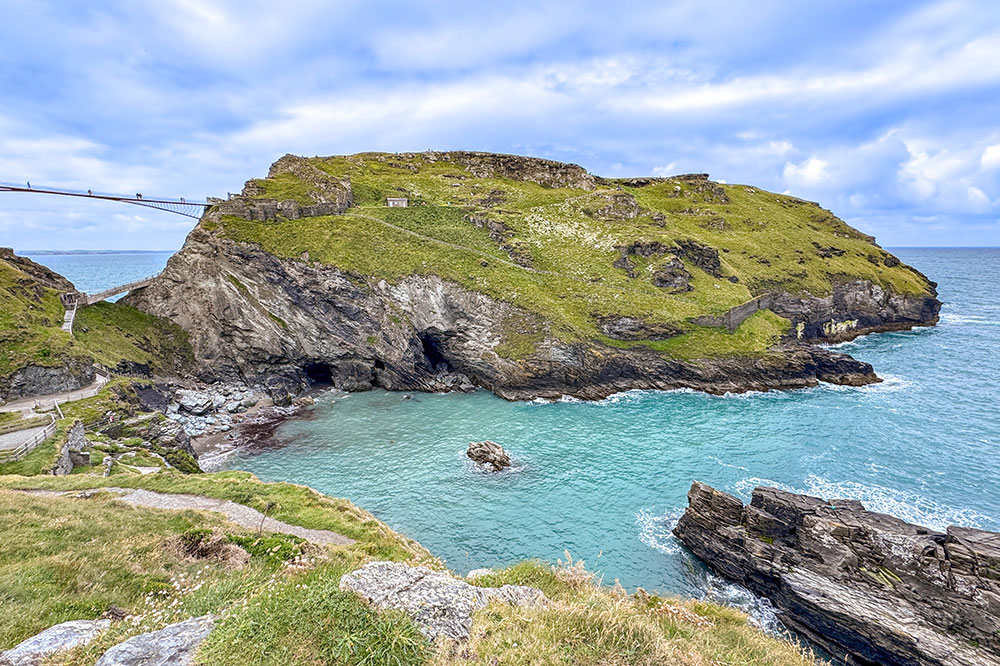
North Cornwall has a spectacular stretch of coast shaped by the open Atlantic. It’s wilder, windier and considerably less polished than the south Cornish coast.
It still feels very much untouched and remote, so it’s perfect for exploring at a slower pace, but also for a bit of adventure.
This area of Cornwall has a little bit of everything for all types of travellers. Options go from wild Atlantic beaches for those wanting to relax or ride the waves, ancient ruins for history lovers, stunning hikes for those looking for something more active, and some of the best seafood in England.
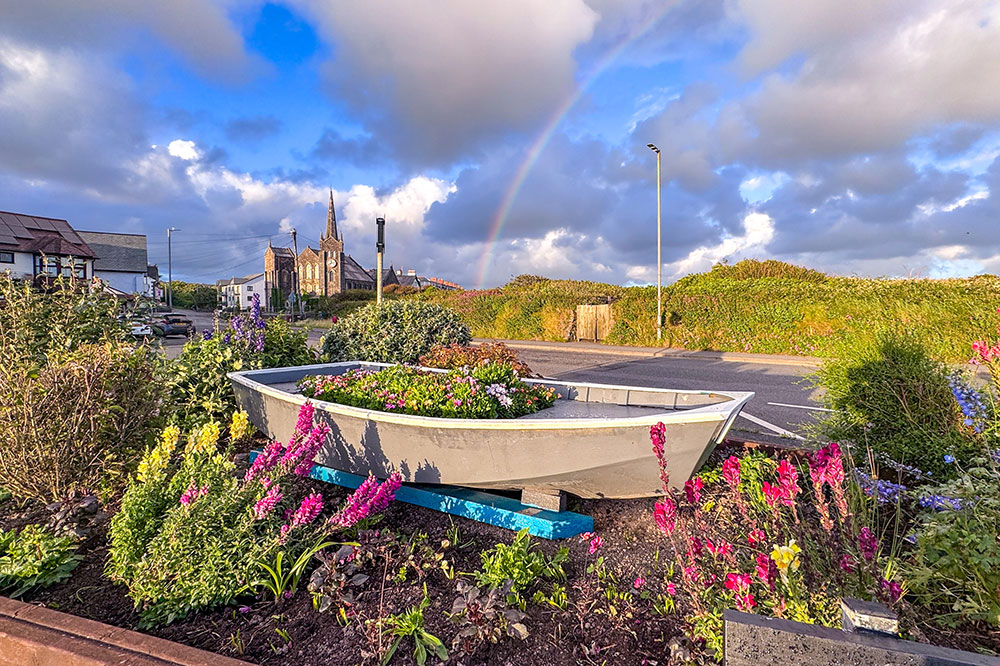
So to help you plan the perfect 4 days in North Cornwall, I’ve put together an easy to follow itinerary with a base in Bude.
Quick overview: North Cornwall in 4 days
| Best for | Coastal walking, beaches, food, fishing towns and history |
| Ideal trip length | 4 days |
| Best time to visit | April to October for swimming and hiking |
| Base town | Bude |
| Getting around | Car (essential) |
| Route | Bude → Tintagel → Boscastle → Clovelly → Hartland Quay → Padstow → Port Isaac |
| Key hike | Tintagel to Boscastle on the South West Coast Path (approx. 5 miles) |
Where to stay in North Cornwall
Links Loft, Bude
Bude is the perfect starting point. Sitting at the northern end of the Cornwall, it has some of the best beaches in the country, a tidal sea pool and plenty of shops, pubs and restaurants that give the town a lot of life.
In Bude, you’re perfectly located for day trips into North Devon and within easy reach to other North Cornwall spots, including coastal hikes and fishing towns, all without having to change your accommodation.
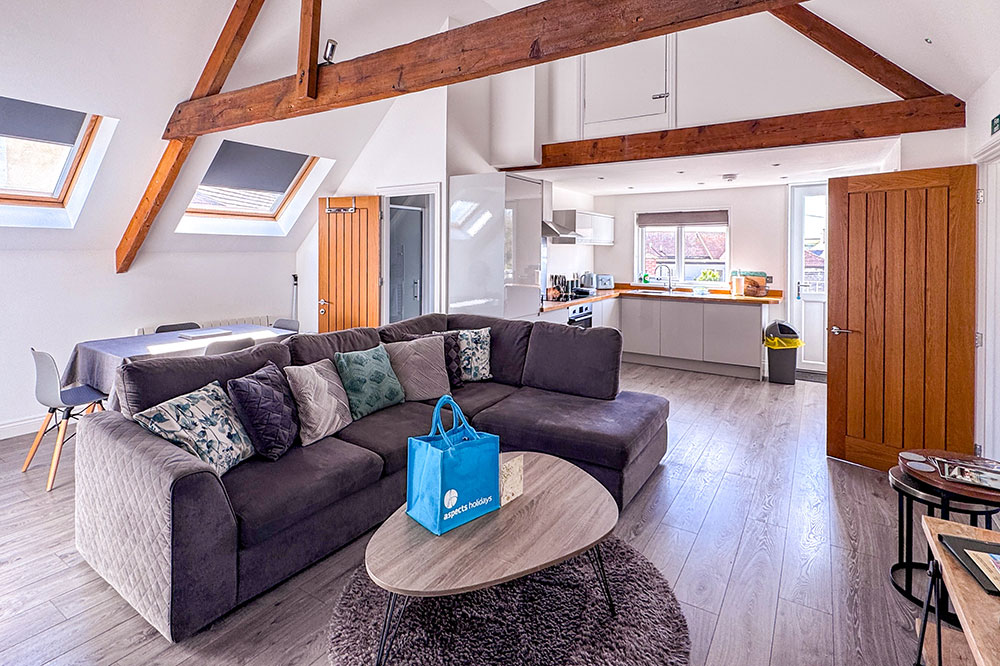
I stayed at Links Loft, a two bedroom holiday let by Aspects Holidays. I travelled on my own, but it sleeps up to 4 people. It sits in a quiet part of town, overlooking Bude golf course, with Crooklets beach a short walk away, and Summerleaze Beach and Bude Sea Pool not much further.
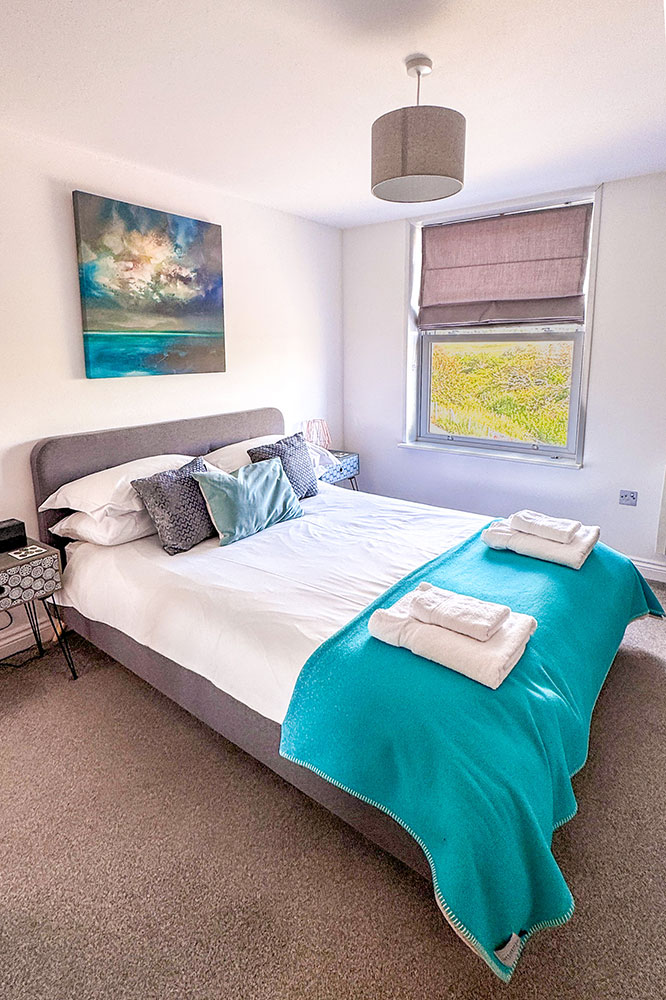
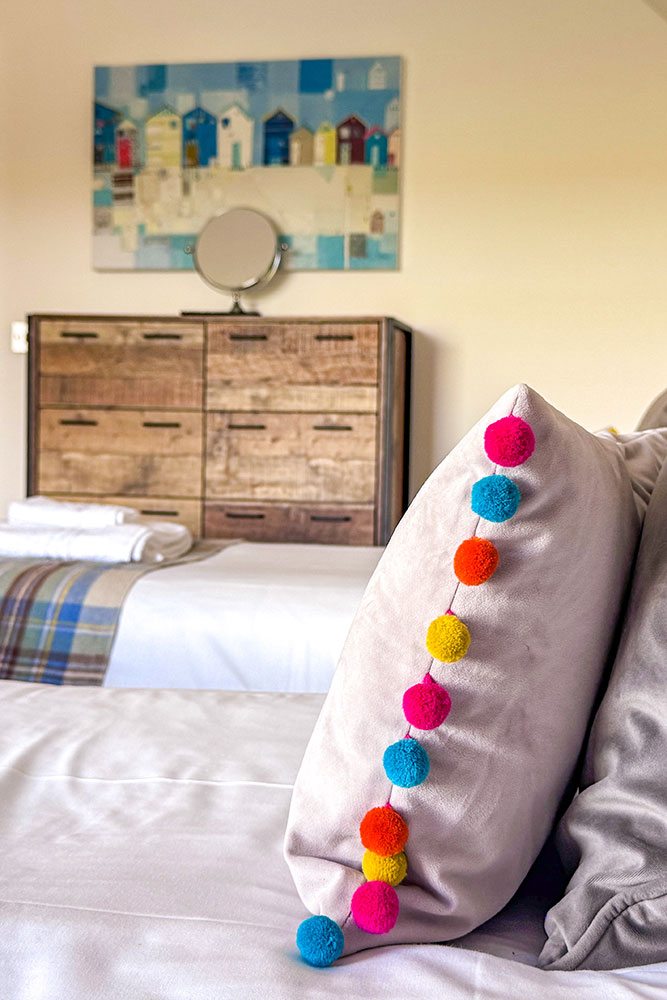
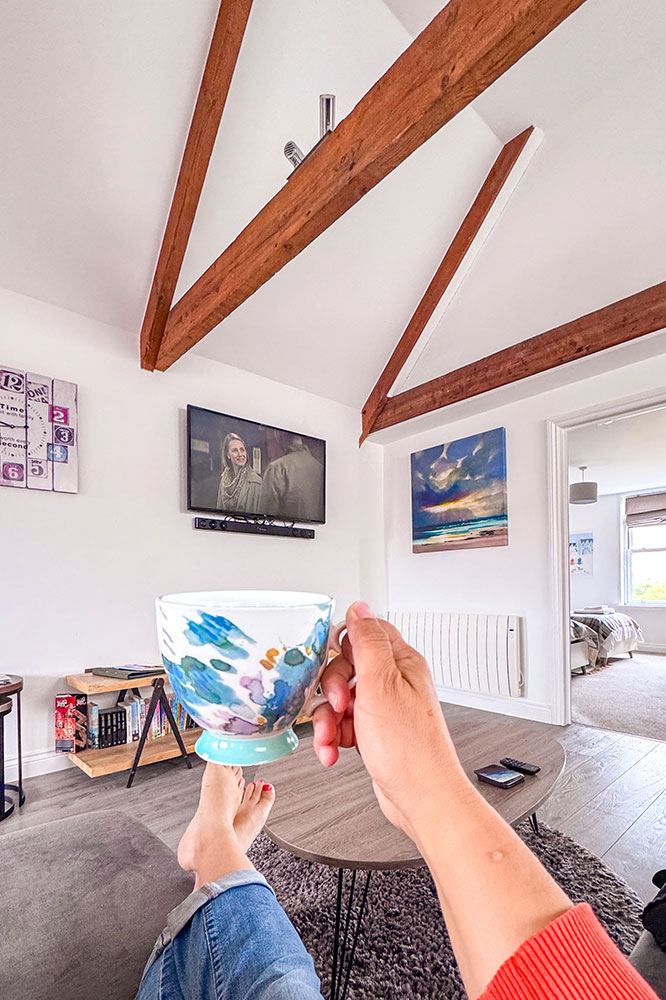
The high ceilings and the exposed beams made the loft feel very bright and spacious, but cosy at the same time. Both bedrooms look straight out over the greens, and the nautical decor throughout really makes you feel like you’re in Cornwall, giving you a real sense of place.
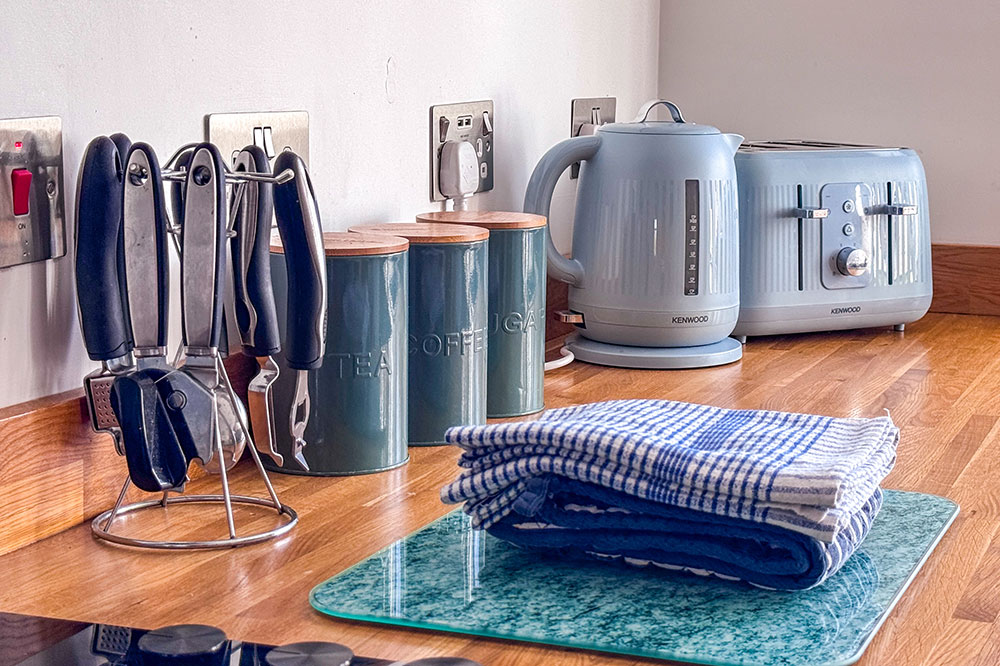
There’s a big and well equipped kitchen too, so on my first evening in Bude I decided to stay in and cook a nice comforting meal after a long drive.
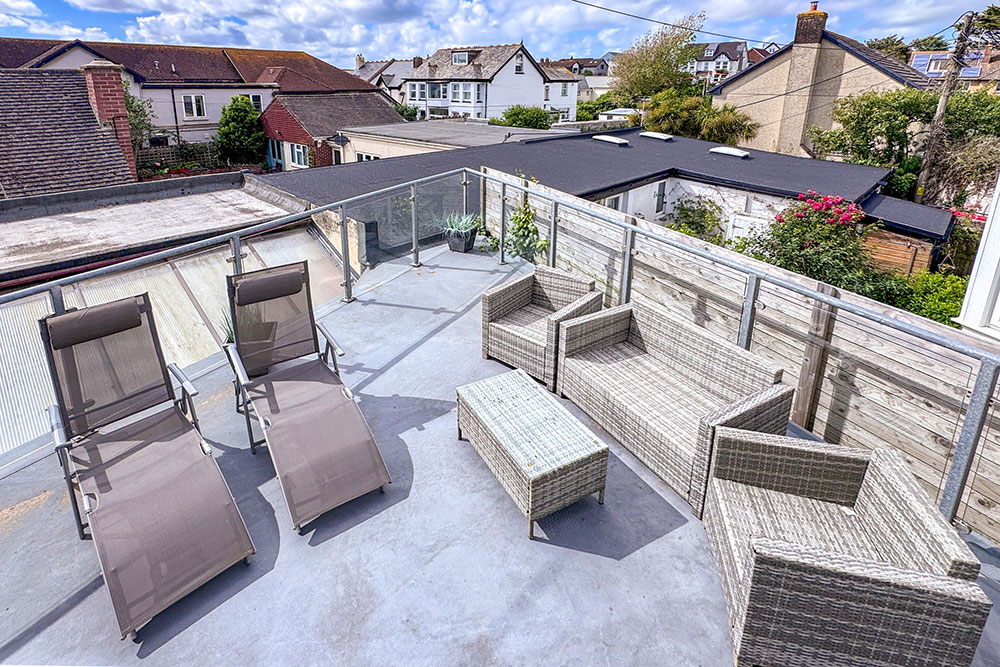
The roof terrace is one of the best parts. It’s a real sun trap, and the perfect spot to wind down in the evening with a glass of wine after a whole day of exploring, before walking into town for dinner.
Pet friendly accommodation
One thing I loved about Links Loft is that it’s pet friendly, and you have everything you need like treats, poo bags, and even dog tags with the number of the Aspect Holidays’ office just in case your dog gets lost.
I don’t travel with a pet these days, but I used to and I know how important it is to know that your hosts have thought of everything.
This is my second trip with Aspects Holidays (I visited Falmouth last time), and I will keep choosing them whenever I come back to Cornwall. They’re a small locally run agency and their customer service shows in the small personal touches.
A welcome hamper waiting on arrival, and a team who clearly knew the property, the area, and what you (and your pets) need for the perfect break, make all the difference!
More places to stay in Bude
Aspects Holidays has a lot of options to stay in Bude, but here are a few highlights:
- Tamarisk: A beautiful 19th Century 3 bedroom house overlooking Summerleaze Beach. Sleeps 5.
- 12 Westcliff: A lovely 2 bedroom apartment with views over Summerleaze Beach and Bude Canal. Sleeps 4
- Downhouse: A spacious 5 bedroom house with a large orangery just a few metres away from Crooklets Beach. Sleeps 12
Day 1: Bude
Bude Highlights: Summerleaze Beach, Bude Sea Pool, Bude Castle
Where to eat in Bude: Life’s a Beach, House of Chapin
Summerleaze Beach and Bude Sea Pool
Summerleaze Beach, Bude’s main beach, is a stunning wide, sandy beach backed by dunes. It’s only a few minutes’ walk from the town centre, and it was voted UK’s best beach in 2026 by The Sunday Times.
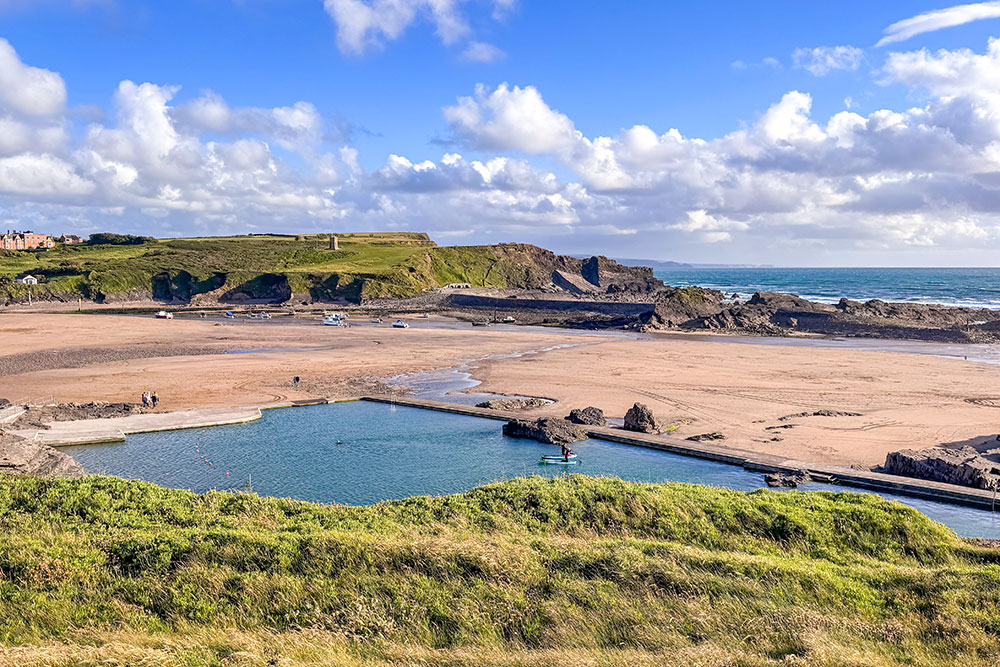
The beach is very popular with local surfers, holidaymakers and pet dog owners, and it’s a great spot to go for a wander any time of the day. Although my favourite time is sunset.
Bude Sea Pool
Located in Summerleaze Beach, Bude Sea Pool is a tidal pool that has its water refreshed twice a day by the sea, so it’s always possible to go for a swim, even when the tide is out or the open water is too rough. It’s free to use, but be ready for the chilly water!
Bude Castle
A short walk from the beach, Bude Castle is not a real medieval castle, but rather an impressive Victorian family home built by Sir Goldsworthy Gurney. He wanted to prove that a house could be built on sand dunes so he invented a concrete raft foundation.

It now houses a small heritage centre covering local history, from local shipwrecks to Bude’s canal.
Other things to do in Bude
- Surf lesson at Summerleaze Beach in Bude
- Coasteering adventure near Bude
- Stand up paddle boarding on Bude Canal
- Monster 360ft long slip and slide session in Bude
Where to eat in Bude
Life’s a Beach
If you love fish and seafood, then don’t skip this beachside cafe at Summerleaze. Life’s a Beach has been going since 1999 and it keeps getting recommended as one of the best spots for fish and chips in Bude.
House of Chaplin
Located at the top of Belle Vue, House of Chaplin is the spot I’d recommend for breakfast every morning. Whether it’s avocado toast, a bacon sarnie (my favourite) or a full fry up, this independent cafe has you covered.

It has a very relaxed and artistic atmosphere and they will make you feel really welcome. So much so that it’s tempting to while the morning away there.
Day 2: Day trip to Clovelly and Hartland Quay, Devon
Highlights: Clovelly village, Hartland Quay cliffs
Where to eat: The Farmers Arms, Woolfardisworthy (pronounced Woolsery)
Clovelly
Clovelly is a privately owned village that originally dates back to the 14th century. The village has been owned by only three families over the last 700 years, which is largely why it feels like you’ve travelled back in time.

It has a steep cobbled main street that has two names depending on what direction you are going. Up-a-long if heading back to the visitor centre, or Down-a-long if you are going down to the harbour. Neither direction makes for an easy walk if you are wearing the wrong shoes.
The street is so steep that there is no car access into the village, and sledges are still the practical way to move anything heavy. Villagers used donkeys to haul the sledges up the hill in the old days, but now it’s just humans and small engines doing the hard work.

The donkeys are now retired from hard labour and they live a peaceful life in the stables at the top of the village. Today can still see them visiting Clovelly to remind people of the olden days. Although now they just enjoy being photographed by visitors.
Even though this is a lived-in village, there is an admission charge of £10.90 to access it.
Hartland Quay
Hartland Quay is one of the wildest stretches of coast in North Cornwall and the West Country, with dramatic cliffs and rocky coves.

The cliffs themselves are the main reason people visit Hartland Quay. Layers of sedimentary rock have been folded and tilted by tectonic pressure over millions of years, forming spectacular zigzag patterns that draw geologists to this coast.
A harbour was first built here in the sixteenth century to shelter ships along an extremely exposed stretch of coast, but a series of storms through the nineteenth century eventually destroyed it.

What remains is the Hartland Quay Hotel, built from the old harbour buildings, along with a small museum documenting the area’s history of shipwrecks, over a hundred recorded along this stretch of coastline.
Recently, Hartland Quay Hotel was used as the filming location for the 2020 Netflix remake of Rebecca. You can still see the wrecked boat called “Je Reviens” from the movie on display.
Where to eat near Clovelly and Hartland Quay
The Farmers Arms, Woolfardisworthy (pronounced Woolsery)
The Farmers Arms is the perfect place to have lunch or dinner on day two of this itinerary.

In this traditional Devon country pub most of what ends on your plate has come from the pub’s own farm just up the road. The menu changes with the seasons and it’s been included in the Michelin Guide.
I had the whole barbeque fish and not only was it one of the most delicious fish I’ve ever had, but it was the prettiest too, decorated with wild edible flowers picked from the garden. It came with sweet potato fries and garlic and herb mayonnaise.
It was so good that I still think about this meal!
Day 3: Tintagel to Boscastle
Highlights: Tintagel Post Office, Tintagel Castle, Rocky Valley, labyrinth petroglyphs & Boscastle Harbour
Where to eat: The Harbour Light Cafe, Boscastle
Tintagel Post Office
The Tintagel Old Post Office is one of the most unusual buildings in Cornwall. Despite the name, it started life in the 14th century as a farmhouse, and only became a post office for a brief spell in the Victorian era, when it served as the village’s letter receiving station.

Its roof gives away its age, as a wavy, undulating expanse of slate that settled unevenly over the centuries. By the late 1800s it had fallen into disrepair, and a group of local artists stepped in to save it.
Inside, five small rooms trace centuries of ordinary Cornish life, right down to the furniture.
Tintagel Castle
Tintagel Castle is located on one of the most striking settings on the English coast.
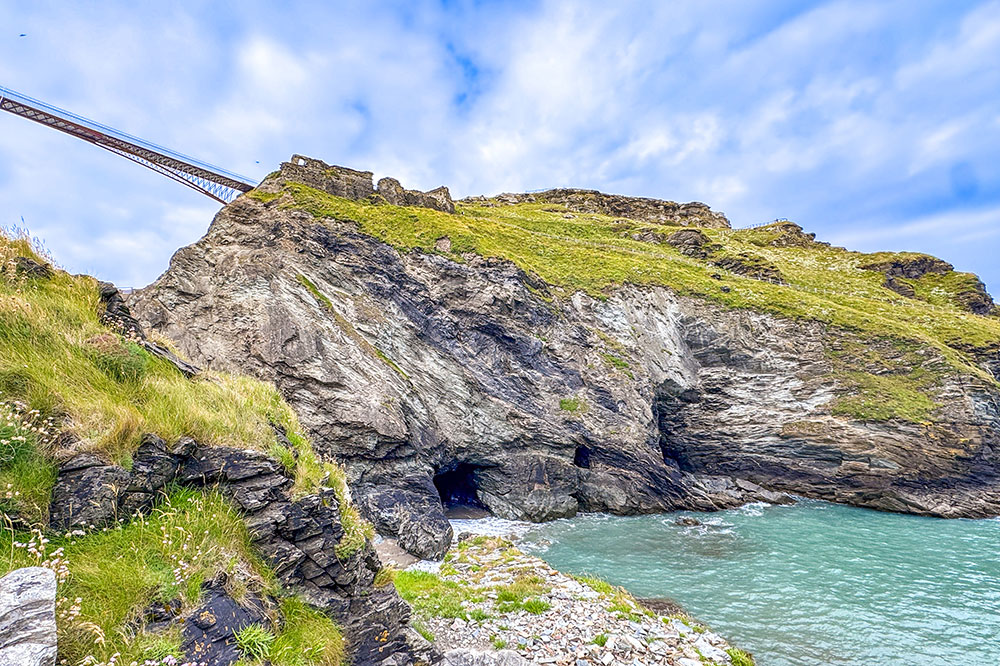
Richard, Earl of Cornwall, built the castle here in the 13th century, as even back then, it was said to be birthplace of King Arthur. The cave below is said to be Merlin’s Cave and is accessible only at low tide.
The castle is divided into two sections linked by a narrow footbridge. I skipped a visit this time, as you need a few hours to make the most of it, and I wanted to get going on my hike to Boscastle.
But if you’d like to visit the Castle, you can book your ticket in advance to help you plan your day.
Hiking from Tintagel to Boscastle
This stretch of the South West Coast Path is roughly five and a half miles from Tintagel to Boscastle, and it was a long overdue return for me.
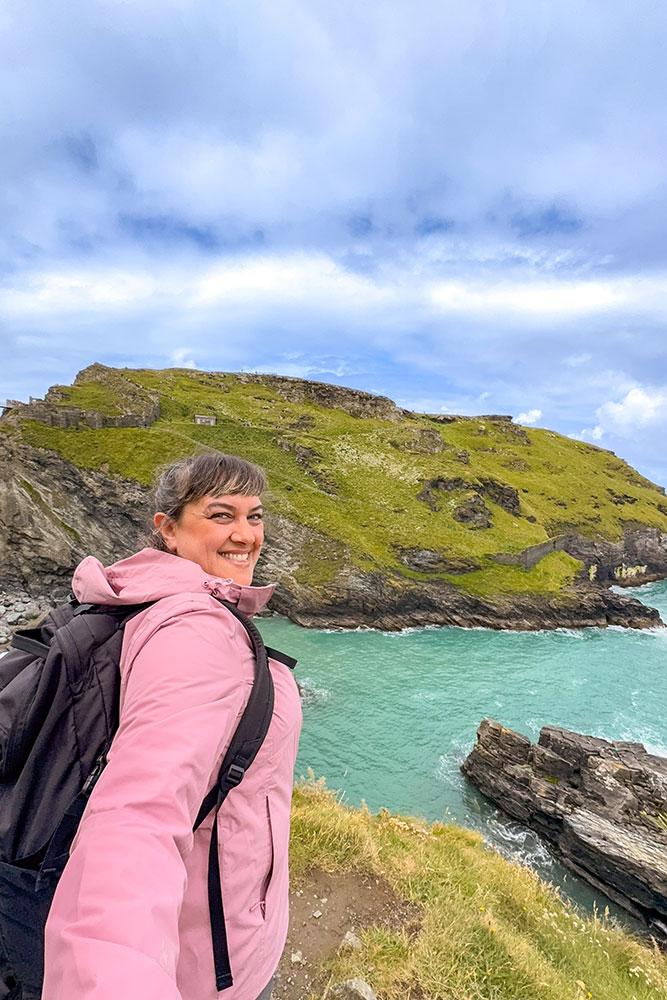
It had been years since I’d last walked the full 630-mile trail, and this section of the North Cornish coast was one of my favourites, so I just had to come back to do it again.

The walking itself is spectacular, following the cliff edge closely in places. Wildflowers line much of the route, and the coves and caves along the way make it obvious why smuggling once thrived here. The sea itself is a surprise, a turquoise more Mediterranean than British.

Don’t skip the short detour from Rocky Valley and St Nectan’s Glen to the ancient Labyrinth Petroglyphs, thought to date back to the Bronze Age (4,500-2,800 years ago).

Pack a waterproof jacket and water, and expect the weather to shift quickly, since clear sunny skies can turn to rain and back to sunny again within minutes.
Boscastle
You will finish your hike in Boscastle, one of North Cornwall’s most atmospheric harbour villages. Its Elizabethan harbour walls, built to tame this notoriously difficult stretch of water, still shelter fishing boats today.

The village takes its name from Bottreaux Castle, a long-vanished Norman fortress, but its history still runs deep.
The Museum of Witchcraft and Magic houses the world’s largest collection of occult artefacts, fitting for a coastline steeped in folklore. It is in fact one of the best places in Europe to celebrate Halloween.

Top tip: If you are visiting Boscastle independently from the hike, time your visit with low tide and walk out to the Devil’s Bellows, a blowhole that erupts with spray through a fissure in the rock.
Where to eat in Boscastle
The Harbour Light
The Harbour Light is a small speciality cafe right on Boscastle Harbour, and the perfect place to refuel after the hike from Tintagel. It’s known for its coffee and generous cream teas, with a handful of outdoor tables looking straight out over the water.

It’s set in a charming old building decorated with cute bunting, but the highlight is the food. I had their classic cheese toastie and it was just what I needed after my hike.
Day 4: Port Isaac and Padstow
Highlights: Padstow Town and Harbour, Port Gaverne Beach, Port Isaac Harbour and ‘opes’
Where to eat: Stein’s Fish and Chips, Padstow
Padstow
Located on the Camel Estuary, Padstow is a small fishing town with a harbour that has become as famous for food as for boats.

Padstow has become a real foodie destination thanks to celebrity chef Rick Stein, and his name now stretches across a fish and chip shop, a deli, a cookery school and several restaurants.
But Padstow’s culinary reputation goes beyond Stein’s empire, with plenty of seafood restaurants and bakeries popping up in the narrow streets around the quay.

Beyond the harbour, steep lanes climb past slate roof cottages and independent galleries.
Padstow is also famous for the National Lobster Hatchery, where you can experience marine conservation in action. You can buy a ticket here.
The Camel Trail ia a former railway line turned into a cycling and walking path that follows the estuary towards Wadebridge. Unusually for North Cornwall, it’s a flat and easy path. Another way to explore the Camel Estuary is on a guided kayaking tour.
Don’t miss the opportunity to explore the Padstow coastline and spot some of the amazing marine wildlife that lives there. You have the option of a RIB Sealife Safari or if you’re short on time, there’s an hour long seal safari too.
Port Isaac
Port Isaac is one of Cornwall’s most photographed fishing villages. Small cottages sit along a steep valley to a compact working harbour that still lands crab and lobster each morning.

The village grew wealthy on pilchards in the nineteenth century, and many of the slate-roofed buildings date from that era are packed tightly together against the wind from the Atlantic.
The best way to explore Port Isaac is getting lost in its maze of narrow lanes, known locally as opes, an old Cornish dialect word for open walkways or passages.

The narrow alleys weave between the cottages, and some are barely shoulder width across. There’ s even one called Squeezy Belly Alley.
They’ve been built this way to funnel wind gusts away from the harbour and to shelter goods being carried up from the boats.
Port Isaac has been famously portrayed as the fictional Portwenn, in the hit television series of Doc Martin. You can even do a tour of Doc Martin locations.
Where to eat in Padstow
Stein’s Fish and Chips
Stein’s Fish and Chips is the most famous chip shop in Cornwall, and with reason. It serves locally landed fish without the price tag that normally commands a Stein restaurant. I was lucky that there wasn’t a queue, but if there is one, it’s definitely worth the wait.

I ordered the Forgotten Fish, which is fish and chips made with unusual species of fish rather than the usual cod or haddock. It is whatever fish is available in the market that day.
I do have to confess that I can’t remember what kind of fish I had that day, but what I can remember is that it was delicious!
How to get around North Cornwall
It is possible to get around to most places on public transport, but you will need to scale this itinerary back and plan the timings with precision as buses are not that frequent.

So I would say that a car is essential to make the most of North Cornwall. The coast road links most places, but narrow lanes and high hedges mean journeys take longer than the map suggests.
I don’t own a car, so I use Discover Cars to check the best car hire deals.
FAQs about this North Cornwall itinerary
You could easily spend 7 days (or even longer) exploring North Cornwall. But 4 days is enough to cover the highlights with a side trip to North Devon, at a relaxed pace, including time for one hike along the South West Coast Path.
Bude works well as a base, with the rest of this itinerary within an hour’s drive.

The coast path between Tintagel and Boscastle has a few steep climbs and descents, so you will need proper footwear. But I wouldn’t say it’s difficult. As it’s only roughly 5 miles, you can take your time and walk it at a pace that lets you enjoy every twist and turn.
Yes. Public transport is not the best option for exploring North Cornwall, and distances take longer than they look on a map due to narrow lanes.
Do you have any questions about this 4 day North Cornwall itinerary?
Let me know in the comments!
LIKE THIS POST? PIN AND SAVE FOR LATER


Disclosure: This post has been created as a partnership with Aspects Holidays. As always, all views are my own.