
Tips for how to plan the perfect Bruges 3 day itinerary that goes beyond the Markt and the canal boats. What to do, where to eat, and how to get around to make the most of your time in this fairytale city.
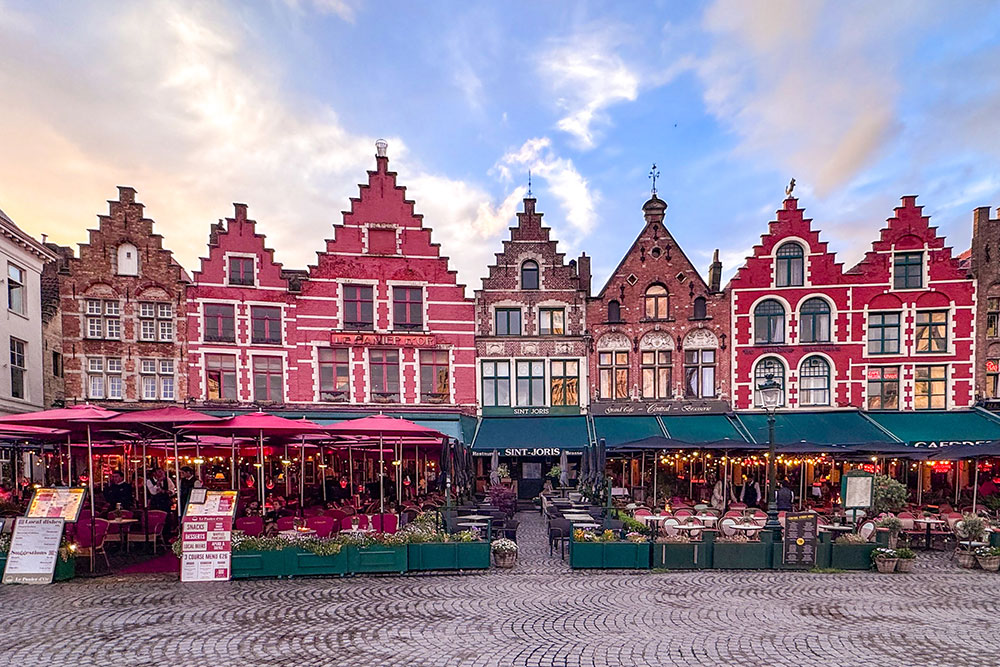
Planning your itinerary for Bruges?
You are in the right place. Bruges rewards slowness, and the version most visitors see in a single afternoon, the Markt, a canal boat ride, and a box of chocolates, is really only the introduction.
I realise that knowing where to start can feel a little overwhelming when the whole point is to look beyond the obvious sights, but it does not have to be.
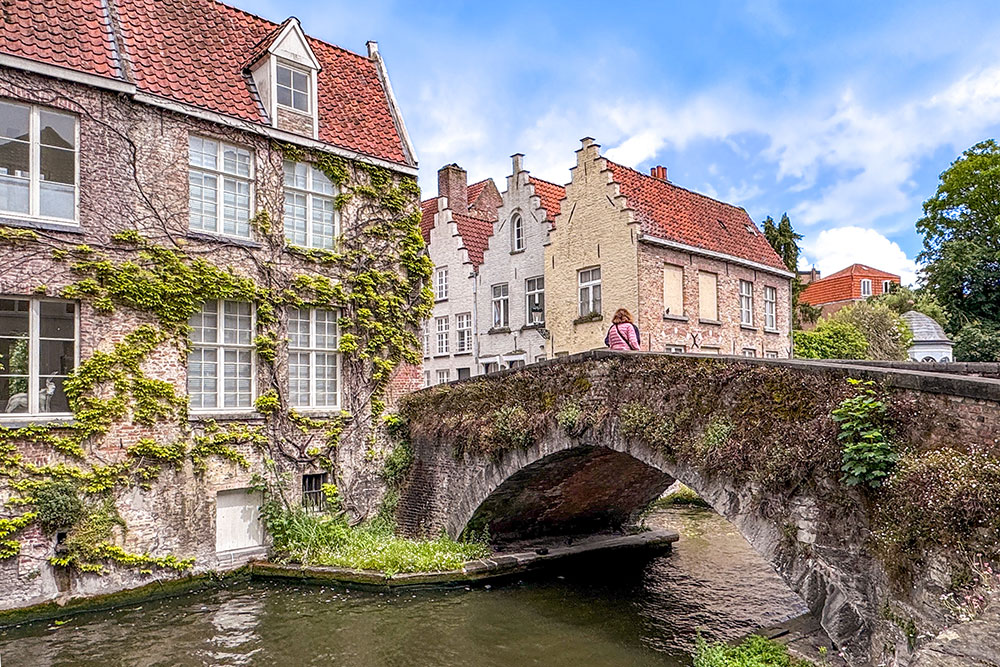
The key to planning the ultimate off-the-beaten-path Bruges trip is to plan ahead so you know which neighbourhoods to explore beyond the centre, stay somewhere central enough to reach them easily, and plan strategically so you only cover one or two areas each day.
With these three approaches, you are going to make the most of your 3 days in Bruges.
Keep reading for a neighbourhood by neighbourhood guide, including where to stay and eat.
Where to stay in Bruges
Everelmus Boutique B&B
I stayed at Everelmus, a boutique B&B within an early 18th Century townhouse that’s been restored with quiet elegance and real respect for its original character.
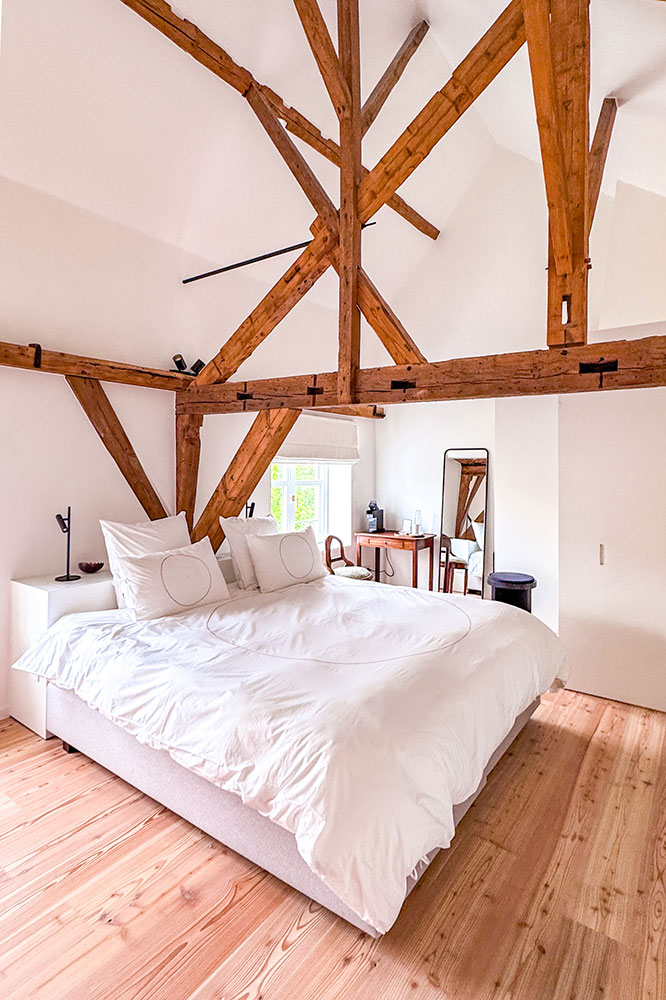
This small guesthouse has just four rooms, a walled garden, and plenty of original details. The restored parquet, the still intact centuries-old wallpaper, and the exposed wooden beams make you feel like you’re immersing yourself deep in the history of Bruges.
But it is Marjan and Ferdinand, Everelmus’ hosts, that make this stay feel so memorable. Their passion for their elegant historic guesthouse and the city’s heritage really comes through, and they will make you feel at home from the moment you step through the door.
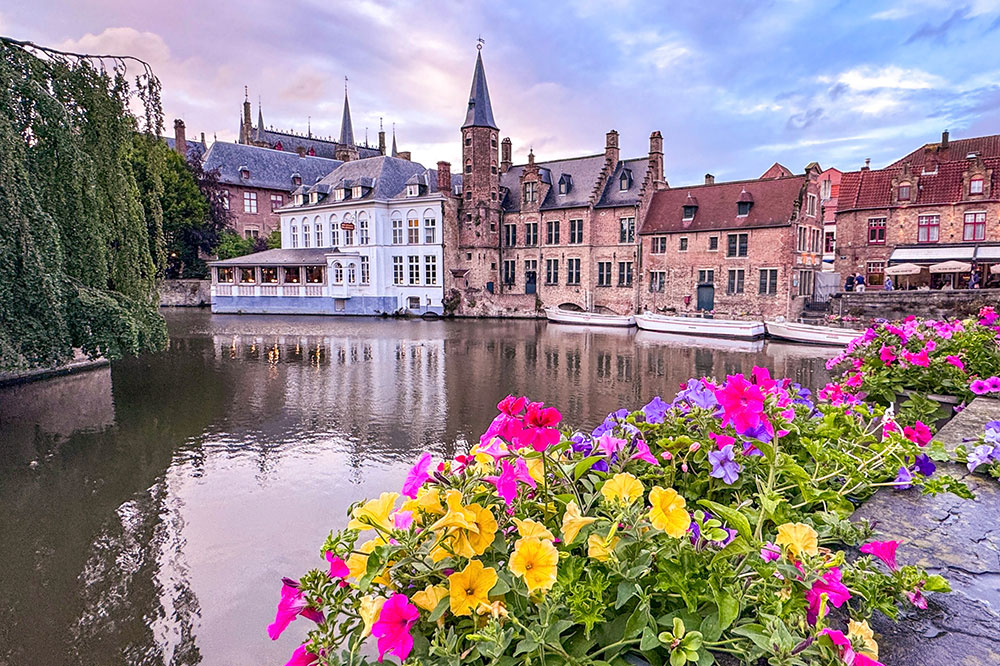
Being right on the Dijver, it is very close to everything this itinerary covers without staying in the busiest part of the centre. I loved that I could step out first thing and explore the city before the groups of day trippers arrived.
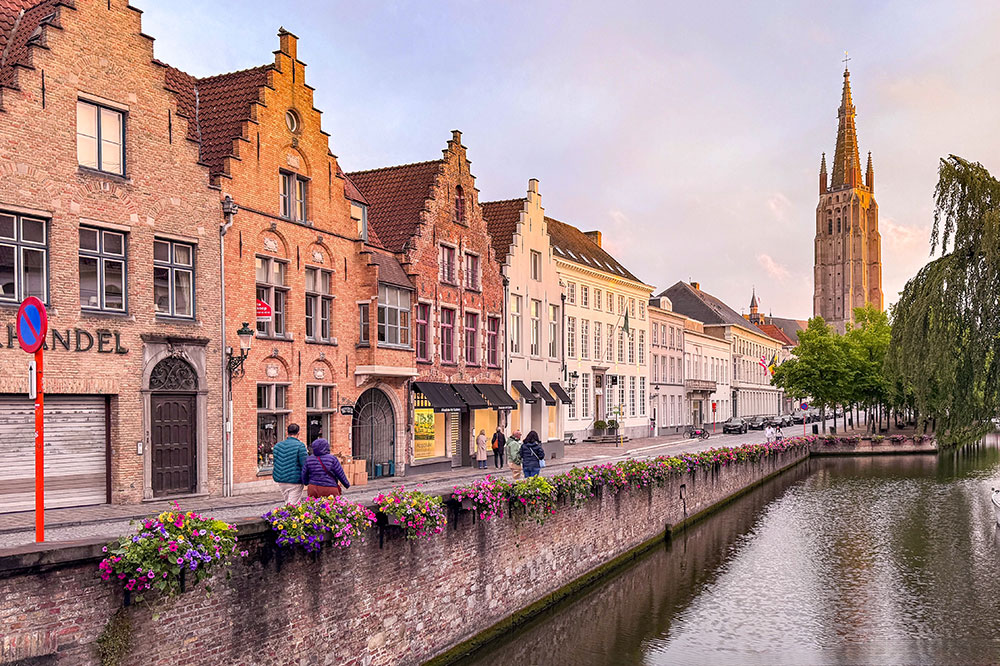
The Dijver is one of the quietest and most beautiful stretches of canal in the city, right next to the Groeningemuseum and BRUSK, and it puts you within a few minutes’ walk of the Markt, the Begijnhof, and Sint-Anna Quarter.
> Book your stay at Everelmus Boutique B&B here
Top Tip: You can follow this itinerary as suggested, or you can download the Visit Bruges app, which has routes that include a lot of these stops. Since apps like this work best with a live connection as you walk the routes, many visitors pick up a Europe SIM card before arriving rather than relying on cafe or hotel WiFi.
Day 1: Old Town & the Museum Quarter
Stop 1. The Old Town
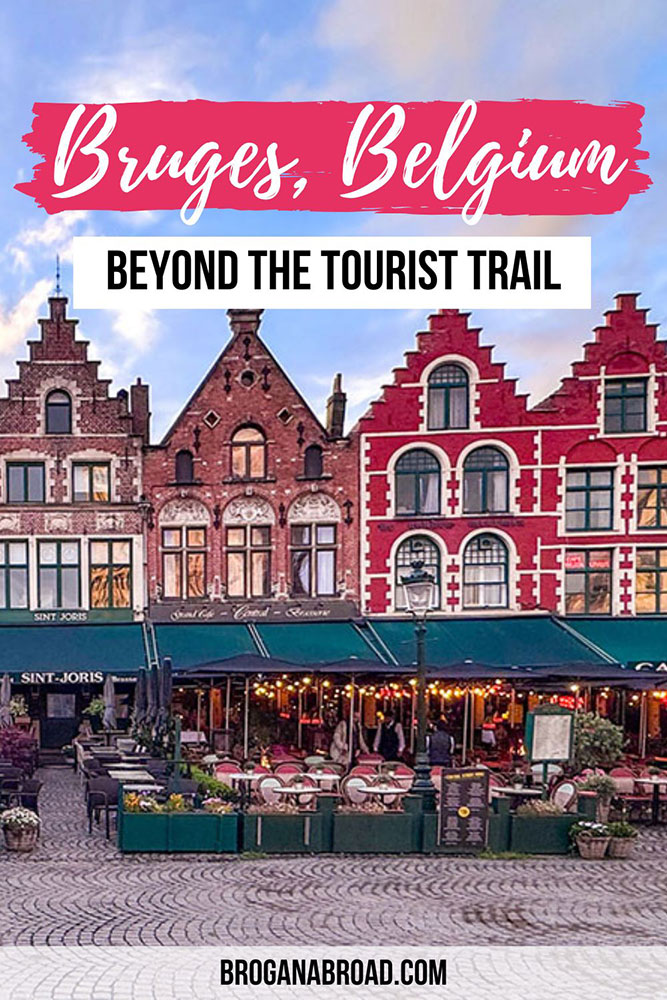
After enjoying breakfast at Everelmus B&B (another thing that I loved about staying here), head into the heart of the Old Town. Give yourself a leisurely morning around the Markt and the Burg, then let yourself get lost in the smaller streets that fan out from them, particularly on the Dijver side.
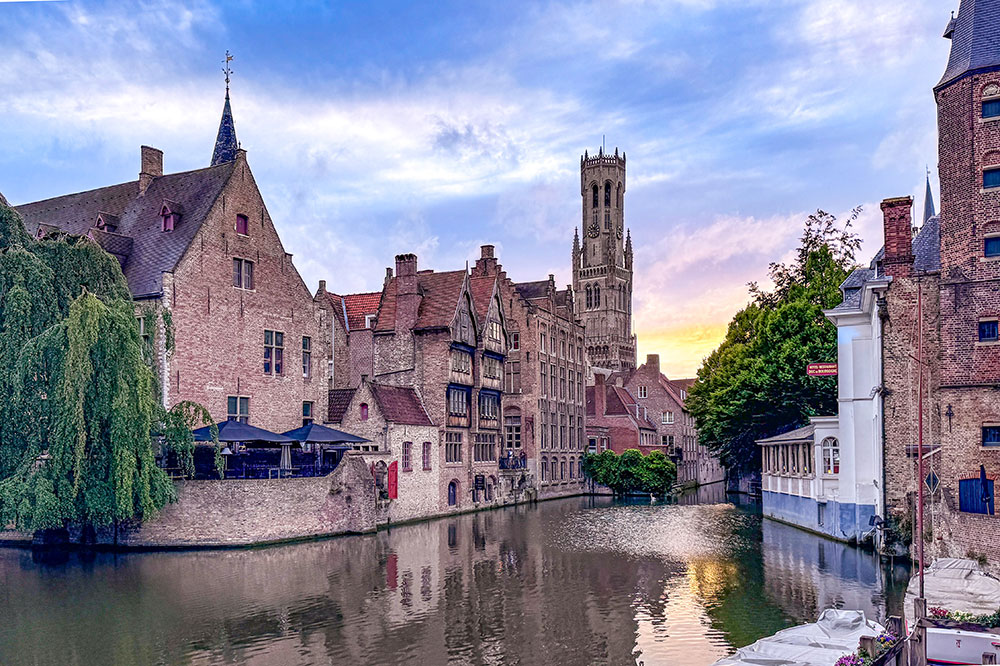
Bruges is a UNESCO World Heritage Site. Its entire historic centre survived largely untouched by the wars and redevelopment that reshaped so many other European cities. It is often called the best preserved medieval city in Europe, and it earns that title.
But that same reputation is also what limits most people’s experience of it. Because the Markt and the canals photograph so well, Bruges gets treated as a place to see rather than a place to spend time in.
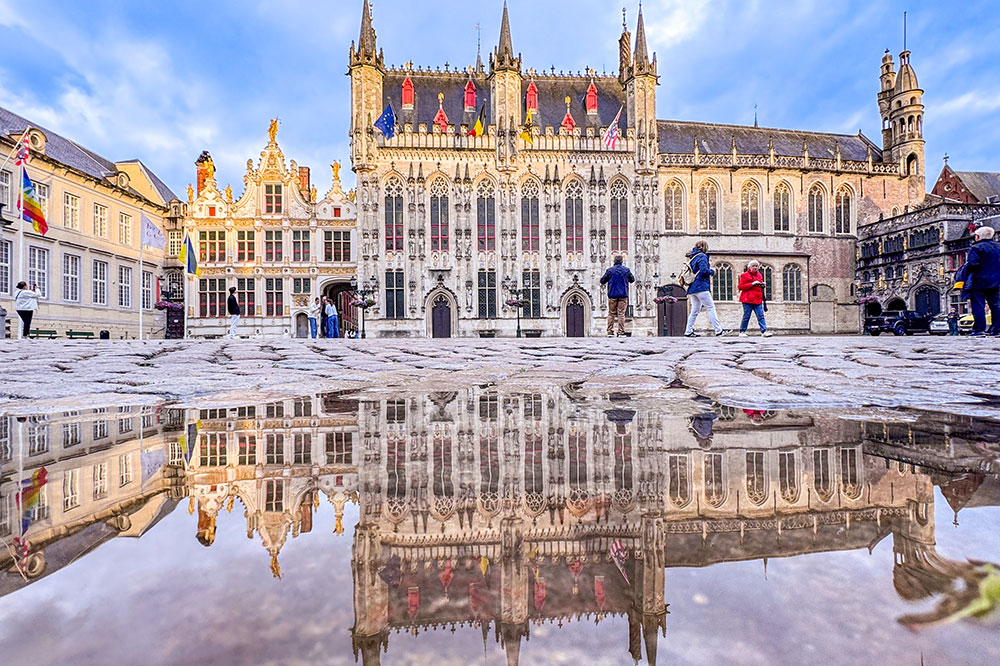
So, of course, do the obligatory loop of the main square, then let the smaller streets pull you away from it.
Stop 2. Groeningemuseum and BRUSK
Once you have looped back towards the Dijver, this is where both the Groeningemuseum and BRUSK are.
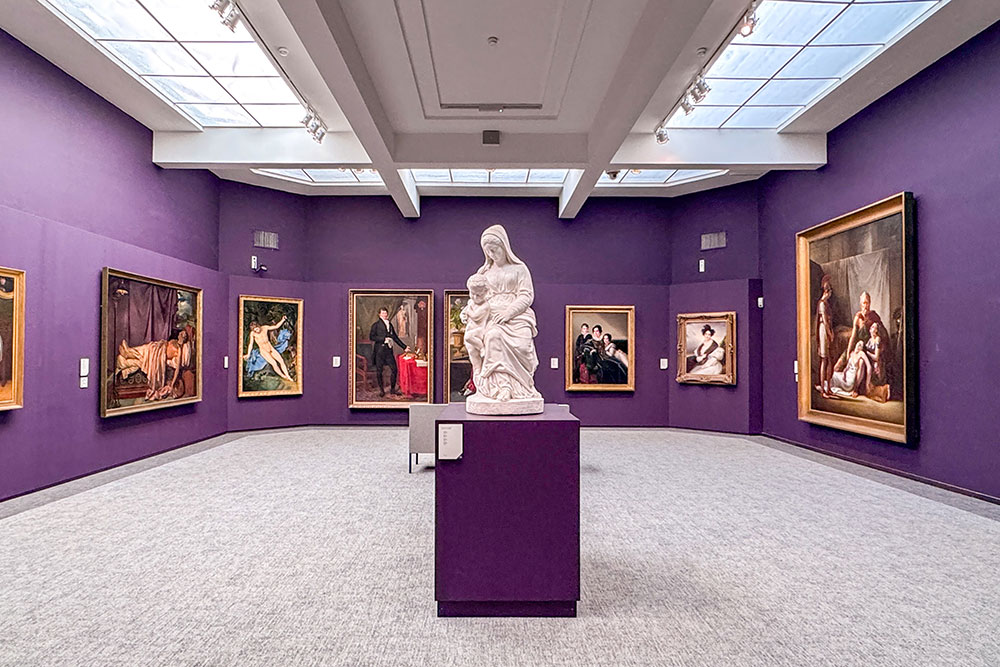
The Groenigemuseum houses six centuries of Flemish and Belgian painting in just a handful of rooms, from Jan van Eyck’s Flemish Primitives through to Magritte and Delvaux.
As the museum stays deliberately compact, an hour and a half is enough to see the highlights without museum fatigue setting in.
Right next door is the newest addition to Bruges’ museum quarter, and honestly, the most exciting one.
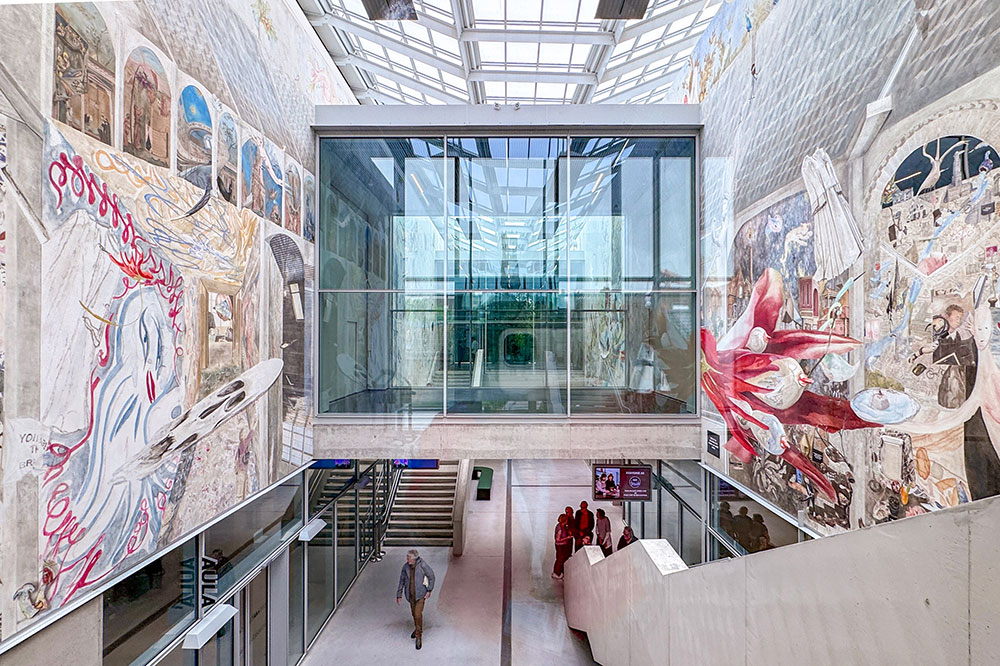
BRUSK is a striking contemporary art gallery built for major international exhibitions that opened for the first time in May 2026. When I visited, there were two exhibitions on:
‘Bigger Picture’ is a look at how Bruges was connected to the rest of the world throughout the ages, and ‘Latent City’, Belgian artist Refik Anadol’s first solo exhibition of AI-driven digital art.

Incredibly for such a modern building, it blends in with the medieval buildings around it rather than competing with them.
Don’t miss the museum shop, which is stocked with Handmade in Brugge pieces, and the light-filled Bar Brusk cafe while you’re here. The bar is open to everyone, with or without a ticket, and on the first Friday of every month it stays open well into the evening.
Where to eat in the Old Town
Kosmopoliet
For dinner, book a table at Kosmopoliet, a fully vegan restaurant with a stylish, understated interior, proof that Bruges’ food scene has moved well beyond stews and waffles. Portions are generous and the menu changes with the seasons.
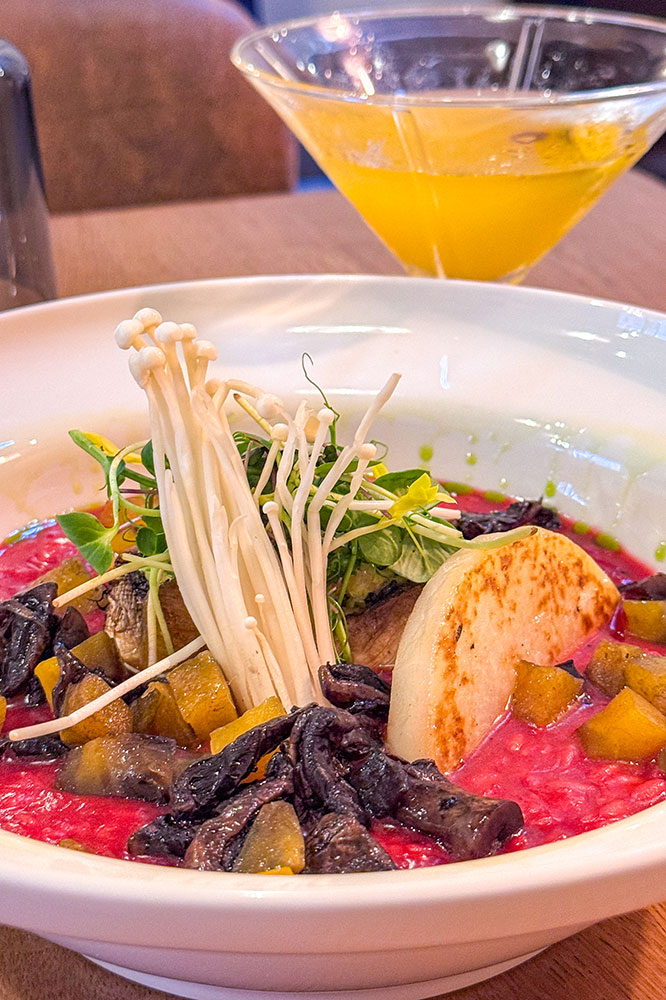
I had the pink risotto with Parisian mushrooms and roasted yellow beetroot and it was my favourite thing I ate in Bruges on this trip.
Day 2: Sint-Anna Quarter By Bike
Pick up a rental bike this morning and head to Sint-Anna Quarter, also known as the ‘Silent Quarter’. Located just beyond the busiest part of the centre, the shift in atmosphere is immediate as soon as you arrive: narrower lanes, fewer tour groups, and a slower pace that feels much closer to how Bruges actually lives.
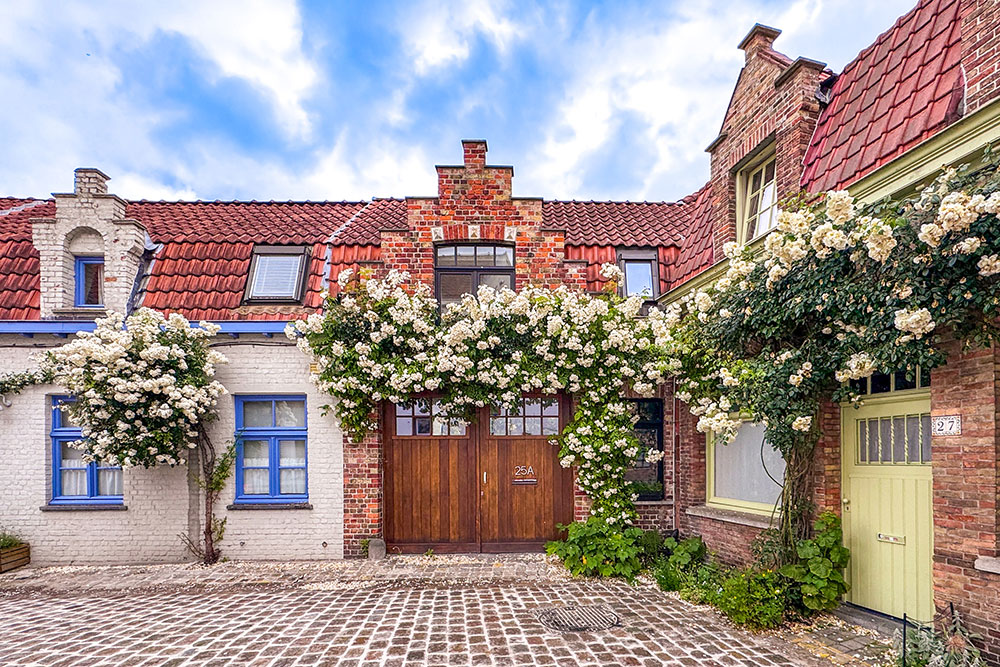
Top Tip: Rent your bike the night before so you can save time in the morning and go straight there. Sint-Anna is only a few minutes’ ride from the Markt, but you will want to dedicate a whole day to this area.
Stop 1. Oud Huis Deman Bakery
If you are in Bruges on a Friday, start the day at Oud Huis Deman, a biscuit bakery that has been run by the women of the same family for five generations.
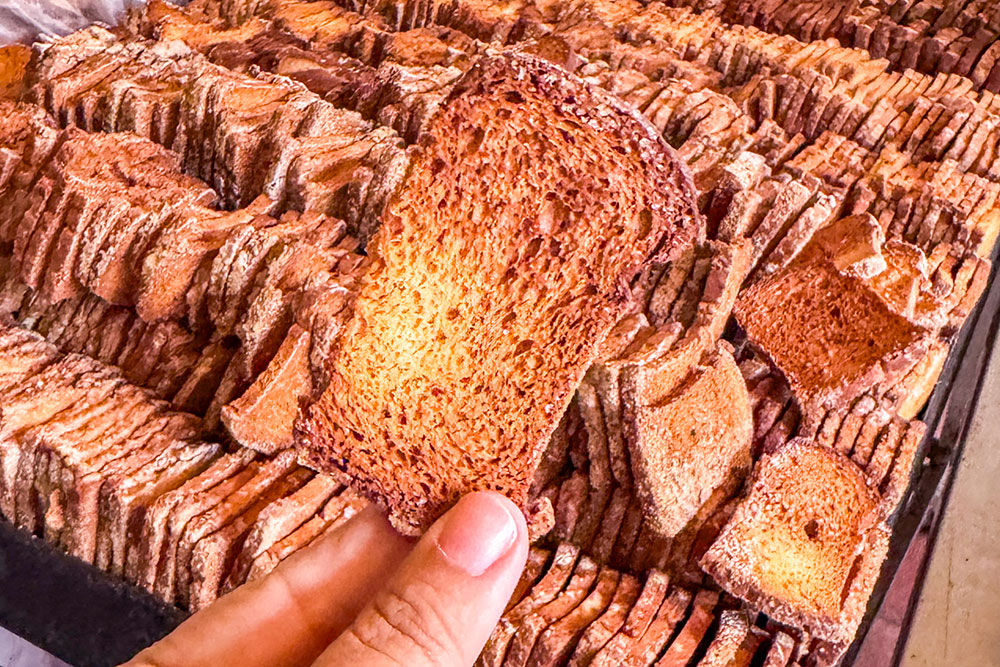
Mother and daughter still bake everything by hand using recipes that go back to 1880. These recipes have never been written down, only passed from one generation to the next, so this is pretty special.
This bakery is famous for being where Brugs Beschuit, the traditional Bruges rusk, was invented by Stefanie Vervacke, the co-founder of Oud Huis Deman. They also make speculoos, lace cookies and many more.
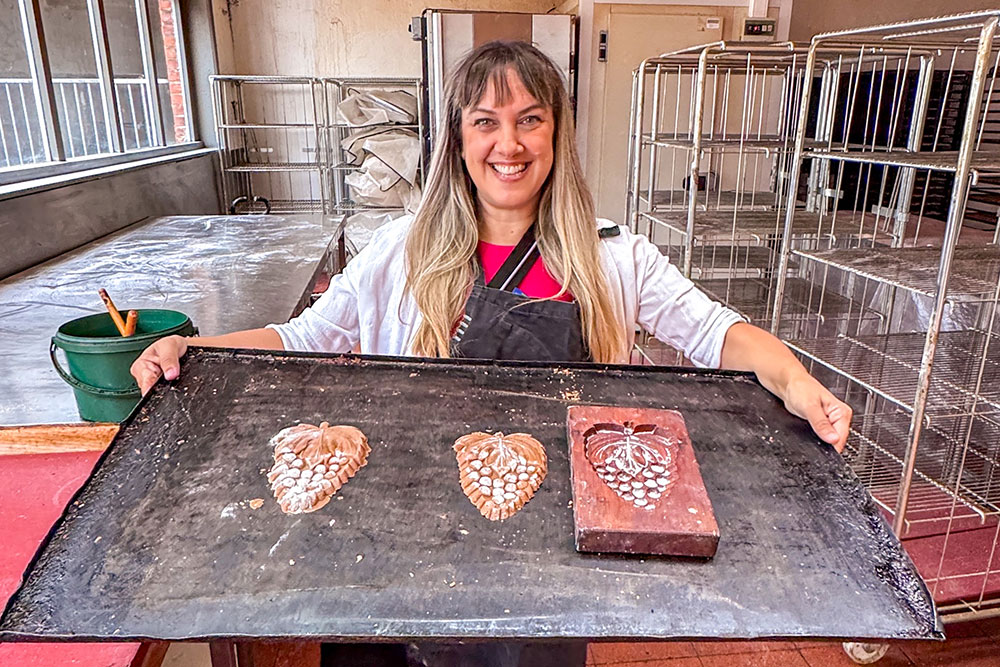
Oud Huis Deman only opens to the public on Friday mornings, but there is no shop in the traditional sense of the word. Just a working bakery and whatever has come out of the oven that morning.
Top Tip: Get there early on a Friday morning, and buy more than you think you need. It’s absolutely delicious and very popular with locals, so they are bound to sell out.
Stop 2. Adornes Domain & Jerusalem Chapel
This is one of the most interesting places in the city. Adornes Domain is a fifteenth century private estate built by the Adornes family, wealthy merchants from Genoa. The estate includes the Jerusalem Chapel, modelled on the Church of the Holy Sepulchre after a family pilgrimage to Jerusalem.
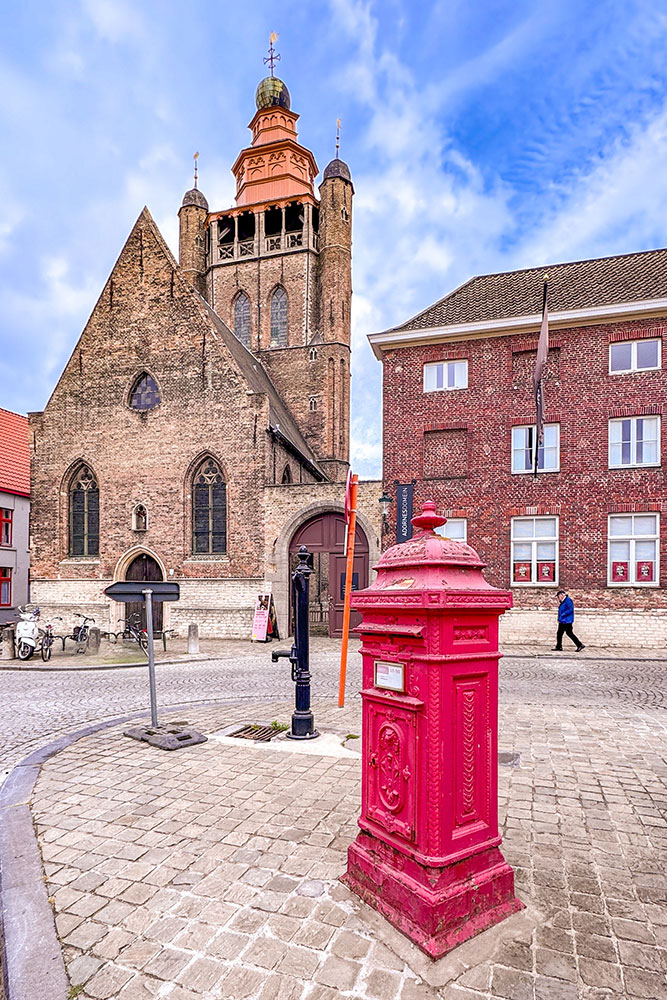
The chapel still holds the mausoleum of Anselm Adornes and his wife, along with the oldest stained glass in Bruges, and the estate has never changed hands. The same family still owns it, seventeen generations later.
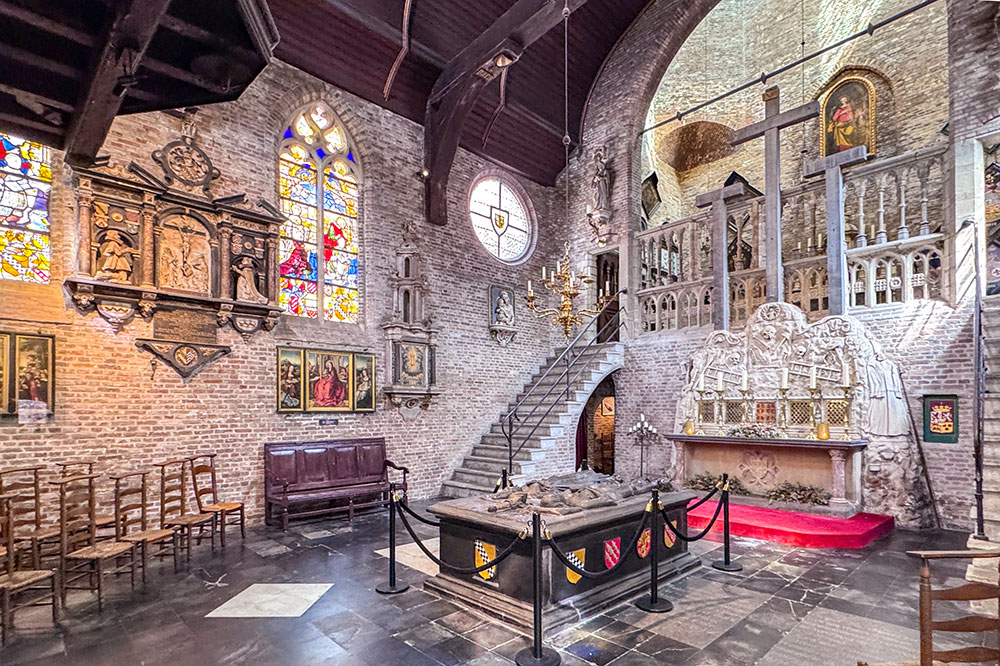
As you walk through the site, you will come across the Scottish Lounge, which runs on an honesty system, so you can sit with a coffee or tea among the gardens and simply leave payment in the tin.
Stop 3. Kantcentrum (Lace Centre)
This was the highlight of my trip to Bruges. Around the corner from Adornes Domain is the Kantcentrum, Bruges’ Lace Centre, housed in a former lace school.
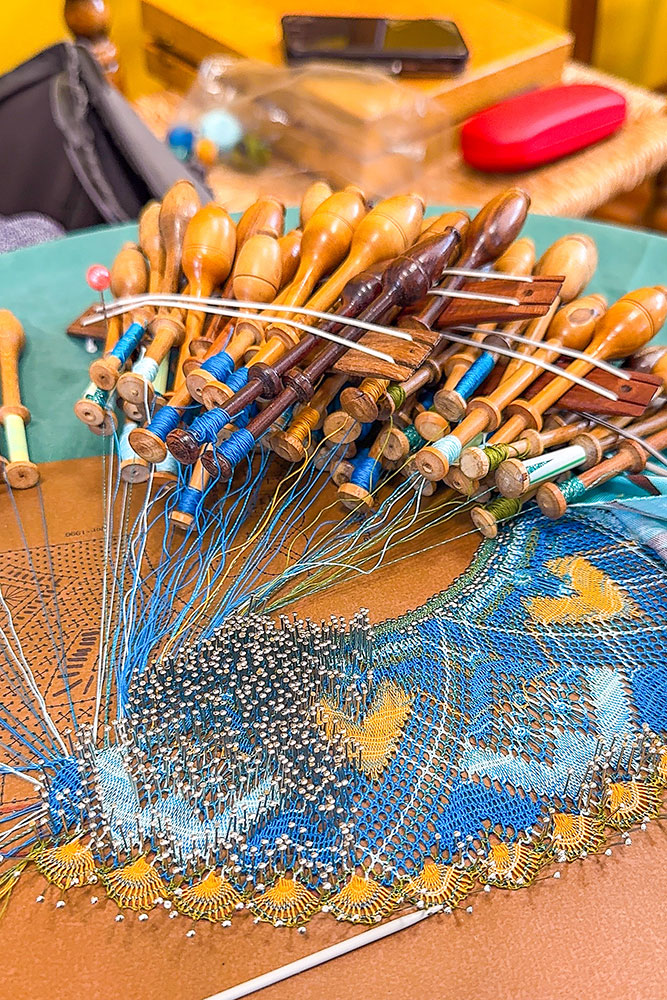
The ground floor museum traces the history of Bruges lace and it includes examples of lace from other European countries. But the draw is upstairs, where lacemakers gather most afternoons to work at their pillows, bobbins clicking, happy to talk you through what they are making if you ask.
It’s a true work of art and it requires not just incredible skill, but also a lot of patience, as progress can be slow. It’s indeed a labour of love!
This is one of the only places left in the city where a centuries-old Bruges craft is still being practised rather than just displayed behind glass.
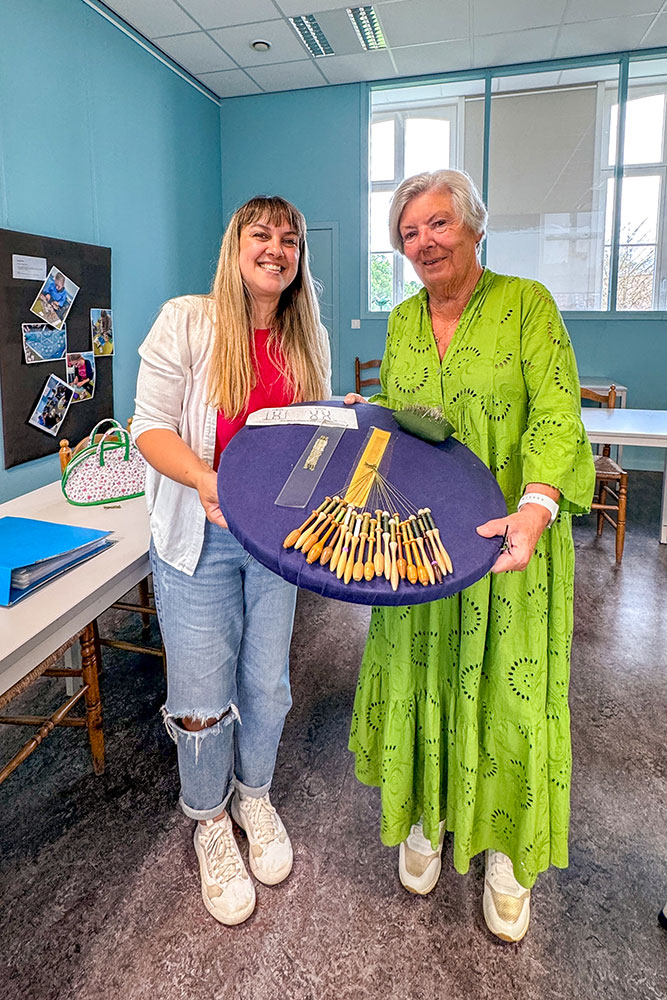
I was very lucky to have a one-to-one workshop with Monique, one of the lacemakers, where she showed me the different kinds of stitches you can make, and how the patterns come together by combining them.
And after a little while with Monique patiently supervising my newly acquired skill, I ended up creating my own lace bookmark, which of course I took home with me.
Stop 4. Sint-Janshuismolen & the Kruisvest windmills
From there, cycle along the Kruisvest, the eastern stretch of the city ramparts, where four windmills still stand in a row.
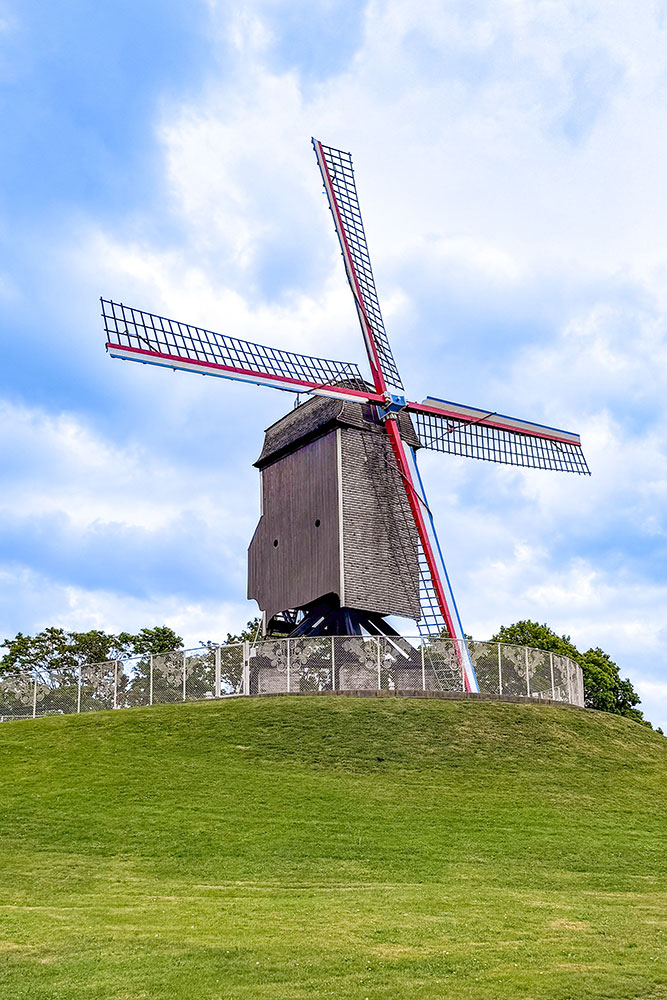
Only one, the Sint-Janshuismolen, still grinds grain, and on a windy afternoon you can watch the millers work the sails by hand exactly as they have since 1770.
Climb the steep internal stairs for a view over the green ramparts that most visitors never see, as it is a bit of a walk, or a short and pleasant bike ride, away from the centre.
Where to eat in Sint-Anna
Sanseveria Bagelstation
Sanseveria is a cosy bagel salon in the city centre, close to the edge of Sint-Anna, so it’s an easy detour for lunch. The bagels are delicious (I had the Moroccan-spiced chicken with brie), and the vintage crockery and retro Flemish deco are really fun and unique.
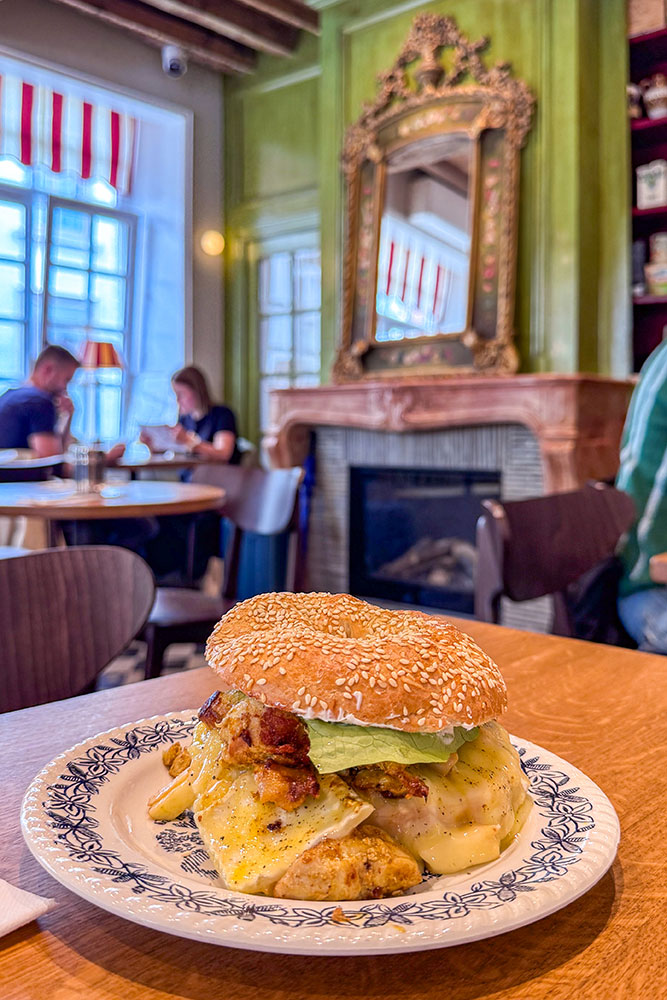
They have vegan and gluten free options, and it is worth booking ahead, since it fills up fast.
Vlissinghe
Round off the loop with dinner at Café Vlissinghe, tucked down a quiet Sint-Anna side street. Records date it back to 1515, which makes it the oldest café in Bruges.
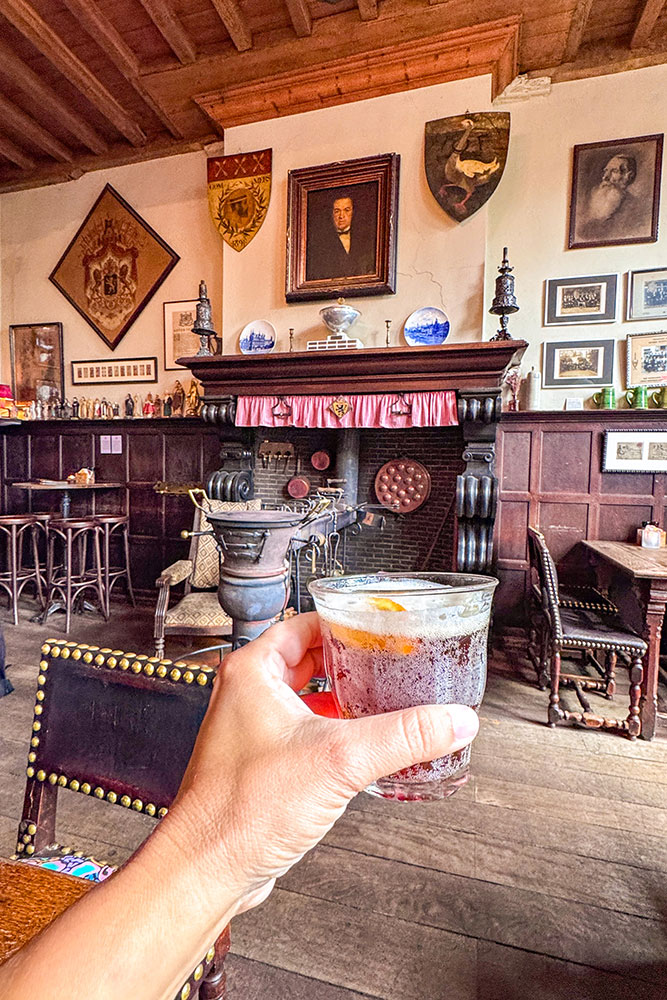
Come for simple bar snacks that go well with Bruges beer, soups, cheese and meat platters, and toasties served in front of an old-fashioned stove, and in summer, stay for a game of petanque in the back garden, exactly as generations of locals have before you.
Day 3: Begijnhof, Minnewater & ‘t Zand
Stop 1. Begijnhof
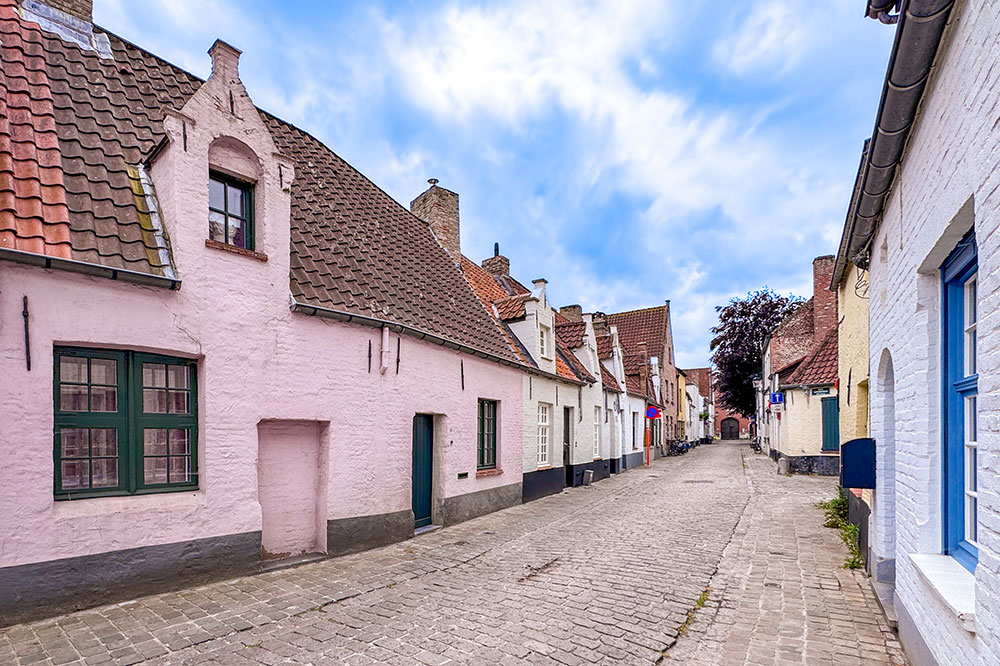
Start your last day at the Begijnhof, and go early if you can. This walled community of whitewashed houses was built for the Beguines, lay women who lived in religious communities without taking full vows.
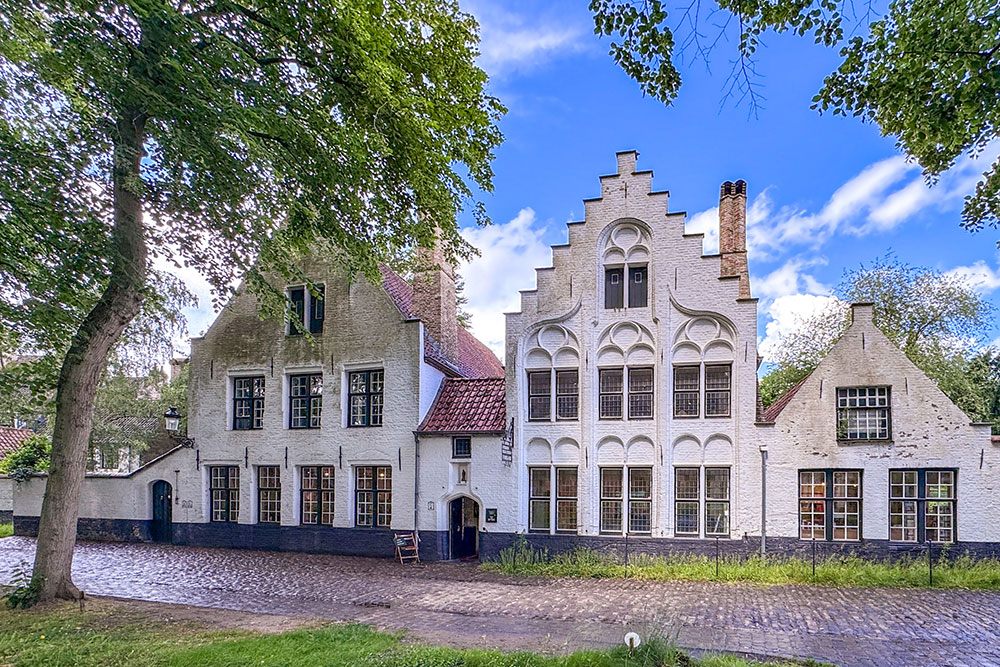
It’s a UNESCO World Heritage Site and still home to Benedictine nuns today. It’s one of the most peaceful spots in the city.
Stop 2. Minnewater Park
Immediately south of the Begijnhof is Minnewater Park, known as the Lake of Love, with willow trees along the edge of the water and swans drifting past. It is a lovely local park worth of a slow walk rather than a five minute detour.
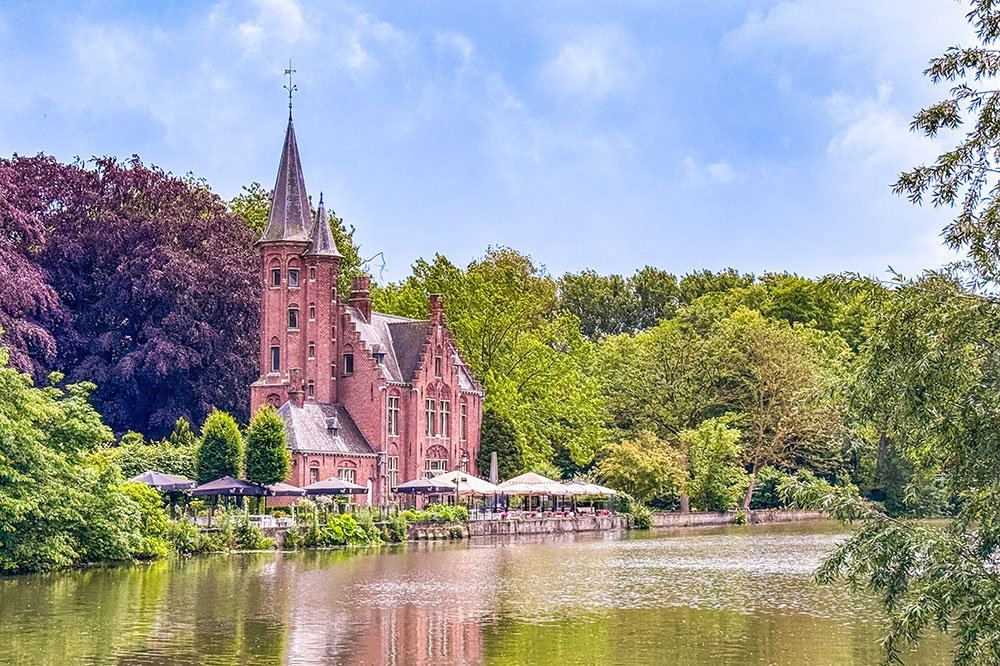
If you’re travelling with your loved one, make sure you cross the Minnewater Bridge (or Lover’s Bridge), as legend says that couples who walk hand in hand across it will share eternal love. But even if you are visiting on your own, it’s worth crossing it for the view too.
Stop 3. Sashuis (Handmade in Brugge)
The Sashuis, a former lock keeper’s house right on the square, is now the home of Handmade in Brugge, a network of more than a hundred local craftspeople.
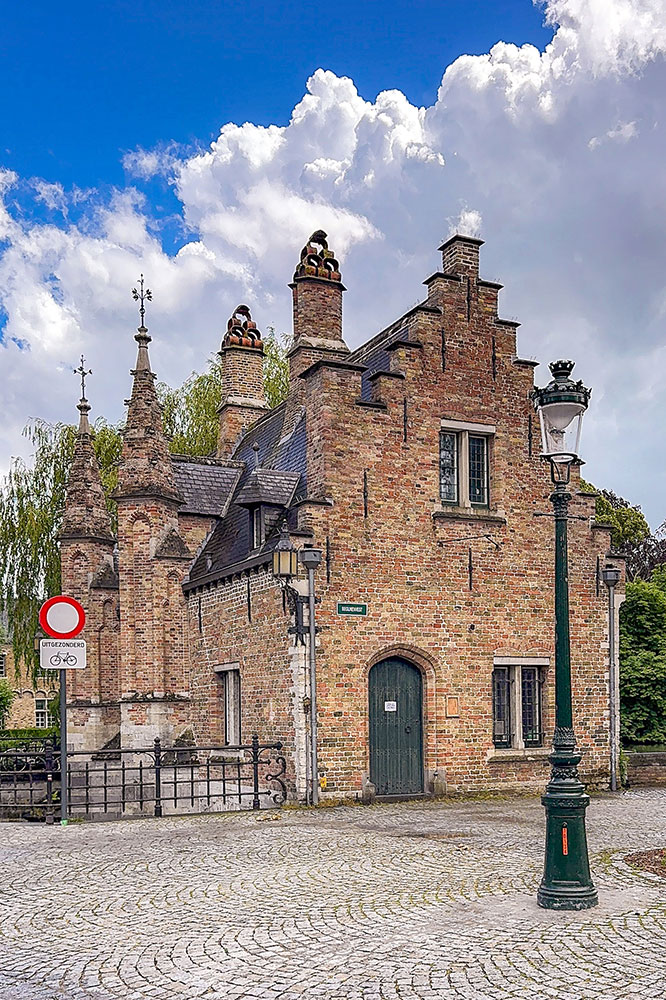
Inside is a small shop selling genuinely handmade goods from Bruges makers, lace, ceramics, jewellery, food, rather than the mass produced souvenirs that fill most of the shops closer to the Markt.
It is the best place in the city for a gift that actually came from Bruges.
Stop 4. Concertgebouw Circuit
Finish your three days at the Concertgebouw (Concert Hall), Bruges’ modern concert hall on ‘t Zand, and one of the few modern architecture buildings in the city.
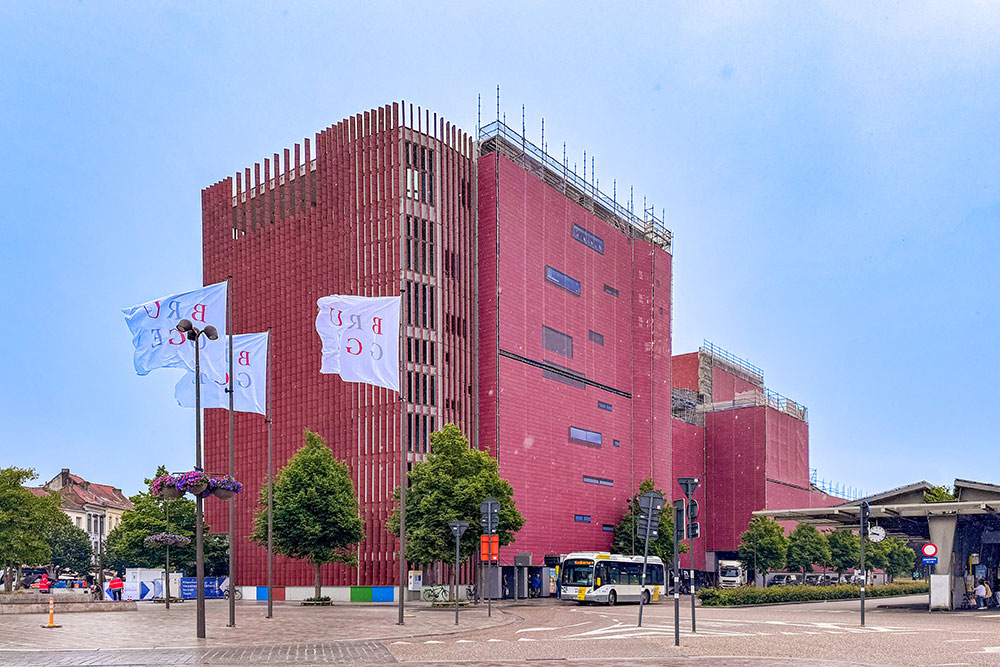
The self-guided Circuit tour takes you through the building’s architecture, acoustics, and art collection, and ends on the rooftop terrace on the seventh floor of the Lantern Tower, with a panoramic view stretching over the medieval rooftops all the way to the coast.
It is a great way to end this itinerary and a reminder that Bruges is much more than what we see on quaint postcards.
Where to eat near the Begijnhof
‘t Nieuw Walnutje
‘t Nieuw Walnutje is a cosy, rustic Belgian restaurant on Walplein, one of Bruges’ prettiest small squares, right opposite the De Halve Maan brewery.
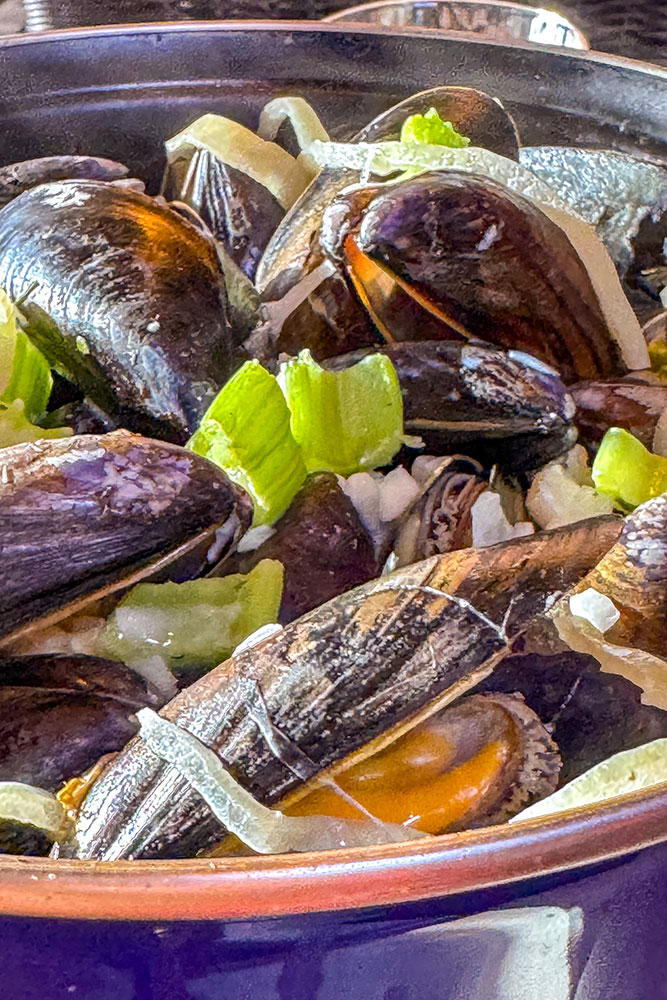
The menu sticks to Flemish classics like mussels, Flemish stew, and shrimp croquettes (I highly recommend the latter), and the tree-lined terrace is one of the best places in the city for a long, leisurely lunch.
If You Have More Than 3 Days In Bruges
If you have more than three days in Bruges, I would use the extra time on a day trip rather than more of the centre.
Damme
Damme is a small, sleepy canal town about half an hour away by bike along a straight tree lined path, or by boat in summer, with its own windmill and a handful of secondhand bookshops worth a browse.
Lissewege
Lissewege, often referred to as the ‘White Village’ is another strong option, just 10km north of Bruges. It is a quaint village with whitewashed houses, a majestic 13th century church and peaceful atmosphere.
Bruges Travel FAQs
Yes, Bruges is very safe. It is a small, walkable city with low crime rates, though the usual common sense around bags and belongings in busy squares still applies.
No, and I would actively avoid one. The historic centre is largely pedestrianised, parking is limited and expensive, and everything in this itinerary is reachable on foot or by bike. In fact, cycling is the best way to get around in Bruges.
Spring (April to May) and early autumn (September to October) offer the best balance of mild weather and thinner crowds. Summer is lively but busy, particularly around the Markt in the middle of the day, and winter is quietest outside the Christmas market period.
Two full days cover the highlights, but three is what it takes to properly explore beyond the centre, which is exactly what this itinerary is built around.
How To Get To Bruges
Bruges has no airport of its own. To visit, fly into Brussels Airport, then take the direct train to Bruges, which takes about an hour. It is a far more relaxed and sustainable way to arrive than renting a car.
If you are coming from the UK, Eurostar now makes Bruges reachable from London in well under four hours door to door, via a change in Brussels.
Once you arrive at Bruges station, it is a fifteen to twenty minute walk into the historic centre, a short taxi ride, or you can take the airport shuttle which only takes a few minutes, if you are carrying luggage.
Do you have any questions about this itinerary of 3 days in Bruges?
Let me know in the comments!
Like this post? Pin and save for later
Disclosure: This post has been created as a partnership with Visit Bruges. As always, all views are my own.