
This Airport Secret Could Save You Hours, And Most Travelers Have No Idea It Exists
This post may contain affiliate links that earn me a small commission but come at no extra cost to you.
There is a way to glide past the world's longest security lines while everyone else stands there in socks holding a quart bag of shampoo. The catch is that almost nobody understands the difference between the three programs that make it possible.
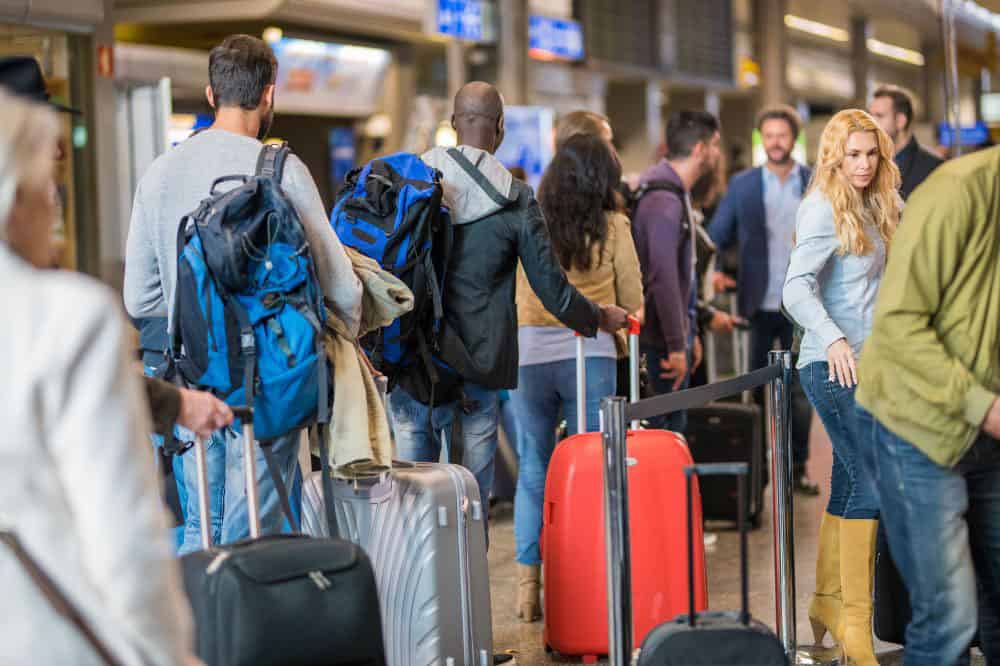
Airport security has changed dramatically over the past two decades. What used to be a quick walk to the gate has turned into a maze of body scanners, biometric checks, and travelers who cannot quite figure out whether their belt counts as metal.
Anyone who has flown recently has stood behind someone struggling to read the ounces on a travel bottle while a flight boards in fifteen minutes.
Three programs exist specifically to solve this problem: TSA PreCheck, Global Entry, and CLEAR. Each one promises a faster path through security or customs, but they work in different ways, cost different amounts, and serve different kinds of travelers.
Here is what separates them, and which one actually makes sense depending on how often someone flies.
What TSA PreCheck Actually Gets You
TSA PreCheck is a screening program run by the Transportation Security Administration that lets approved travelers skip several of the more annoying parts of airport security.
Shoes stay on. Laptops and liquids stay in the bag. The scanner is a standard metal detector rather than the full body imaging machine.
PreCheck works at more than 160 airports across the country and applies to domestic flights, international departures from the United States, and connecting flights coming back into the country.
The dedicated lines are typically much shorter than standard security, though travelers still need to show ID to a TSA agent before heading through. Most people clear the checkpoint in fifteen minutes or less.
Who qualifies: U.S. citizens, U.S. nationals, and lawful permanent residents. Visa holders are not eligible.
Applying involves filling out an online form, scheduling an in person appointment at an enrollment center, sitting for a brief interview, and providing fingerprints along with identifying documents like a driver's license and birth certificate or Social Security card.
The cost is eighty five dollars for five years, paid once. Children under twelve and active military members fly free under a parent's or sponsor's enrollment.
Several travel credit cards, including the Chase Sapphire Reserve, Capital One Venture Rewards, and United Explorer Card, reimburse the fee automatically.
Why Global Entry Might Be the Smartest Move for International Flyers
Global Entry is run by U.S. Customs and Border Protection and is built for travelers re-entering the country from abroad. It is available at more than fifty airports nationwide.
Normally, returning to the U.S. means standing in line for a customs kiosk, watching someone slowly read every question on the screen as if they might actually be smuggling livestock.
Global Entry members skip that altogether. They use a dedicated kiosk, scan a passport, provide fingerprints, answer a short set of questions, and move straight to a shorter line for the customs officer.
Who qualifies: U.S. citizens and lawful permanent residents, along with citizens of several partner countries including Argentina, India, Colombia, the United Kingdom, Germany, Panama, Switzerland, Singapore, South Korea, Taiwan, and Mexico.
The application process mirrors PreCheck: an online application through the Department of Homeland Security's Trusted Traveler Program, followed by an in person interview where a passport is required.
Global Entry costs one hundred dollars for five years and is not discounted for children or military members.
It does, however, include TSA PreCheck automatically, so anyone considering both programs separately should simply pay the extra fifteen dollars and get Global Entry instead.
Cards like the Bank of America Premium Rewards Visa and the IHG Rewards Club Premier Credit Card often cover the cost.
CLEAR: The Fastest Option, for a Price
CLEAR takes a different approach entirely. It is a private company, not a government program, and it verifies identity through fingerprint or iris scans rather than a physical ID check.
Travelers walk up to a CLEAR kiosk, confirm their identity biometrically, and head directly to security screening, no agent interaction required.
CLEAR operates at more than thirty U.S. airports and also shows up at stadiums and arenas, where it can speed up entry to major events.
As PreCheck has grown more popular, its lines have started to rival regular security during peak travel times. CLEAR sidesteps the issue completely by skipping the ID check altogether.
Travelers without PreCheck still have to go through standard screening once they reach the front, but they save real time getting there. CLEAR is also useful when PreCheck lanes are closed, since CLEAR generally operates on different hours.
Who qualifies: U.S. citizens and permanent residents aged eighteen and older. Children can join an adult in the CLEAR lane for free without needing their own enrollment.
The application works similarly to the other two programs, with an online form followed by an in person biometric appointment.
CLEAR costs one hundred seventy nine dollars per year, by far the steepest of the three. A family plan allows up to three additional adult members for fifty dollars per year each, and those family members do not need to travel with the primary account holder to use it.
Delta and United loyalty members receive a sixty dollar discount, bringing the price down to one hundred nine dollars annually.
The Free Option Nobody Talks About: Mobile Passport Control
Before assuming Global Entry is the only way to skip the customs line, there is a free alternative worth knowing about: the Mobile Passport Control app, run by U.S. Customs and Border Protection.
There are several similar sounding apps in app stores, so it helps to confirm the official one before downloading.
The app lets travelers fill out their customs declaration directly on their phone while still on the plane, during that long stretch of waiting for everyone ahead of them to deplane.
Once that form is submitted, travelers walk straight to the customs officer with a barcode on their phone and a passport in hand, skipping the kiosk entirely.
It is genuinely free. A newer paid tier exists that saves personal information for future trips, but the free version works just as well with a quick photo and a passport number entered each time.
Travelers using the app typically end up in the same line as Global Entry members, and sometimes even ahead of them, since Global Entry travelers still need to complete their kiosk step before joining the queue.
Free Reservations: Airports Are Starting to Offer Skip the Line Slots
A newer option has emerged at select airports: free reservation systems that let any traveler, regardless of program enrollment, book a specific entry window through security.
The system, run by a provider called WhyLine, which was recently acquired by CLEAR, originally handled skip the line bookings for places like the DMV.
It now operates at a growing list of airports in the United States, Canada, and Europe, including Denver, Seattle, Minneapolis, JFK Terminal 4, LAX Terminals 7 and 8, Phoenix, Orlando, Newark Terminal A, Dallas Fort Worth, Charleston, Calgary, Edmonton, Montreal, Toronto, Vancouver, Amsterdam, Berlin, Frankfurt, Hanover, and Rome.
Each airport has its own hours and booking windows, generally somewhere between an hour and seventy two hours in advance, and spots are limited.
So Which One Is Actually Worth It?
For travelers trying to spend as little as possible, pairing a free airport reservation with the Mobile Passport Control app delivers nearly all the same time savings without spending a cent.
For frequent international travelers, Global Entry is the strongest value. At one hundred dollars for five years and PreCheck included, it covers both domestic and international trips in a single application.
The Mobile Passport Control app can sometimes move faster, but Global Entry remains the more dependable long term option.
For travelers who simply want the absolute fastest possible path through security and are not worried about cost, CLEAR paired with Global Entry and PreCheck is the combination that gets people through the checkpoint in a matter of seconds rather than minutes.
Whichever program ends up being the right fit, all three exist to solve the same problem: getting through the airport with as little friction as possible, so the only thing left to worry about is making the flight.