
One American airport shows up so many times on the country’s most turbulent flight routes that it almost feels personal. Buckle up, because this list is going to make some people rethink their travel plans entirely.
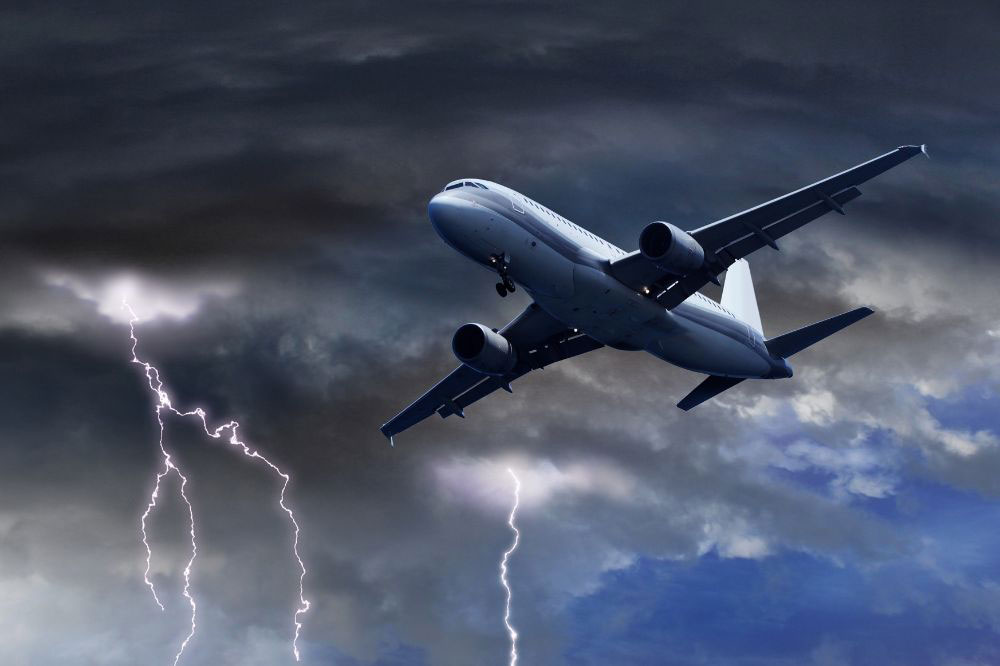
For anyone who has ever watched their drink vibrate off the tray table somewhere over the Rockies, a new report from turbulence monitoring service Turbli is equal parts vindicating and unsettling.
The data is in for 2025, and it points firmly at one corner of the country: the mountainous West.
The Roughest Ride in America
The single most turbulent flight route in all of North America is the short hop between Denver International Airport (DEN) and Jackson Hole Airport (JAC) in Wyoming.
It covers just over 400 miles, but what it lacks in distance it more than makes up for in drama. The route recorded an eddy dissipation rate of 18.18, one of the highest turbulence scores anywhere in the country.
The geography tells most of the story. Flights leaving Denver must negotiate the city’s mountainous terrain before threading into Jackson Hole, where the airport sits surrounded by the Teton Range inside Grand Teton National Park.
According to the National Park Service, it is the only commercial airport in the United States located within a national park, and getting in and out of it is genuinely not a smooth experience.
Denver Keeps Coming Back
Denver does not just top the list. It appears on five of the ten most turbulent routes in the entire country, making it the single most consequential airport for nervous flyers.
The second most turbulent route connects Albuquerque International Sunport (ABQ) in New Mexico to Denver, matching the same eddy dissipation rate as the DEN-JAC run.
Jackson Hole to Salt Lake City comes in third, followed by Denver to Salt Lake City in fourth, and Bozeman Yellowstone International Airport (BZN) in Montana down to Denver rounding out the top five.
Why the Shaking Happens
Turbli’s methodology centers on eddy dissipation rates, a measurement system that sorts turbulence into five levels: light, moderate, moderate/severe, severe, and extreme.
The Federal Aviation Administration describes turbulence as air movement generated by atmospheric pressure, jet streams, air currents around mountains, weather fronts, and thunderstorms.
Mountains are a major factor, which goes a long way toward explaining why so many of the worst-rated routes cut through the American West.
It is also worth knowing that turbulence is becoming more frequent as extreme weather events increase.
The upside is that turbulence reporting technology has improved alongside that trend, giving flight crews better tools to identify and route around the roughest air before passengers even notice.
What the Risk Actually Is
Turbulence itself rarely causes structural problems for an aircraft. The real danger, as the FAA is direct about, comes from passengers who are not wearing their seat belts.
The agency recommends keeping a seat belt fastened whenever seated, regardless of whether the overhead sign is lit, and staying alert to crew announcements.
As the FAA notes in its traveler guidance, rough air can throw an unbuckled passenger from their seat without any warning at all.
The Full Ranking
Here are the ten most turbulent flight routes in North America according to Turbli’s 2025 data:
- Denver (DEN) to Jackson Hole (JAC)
- Albuquerque (ABQ) to Denver (DEN)
- Jackson Hole (JAC) to Salt Lake City (SLC)
- Denver (DEN) to Salt Lake City (SLC)
- Bozeman (BZN) to Denver (DEN)
- Boise (BOI) to Bozeman (BZN)
- Bozeman (BZN) to Salt Lake City (SLC)
- Albuquerque (ABQ) to Salt Lake City (SLC)
- Denver (DEN) to Las Vegas Harry Reid International (LAS)
- Las Vegas (LAS) to Salt Lake City (SLC)
If any of these routes appear on an upcoming travel itinerary, the seat belt is worth fastening well before the fasten sign comes on. And perhaps skip the hot coffee for that one.