
A seat at the front of the plane is closer than most travelers think, and the gap between knowing and not knowing is worth thousands of dollars. These are the strategies the airlines would rather stay quiet.
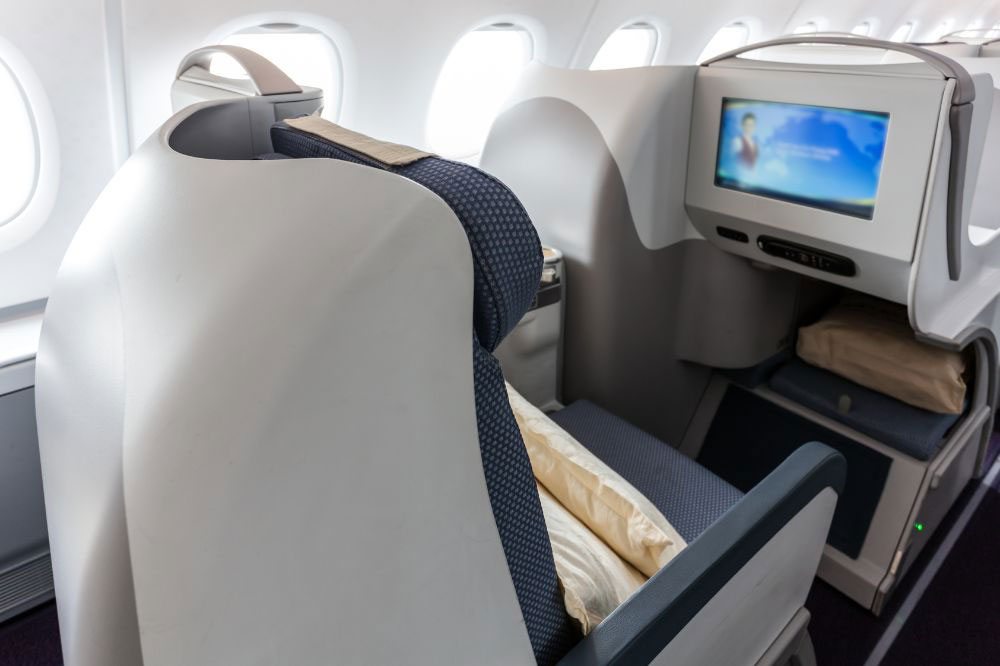
Flying business class is widely assumed to be the exclusive domain of corporate expense accounts and the genuinely wealthy. That assumption is costing regular travelers a lot of money and a lot of uncomfortable overnight flights.
The reality is that there is an entire ecosystem of deals, programs, bidding tools, and insider strategies that puts lie-flat beds and lounge access within reach for people who book smart.
It does require some flexibility, some planning, and occasionally the willingness to pivot at the last minute. But the payoff, measured in sleep, comfort, and sanity on a 10-hour flight, is hard to argue with.
Here is exactly how to make it happen.
Bid for an Upgrade
More than 50 airlines worldwide run bidding programs that allow economy passengers to place an offer on available business class seats. The participating carriers include Air Canada, Lufthansa, Qantas, Virgin Atlantic, and LATAM, among others.
Most of these programs operate through a company called Plusgrade. The process is simple: pull up the booking on the airline’s bidding page, enter the confirmation number, and submit an offer.
Airlines typically set a floor of around $300, which is the minimum entry point for any bid. The credit card on file is not charged unless the bid is accepted, and travelers find out by departure day at the latest.
One thing worth knowing before bidding: the offer applies per flight segment, not to the round trip as a whole. Anyone with a connecting itinerary will need to place a separate bid for each leg.
Use Credit Card Points and Miles
This is, without question, the most accessible route into business class for travelers who are not already wealthy.
Travel rewards credit cards accumulate points through everyday spending, and those points can be transferred to airline loyalty programs where business class redemptions often represent remarkable value.
Travel expert Katy Nastro from Going puts it plainly: points and miles are how regular people fly at the front of the plane.
Her team found a business class deal to Spain for 54,000 points round-trip, compared to the standard redemption rate of more than 150,000 points. The cash equivalent for the same seat was well over $3,000.
Kyle Potter, executive editor at Thrifty Traveler, points out that business class is where miles genuinely outperform cash.
Some recent standout deals include Iberia business class from Boston, New York, Washington D.C., or Chicago to Madrid for as low as 34,000 miles each way, and TAP Air Portugal business class from JFK to Lisbon for 35,000 miles one-way, booked through Avianca LifeMiles.
There is a catch worth understanding. Airlines have been moving toward dynamic pricing, which replaces fixed redemption charts and means peak travel periods now require significantly more points. Award seats are also increasingly being prioritized for cash-paying passengers.
Flexibility on travel dates and booking as far in advance as possible are the two biggest factors in making miles work.
Build Elite Status with an Airline
Frequent flyer status is the traditional path to complimentary upgrades, and it still delivers. Travel blogger Angel Trinh of Pennywise Traveler recently moved from basic economy to business class on a Miami to Bahamas flight entirely because of her American Airlines Platinum Pro status.
Status is earned by accumulating miles or points through flying, co-branded credit card spending, partner hotel stays, car rentals, and shopping portals.
Once a traveler crosses a specific threshold of miles and flight segments within a calendar year, they unlock a status tier. Airlines then prioritize their highest-status passengers when distributing complimentary upgrades to available business class seats.
The honest picture is that both United and Delta have raised their requirements considerably in recent years.
With more travelers willing to pay cash for premium cabins, fewer complimentary upgrades are reaching status holders than they once were. It remains a viable path, especially with carriers where competition is less intense, but it takes real commitment to make it pay off.
Consider Business Class-Lite Alternatives
Not all premium cabins are built the same, and some of the strongest value in air travel right now comes from carriers that sit somewhere between standard economy and full business class.
Icelandair Saga Class offers significantly wider seats with more legroom, lounge access in Reykjavik, and fares well below the typical business class price point. Norse Atlantic Premium is a solid choice for travelers who want more space and recline without paying for all the extras.
German carrier Condor offers transatlantic business class with lie-flat seats starting around $2,000 round-trip, undercutting most legacy carrier pricing by a meaningful margin.
KLM’s Premium Comfort cabin sits above premium economy, with larger seats, more recline, an adjustable leg rest, and meals served on actual dishware rather than a plastic tray.
None of these match Qatar Qsuites or a Singapore Airlines private suite. But for long-haul routes where the goal is simply arriving rested, they deserve serious consideration.
Use Hub Airports to Your Advantage
This strategy is widely underused. Bigger airports attract more competition between airlines, which pulls premium cabin prices down. Smaller regional airports simply cannot offer the same volume of routes or the same price pressure.
The math often works out like this: a direct business class flight from Pittsburgh to London might run $3,600.
A cheap connecting flight from Pittsburgh to Washington D.C., combined with a separate D.C.-to-London business class ticket, could come in over a thousand dollars cheaper even after accounting for both fares.
Nastro’s advice is straightforward: do not automatically search from the nearest airport. A short drive or inexpensive regional flight to a major hub consistently opens up better options and lower pricing on premium seats.
Volunteer to Be Bumped to a Later Flight
Airlines regularly sell more tickets than available seats, and when a flight is oversold, gate agents need volunteers willing to accept a later departure.
Instead of bumping passengers involuntarily, agents are authorized to offer compensation in the form of travel vouchers, meal credits, cash, miles, hotel stays, and sometimes a seat in a higher cabin on the next available flight.
For travelers with flexible schedules, this is worth pursuing actively.
Before approaching the gate, check the airline’s website for available business class seats on later departures to the same destination. Then ask politely, keeping in mind that agents managing an oversold flight are juggling a great deal at once.
There is no guarantee, and the right conditions have to be in place. But it costs nothing to ask.
Sign Up for Flight Deal Alerts
Going offers a subscription newsletter with tiered membership levels.
The Elite tier sends business and first class deal alerts from an unlimited number of U.S. departure airports. Recent finds from the team have included Boston to the Netherlands for $1,999 round-trip and Los Angeles to Tokyo for $1,809 round-trip in business class.
Ashley Gets Around is another newsletter focused specifically on business class deals and mistake fares.
A mistake fare is exactly what it sounds like: an airline publishes the wrong price due to a currency conversion error, a missing fuel surcharge, or a pricing input mistake. These correct quickly, but the savings when they surface can be extraordinary.
Potter and a friend once flew Los Angeles to Ho Chi Minh City in business class for around $600 each on a mistake fare. More recently, he tracked down United Polaris business class from the U.S. to London for $899.
Secret Flying and Airfare Watchdog also publish mistake fares as they appear. Speed is everything with these. The window between an error going live and being corrected can be measured in hours.
Fly an All-Business-Class Airline
A small but growing category of boutique airlines sells business class seats as the only cabin on board, which lets them price well below what legacy carriers charge for the same product.
La Compagnie, a French carrier operating transatlantic routes, typically prices at roughly half what comparable airlines charge for business class. Beond, a Maldivian airline based in Dubai, serves travelers heading toward that region of the world.
The route networks are limited and schedules are narrower than those of major carriers. But for the destinations they do serve, the savings are real and the product is the genuine article.