
Every time you board a flight, you make a choice that most passengers never think about twice. What aviation experts and decades of crash data reveal about that choice will change how you book your next seat.
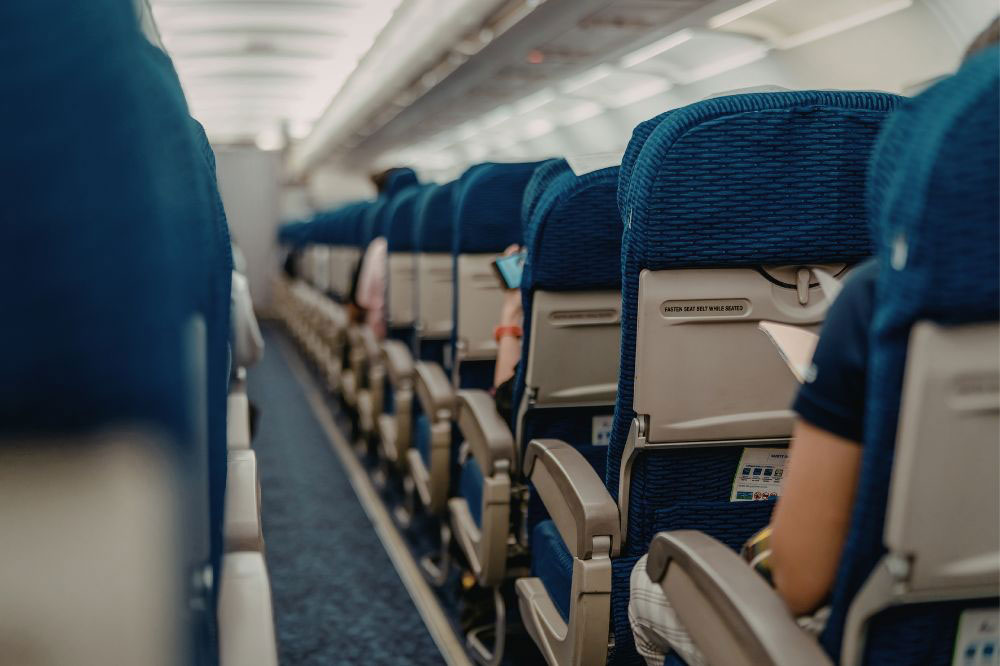
Every frequent flier has a preference. Window or aisle. Front or back. Exit row for the legroom.
But beneath those comfort-driven choices lies a question that aviation safety researchers have been quietly arguing about for years: does where you sit on a plane actually affect your chances of surviving a crash?
The answer is complicated, and it depends entirely on who you ask.
Flying is safer than most people believe
Before getting into seat positioning, it is worth grounding the conversation in reality. Air travel remains one of the safest ways to travel anywhere in the world.
In 2025 alone, nearly 10 billion people flew on more than 100 million flights. The International Air Transport Association’s 2025 Annual Safety Report found that the all-accident rate worked out to roughly one accident per every 0.76 million flights.
As of mid-2026, there had been no mass-casualty crashes involving large commercial passenger aircraft.
Flight anxiety is real, and it is understandable. But statistically, the odds are overwhelmingly in every passenger’s favor before they even sit down.
What the data actually says about rear seats
The most widely cited research on this topic comes from a 2015 investigation by Time magazine.
Reporters analyzed 35 years of Federal Aviation Administration accident and incident data, narrowing their focus to 17 crashes between 1985 and 2000 where survivor and seating information was both available and reliable.
Their findings pointed clearly toward the back of the plane.
Rear seats showed a fatality rate of 32 percent, compared to 39 percent in the middle of the plane and 38 percent at the front.
When they drilled down further into row position, rear middle seats came out with the lowest fatality rate of all, at just 28 percent. Aisle seats in the middle section fared the worst, at 44 percent.
Those numbers sound definitive. But the researchers themselves were quick to add caveats, noting that survival in several of the crashes they examined appeared almost random, with no clear pattern linking seat position to outcome.
Why accident type changes everything
Aviation experts are largely in agreement on one thing: the type of crash matters far more than where anyone is sitting.
Randy Klatt is a former U.S. Navy and commercial pilot and current flight safety officer for the Foundation for Aviation Safety in Washington, D.C.
He confirms that rear seats do carry a statistical advantage, largely due to the physics of how most crashes unfold. But he is also clear about the limits of that data.
“The kind of crash is the real determining factor,” Klatt says. “A high-speed vertical impact or in-flight breakup or midair collision makes seat selection irrelevant.”
Eckhard Jann, a retired safety manager and pilot for German travel group TUI who now works as a safety and crisis management consultant, echoes that view.
While he acknowledges the evidence in favor of rear rows, he points out that no two aviation accidents are alike, and the cause of each incident shapes every aspect of what follows.
Professor Doug Drury, recently retired head of aviation at Central Queensland University in Australia, put it plainly in a piece for The Conversation: the type of emergency dictates survivability.
Why an exit row seat might be smarter than a rear seat
Klatt raises a point that often gets lost in the seat-safety debate. The vast majority of aviation incidents never reach the level of a crash at all.
Ground evacuations, emergency landings, smoke in the cabin: these are far more common events, and for those situations, proximity to an exit matters considerably more than being in row 40.
“An aisle seat close to an exit is the smart move,” he says. “Since ground evacuations are more common than actual crashes, it makes sense to pick a seat from which one can get out of the airplane quickly.”
For passengers physically capable of operating the emergency exit door, those seats represent a real advantage. But Klatt is equally emphatic about the behaviors that matter regardless of where someone sits.
Listen to the crew. Know where the nearest exit is. Leave everything behind.
The case against reading too much into seat studies
Not everyone in the aviation safety world is convinced that seat position studies tell us anything meaningful at all.
Christine Negroni has spent years covering aviation disasters as both a safety specialist and a journalist.
She has written two books on the subject, Deadly Departure and The Crash Detectives, and she is skeptical of the conclusions many passengers draw from existing research.
“The few studies that have been done are flawed for several reasons,” she says. “They focus only on fatal crashes, which is just 5 percent of airline accidents. Since those studies fail to represent the whole, I do not find them meaningful.”
Negroni argues that fixating on seat position creates a dangerously narrow picture of what actually determines whether someone survives an aviation incident.
The location of the initial impact, whether safety equipment functioned correctly, the condition of the crew, the dangers outside the aircraft: all of these variables interact in ways that a simple seat map cannot capture.
She also points out that the studies tracking fatalities by seat assignment cannot always confirm whether a passenger died in that seat, or elsewhere during the crash or evacuation.
Seat belts matter more than seat location
Negroni points to the 2013 crash of Asiana Airlines Flight 214 in San Francisco as a case that illustrates how quickly the variables multiply.
A Boeing 777 arriving from South Korea clipped the seawall at the end of the runway and broke apart.
Three passengers died. Two of them were not wearing their seat belts and were thrown from the plane when it fractured. The third was wearing a belt, but the seat itself detached from its support structure and collapsed.
The National Transportation Safety Board accident report identified all three fatalities by their seat assignments: 42A, 41E, and 41B. All three were in the rear of the aircraft, the section that the Time data would have identified as statistically the safest.
Negroni’s conclusion from decades of reporting on crashes is stark. “The safest seat on an airplane is any seat that you are sitting in and buckled into.”
She has lived through two emergency landings herself, both serious enough to require foam on the runway and ambulances on standby.
Those experiences reinforced her belief that most airplane incidents are survivable, and that passenger behavior before, during, and after the event is far more likely to affect the outcome than row selection.
“Since the vast majority of air accidents are survivable, this means that the actions that passengers take before, during, and after the event are far more likely to have actual impact on their safety than where on the plane they are located.”
Which airlines are ranked safest
Seat position is one piece of the picture. The airline itself is another.
AirlineRatings.com, an Australian aviation safety and product review site, has published annual safety rankings since 2012.
Its methodology tracks more than 300 airlines worldwide, assessing accident history from the past five years, serious incidents from the past two, public and private safety audits, and fleet age.
Its 2025 rankings covered 25 full-service airlines and 25 low-cost carriers. Five U.S. carriers made the cut across both categories.
What actually keeps passengers safe
The honest takeaway from aviation experts is not a specific row number or seat letter. It is a set of behaviors that apply wherever someone sits.
Buckle up before the plane moves and keep the belt fastened throughout the flight. Pay attention during the safety demonstration, even on routes flown a hundred times before.
Count the rows to the nearest exit when boarding, because smoke in a cabin can make it impossible to see. Follow crew instructions without hesitation.
Those are the factors that aviation safety researchers consistently point to as the ones with real, measurable impact.
Seat location, they generally agree, is one small and largely unpredictable variable in a much more complex equation. The back of the plane may carry a modest statistical edge.
But the passenger who is belted in, paying attention, and ready to move will almost always be better positioned than one who picked the right row but tuned everything else out.