
Everyone arrives in Cusco thinking it’s just the place you sleep before catching the train to Machu Picchu, but this ancient city has a way of completely stealing the show if you let it. These two perfectly planned days will not only help you acclimatize to the altitude, but they’ll also introduce you to ruins, markets, and experiences that might just end up being your favorite memories from Peru.


Planning your 2 day Cusco itinerary?
You’re in the right place because I lived in Peru for three months and have travelled through South America extensively and I can help you plan the perfect 2 days in Cusco.
Known as the gateway to Machu Picchu, spending 2 days in Cusco is the perfect way to acclimatise to the high altitude so you can avoid altitude sickness, before undoubtedly visiting one of the seven wonders of the world.


And, as it’s a surprisingly large city, there are plenty of things to see and do to keep you busy.
If you’re scratching your head at where to start, look no further than this perfect Cusco itinerary.
Table of Contents
Where to stay in Cusco
Historic Centre
Staying in the historic centre is a great choice when it comes to choosing where to stay in Cusco. Specifically, you’ll want to stay somewhere close to the Plaza de Armas – the focal point of the city centre.

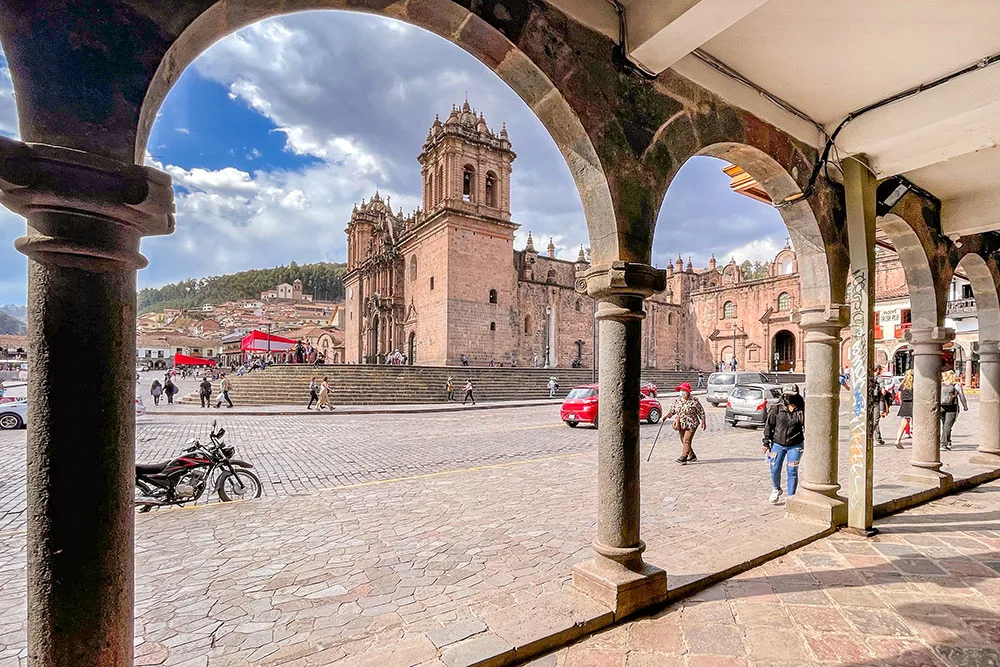
Staying here will mean that you’ll be surrounded by all of the activities and atmosphere, with plenty of restaurants and cafes within close proximity – something which you’ll be grateful for since walking around at altitude is no mean feat!
The accommodation prices in the historic centre are very competitive, and so you’ll usually be able to find yourself a good deal here.
> Book one of the best hotels in Cusco Historic Centre
San Blas
San Blas is a quirky neighbourhood that has narrow cobbled streets, heaps of independent stores and even more charming restaurants and cafes with epic views over the city.


You’ll find a strong vegan scene here and a hipster vibe. However, since the location is higher up than the historic centre, you’ll need to be prepared for a few breathless walks to and from the main plaza.
Whether you’re looking to stay in a luxurious spa hotel or a cheap and cheerful hostel, you’ll certainly find something special on the hillside of San Blas.
> Book one of the best places to stay in San Blas
Day 1 – Historic Centre and San Blas
Stop 1. Historic centre
When you first arrive in Cusco, you’ll need to take some time to adjust to the altitude and so the only thing that you should be doing is walking around the city very slowly.

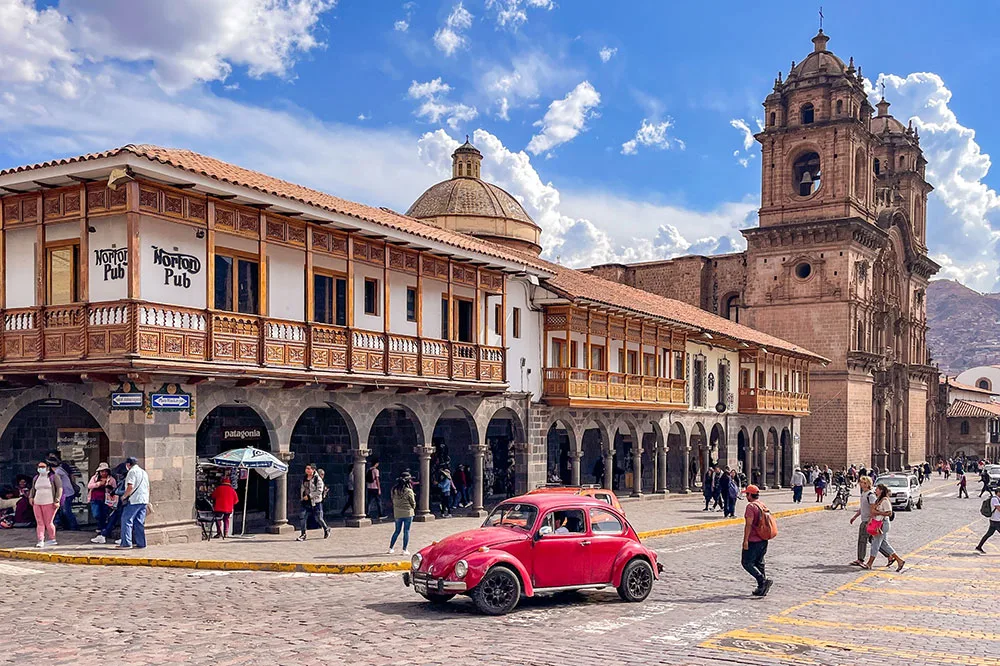
Whether you are on your way to walk the Inca Trail to Machu Picchu or not, this is the perfect way to spend the first day of your Cusco itinerary.
Seeing the incredible historical sights on offer and wandering the city streets, on a walking tour with a local guide or independently, is exactly what you would want to be doing anyway – regardless of the altitude.
The best place to start is the Plaza de Armas. There is plenty of space to relax and enjoy the hustle and bustle of the city here, as well as admire two of the most prominent landmarks of the city: Cusco Cathedral and the Church of the Society of Jesus.


It’s also possible to venture inside both of these sites and what you’ll see is truly magnificent. However, there are strictly no photos allowed and you’ll need to consider the opening times which vary depending on the day.
Before moving to San Pedro Market, I’d highly recommend stopping for an artisan ice cream in the shop below Cafe Plaza on the corner of Portal del Comercio.
I can guarantee that they’ll serve you up some of the best ice cream that you’ll have ever tasted – particularly if you go for the flavour ‘cherimoya’ – a Peruvian fruit also known as custard apple!


Once you arrive at San Pedro Market, there is plenty to explore. It’s the biggest market in Cusco and you’ll find tons of hand-made garments being created on the spot, plenty of local fresh produce and oodles of Peruvian souvenirs waiting to be bought.
Next up is the Twelve Angled Stone – a significant piece of the puzzle in Incan history, as it belonged to the Inca Palace.


This is merely a stop on the way to Saqsaywaman, but none-the-less, it’s an important historical artefact that many tourists see as a non-negotiable thing to visit during their 2 days in Cusco.
After taking an obligatory picture with the stone, you now have two choices: begin the hike to Saqsaywaman or take a taxi. Depending on how you’re coping with the altitude will likely determine your choice.


Regardless of your decision, once you arrive at Saqsaywaman you’ll be astonished. These incredible ancient ruins previously belonged to an Inca Fortress and date back to the 15th century.
In some way, you could see this site as a teaser of what’s to come at Machu Picchu, as the style of the ruins is fairly similar – although, of course, they don’t have anywhere near the same incredible landscape.
Other places to visit in the historic centre
Whilst I highly recommend following this Cusco itinerary as close as you possibly can, if there’s anything that doesn’t sound like your cup of tea or you feel like you can squeeze in a few more things to do, then don’t worry, there are more options.


1. Inca Museum: A great place to visit to get a head start on building your knowledge for your trip to Machu Picchu. It’s filled with interesting pottery, sculptures and statues and it can be found behind the Cusco Cathedral.
Entrance fee is just 20 soles and it’s a great way to spend an hour learning about the Andean culture and history


2. Treat yourself to a massage: If you’re looking for something more relaxing, then opting for a massage may be more up your alley.
You certainly won’t be short of offers as you wander the streets of Cusco, with many locals trying to grab your attention and sell you a massage for as little as 20 soles. With these prices it’s hard to say no and you’ll be surprised at how good these massages actually are.
In fact, I know people who couldn’t resist getting one of these massages every single day that they were in Cusco!
Tours in the historic centre
Although all of the sites that I’ve mentioned so far can be visited independently, it’s also possible to join a walking tour of the city as well as a guided tour of Saqsaywaman.
By doing so, you will no doubt learn a lot more about the area and have the opportunity to ask any burning questions that you may have about the fascinating history of the Incas.
> Book a combined Cusco and Saqsaywaman walking tour
If you’re really struggling with the altitude or you want to save every ounce of energy for your trip to the UNESCO World Heritage Site of Machu Picchu, then there is also a bus tour of the city which may be more suitable.
> Book an open bus tour of Cusco here
Where to eat in Cusco Historic Centre
Peru is well-known for holding the title for the country with the best food in South America and so it’s no surprise that there are plenty of tantalisingly great places to eat. And Cusco is no exception.


From Peruvian cuisine to more westernised healthy eats, you’ll be spoilt for choice in Cusco. Below are some recommended places to try during your trip:
- Qura – delicious acai and poke bowls for every taste
- Organika – local restaurant specialising in healthy food
- Incanto – Italian- Peruvian cuisine
- Ceviche Seafood Kitchen – elegant restaurant serving food in a minimalistic style
Stop 2. San Blas
San Blas is known as the artistic neighbourhood in Cusco and although it’s much quieter than the historic centre, it’s filled with dozens of hidden gems.
If visiting Saqsaywaman was the last thing you did, then you’ll be pleased to know that it’s a leisurely downhill walk to San Blas.


Your first stop will be the Sapatiana Aqueduct. It’s not very often that you see an aqueduct in the city and this place has become quite the hotspot, so you’ll want to avoid weekends if you can.
You’ll find locals playing music at the entrance, before reaching the steps that descend down and allow you to walk through the water.
The short trail leads to an ancient bridge with steps where the water flows, making for the perfect picture.


The second stop is Mirador de San Blas and along the way, you’ll wander along narrow streets filled with white-washed buildings, climb wonky steps and pass many independent boutique stores selling gorgeous garments.
Upon arrival at the mirador, there will no-doubt be some locals playing instruments, selling souvenirs and offering you their local recommendations of places to eat in the neighbourhood.
The views from the mirador are undeniably spectacular and certainly one of the best things to do in Cusco.


Next up is San Blas Market which is essentially a miniature version of San Pedro Market. However, this place is far less chaotic and well-worth stopping at for an afternoon snack or something to drink.
I’d highly recommend one of the fruit juices on offer here – particularly the Lucuma juice. If you’re not familiar with the lucuma fruit then your mind will be blown when you try this.
Combined with milk and a little bit of sugar, it tastes exactly like a caramel milkshake and it’s absolutely divine.


All that’s left to do in San Blas is make your way back down to the historic centre. In doing so, you’ll continue your journey through cobbled streets, passing many incredible street-art murals, charming art galleries and hippy yoga studios.
Other places to visit in San Blas
1. San Blas Square Market: If you happen to be visiting Cusco at the right time, you’ll also find that San Blas Square has a market most days of the week.


2. Templo de San Blas: You’ll also find Templo de San Blas or San Blas Church, a small temple that’s sweet to visit if you have a little bit of extra free time on your hands.
Tours in San Blas
You won’t find any tours which leave from San Blas, however, you will find that many of the Cusco walking tours also cover this neighbourhood.
Where to eat in San Blas
Given its hillside location, San Blas is home to some of the best places to eat in Cusco with a view.


Some of the best spots are:
- Aura Restobar – great terrace bar and restaurant
- ViewHouse Restobar – stunning views over the city of Cusco
- Cabin and Garden – restaurant set in the middle of nature
Day 2 – Sacred Valley: Ollantaytambo, Urubamba, Moray and Maras
On the second day of your Cusco itinerary, you’ll be exploring Ollantaytambo, Urubamba, Moray and Maras – a selection of towns and sites which make up what’s known as the Sacred Valley of the Incas.


Each location holds important significance to the Sacred Valley and offers unique and incredible sites worth visiting.
Whilst the list of towns and sites goes beyond this list, if you’re exploring independently then these are the ones that I’d recommend visiting.
The best way to explore the Sacred Valley is on a guided tour or hire a driver for a private tour. The latter is more expensive, however, it will offer you a lot more flexibility.


It can, however, be explored independently, you’ll just need to make use of the Collectivo buses and you may take longer to get from site to site.
Either way, you’ll need to purchase a ‘boleto turistico’ – a ticket that includes entrance to all of the sites across the Sacred Valley. You’ll be able to purchase this at any of the sites and use it for the duration of the day.
Stop 1. Ollantaytambo
If travelling independently, your first stop should be Ollantaytambo – the gateway town to Machu Picchu and where you’ll find the train station from where you’ll depart to the magical site.


It was here that the famous Battle of Ollantaytambo took place, where Manco Inca fought the Spanish conquistadors.
It’s also home to some important ruins, including the Pinkuylluna archaeological site and Ollantaytambo Sanctuary – both of which are equally impressive to explore.
However, if you’re looking for something less strenuous, then simply strolling around the markets in Ollantaytambo is also great and a lot of the souvenirs on offer here are hand-made right before your eyes.
Plus, you can’t possibly leave Peru without an alpaca wool jumper!
Stop 2. Urubamba
Only half an hour away from Ollantaytambo is Urubamba, the largest town in the Sacred Valley.


It’s best known for being situated on the Urubamba River where many visitors can enjoy rafting, and it’s also the town closest to the popular sites of Moray and Maras.
Stop 3. Moray
Moray is yet another incredibly impressive archaeological site that contains a number of terraces which the Incas previously used to simulate different climates in order to test out the best conditions for growing their crops.


Not only is the site something to be wowed by, but also the surrounding landscape. With rolling hills stretching for miles and snow capped mountains standing tall in the distance – it’s truly stunning.
Stop 4. Maras
Maras is best known for the unique salt flats which sprawl across the side of the mountain.


They’re believed to have been in action since around 200 AD, with locals still using the same harvesting processes today. This is a must-visit site in the Sacred Valley for anyone looking to capture incredible images which showcase the diverse landscape in Peru!
Other places to visit in the Sacred Valley
1. Chinchero: A typical village in the Peruvian Andes with one of the most interesting Inca archaeological sites, with a colonial church within its grounds, and surrounded by breathtaking mountain panoramas. If you’re here on a Sunday you’ll get to experience the vibrant Sunday Market.


2. Pisac: Don’t miss the spectacular Inca ruins, the amazing local market, and the weaving villages around this colonial small town.
Sacred Valley Tours
Whilst it’s possible to visit the Sacred Valley independently, the best way to explore the sites easily is with a tour, since most of the locations are at least an hour away from Cusco.
Some of the best tours include all or part of the Sacred Valley and include all transport and guided tours of each site. Here are some of the highest rated ones:
Where to eat in the Sacred Valley
Each town in the Sacred Valley has dozens of charming restaurants and cafes dotted around. There are some excellent cheap eats serving popular Peruvian dishes, as well as restaurants catering to the more westernised palate.
The Sacred Valley is also a great place to try guinea pigs if you are brave enough.


Some of the best restaurants in the Sacred Valley:
- Ollantaytambo Restaurant Pizzeria and Craft Bar, Ollantaytambo – a pizzeria with more than just pizza
- Mawic Restaurant, Ollantaytambo – famous for its delicious pisco sour
- Hawa Restaurant, Urubamba – part of the Marriott Luxury collection, they use locally-grown organic ingredients
- El Huacatay, Urubamba – a relaxed family-run restaurant in a colourful garden setting
If you have more than 2 days in Cusco
If you have more than 2 days in Cusco then there are plenty of day trips to consider joining.
The obvious one is, of course, a day tour to Machu Picchu. This is doable, although it would involve a very early morning start.


A more recommended option would be a tour with an overnight stay in Aguas Calientes (Machu Picchu Pueblo).
Here are some of the best Machu Picchu tours that include expert tour guides and train tickets:
> Book your day Machu Picchu tour from Cusco here


Besides Machu Picchu, a day trip to Rainbow Mountain is also extremely popular. At 5,200 metres above sea level, it’s a short yet challenging hike, but so worth it to enjoy one of the most unique landscapes on earth.
> Book your day trip from Cusco to Rainbow Mountain here


Visiting the mesmerising Humantay Lake on a day trip, or rafting down the rapids of Urubamba river are also epic things to do if you’ve got enough time. These are the most popular tours:
Cusco FAQs
Yes, 2 days in Cusco is enough if your main intention is to see the city and visit Machu Picchu. However, with so many other incredible things to do nearby, using Cusco as a base to explore the surrounding area is also a great idea if you have the time.
If you were to include trips like Rainbow Mountain and Humantay Lake, you’ll need to be aware that whilst the days are obviously incredible and a once-in-a-life-time experience, they are incredibly long and tiring.
I’d recommend factoring in a day’s rest in between each long day trip, which could mean spending up to 10 days in Cusco, although this much time may be too long.


The best time to visit Cusco is considered to be either May or October as the weather is great and the crowds are slightly lower. However, visiting between June and September will also mean you’ll benefit from excellent weather, but you should expect a level of visitors.
Yes, there is Uber in Cusco. The other platform used widely across Peru is In-Drive.


Cusco is considered a safe city and it’s unlikely that you’ll run into any problems whilst you’re there. That being said, it’s still a relatively large city and you should avoid wandering down quiet alleyways late at night and using common sense – just as you would in your own city.
Having lived in Miraflores and Barranco in Lima for the last 3 months and travelled to Cusco twice – including once as a solo female traveller – I have never felt unsafe here.
For any eventuality, it is always advisable to get travel insurance to make sure you are at least protected to a degree.
How to get to Cusco
You have two options when it comes to travelling to Cusco: plane or bus.
If you’re travelling by plane, you’ll need to fly into Lima before taking a short domestic flight to Cusco. I’d recommend doing this over taking the bus from Lima, since flights are fairly cheap and the bus journey takes a whopping 21-24 hours.
> Find great deals for flights to Cusco on Skyscanner
If you’re travelling from another city that’s closer to Cusco in Peru, then the bus may be a more suitable option.
The bus network across the country is one of the best in South America, with premium buses often containing sleeper beds to make the journey more comfortable.
Do you have any questions about this Cusco 2 day itinerary?
Let me know in the comments!
Like this post? Pin and save for later


