
The global travel economy just handed American travelers an extraordinary advantage, and most of them have no idea it exists. What’s happening right now in eight specific countries is the kind of opportunity that usually disappears before people think to act on it.

A convergence of favorable exchange rates and a relatively strong U.S. dollar has quietly transformed some of the world’s most spectacular destinations into places where the math simply does not make sense.
Multi-course dinners at quality restaurants, luxury hotel rooms, guided treks through remote mountain terrain, and private boat charters are all priced at levels that feel disconnected from reality.
This is not about budget travel. This is about getting a genuinely premium experience for a fraction of what it would cost almost anywhere else.
Here are eight countries where the dollar is working hardest right now.
Peru
Peru has always been remarkable, but right now it is one of the most compelling value destinations on earth. Quality restaurant meals run around $12.
Guided adventures into some of the most dramatic mountain terrain in South America come in at prices that would be considered laughable back home.
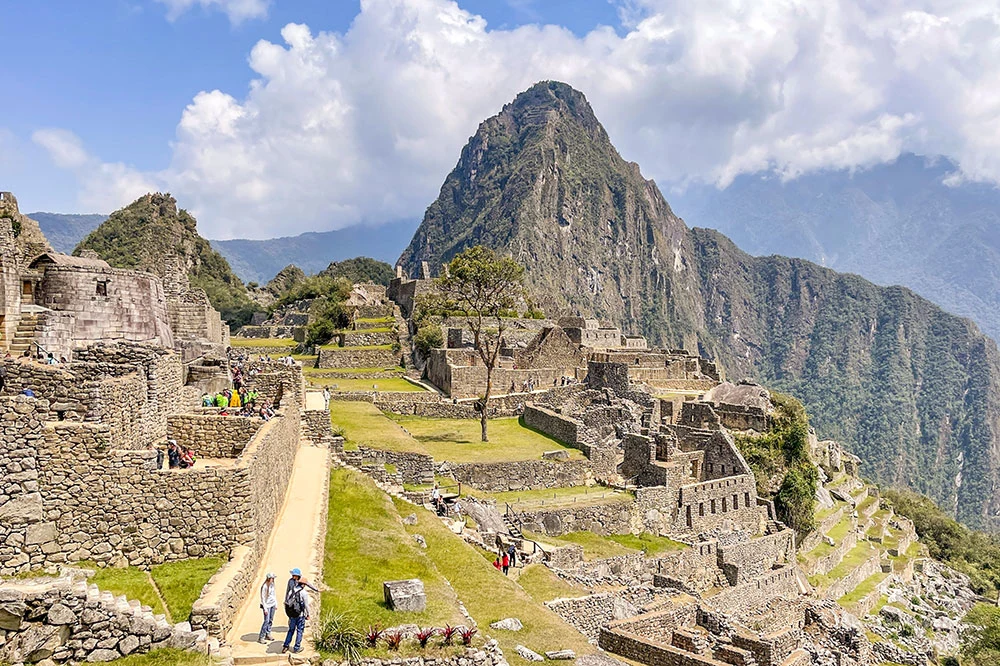
Machu Picchu is the obvious draw, but limiting a Peru trip to the Inca Trail circuit means missing most of what makes the country exceptional.
Huaraz, an Andean city sitting between two mountain ranges, serves as the launchpad for routes through the Cordillera Huayhuash and Cordillera Blanca, as well as stretches of the Great Inca Trail.
These are remote, breathtaking landscapes with a level of cultural immersion that the Machu Picchu crowds simply cannot offer.
In the south, Arequipa is picking up serious momentum as one of the standout destinations of 2026, with a food scene that has the industry paying close attention.
Where to stay: The Inkaterra Machu Picchu Pueblo Hotel places guests in 83 rustic adobe casitas spread across 12 acres of cloud forest beside the Vilcanota River. Daily guided walks move through habitat home to over 200 bird species and a remarkable range of native orchids.
Türkiye
Istanbul rewards visitors in almost every direction, and with Turkish Airlines offering free stopovers, it is more accessible than most travelers realize.
Hagia Sophia, the Blue Mosque, Topkapi Palace, a Bosphorus sunset cruise with Europe on one side and Asia on the other: that cruise runs around $70, and it is one of the more genuinely spectacular things a traveler can do anywhere in the world.
Summer visitors who venture beyond Istanbul to the Aegean and Mediterranean coasts will find that the value deepens further. Hiring a traditional wooden gulet for a multi-night sailing charter costs around $1,400 for a three-cabin boat over four nights.
Where to stay: The Peninsula Istanbul opened in 2024 on the Karaköy waterfront, spreading 177 rooms across three restored heritage buildings. Local craftspeople worked their skills into every surface, from marble to mother-of-pearl inlays.
North Macedonia
North Macedonia is one of the destinations most likely to break into mainstream travel consciousness over the next five years, but right now it remains refreshingly under the radar. For travelers willing to go before everyone else figures it out, that gap is the whole point.
The exchange rate sits at roughly 52 to 54 Macedonian denars to the dollar. A three-course dinner at a high-end restaurant lands around $25. Top-tier hotels run $120 to $200 per night.
Lake Ohrid draws most of the attention, and it earns it. But Mavrovo National Park offers something quieter and more atmospheric, with alpine landscapes, traditional villages, and the unforgettable visual of the half-submerged St. Nicholas Church rising from the water.
Where to stay: The Skopje Marriott Hotel sits directly on Macedonia Square, walking distance from the Old Bazaar and the Stone Bridge, with a full-service spa.
Japan
The yen has been running weak against the dollar for several years. As of mid-2026, one U.S. dollar converts to around 159 Japanese yen, a gap that transforms Japan from a notoriously expensive destination into a genuinely accessible one.
Ryokan stays, tasting menus, and guided cultural experiences are all within reach of budgets that would have struggled there a decade ago.
Tokyo, Kyoto, and the Kumano Kodo pilgrimage trail are the established draws. But rural Japan, particularly the Tohoku region in the north, is where the value gets even more pronounced and where connections with local people and centuries-old traditions feel most authentic.
Where to stay: Hoshinoya Tokyo is an 84-room urban ryokan in the Otemachi financial district where each floor operates like its own private inn, complete with shared tea areas stocked with Japanese snacks.
It is also the only hotel in Tokyo with an onsen fed by actual hot springs from 5,000 feet below street level.
Mexico
Mexico makes sense for American travelers on multiple levels simultaneously: short flight times from most U.S. cities, a strong dollar, and genuine variety across regions.
Mexico City alone is worth an extended trip. The neighborhoods of Roma, Condesa, and Reforma each offer their own mix of street food, design, and nightlife, and hotel options span every budget.
Guadalajara is drawing significant attention as a 2026 FIFA World Cup host city, and its food scene deserves far more international credit than it currently gets.
The Yucatán Peninsula delivers beaches alongside Maya archaeological sites. Oaxaca remains one of the most food-obsessed destinations in the entire Western Hemisphere.
Where to stay: Condesa DF in Mexico City delivers 40 well-designed rooms inside a 1928 French neoclassical mansion, with a rooftop terrace that taps directly into the city’s energy.
Vietnam
Vietnam has a long-standing reputation for affordability, and that reputation holds. Accommodation, food, and public transport are all priced in ways that bring the overall cost of a trip in well below what most travelers expect.
Da Nang is currently one of the most talked-about entry points into the country, sitting at the intersection of Vietnam’s coastline and its cultural interior.
Sapa in the north delivers serious trekking through rice terraces and minority village communities. Down south, Ninh Van Bay is the kind of beach destination that requires a second look to confirm it is real.
Where to stay: Six Senses Ninh Van Bay sits across the bay from Nha Trang, with 62 pool villas along the beachfront and hillside, accessible only by boat.
Argentina
Argentina works on two levels at once: a genuinely wide range of travel experiences, and an exchange rate (currently around 1,407 Argentine pesos to the dollar) that makes premium versions of those experiences dramatically more accessible.
Buenos Aires hotels with serious design credentials and strong service run between $200 and $350 per night. In Mendoza, vineyard stays with Andes views come in at similarly approachable rates.
Even Patagonia, historically one of Argentina’s more expensive regions, becomes more manageable with the dollar performing this well.
For something well off the standard tourist circuit, the Esteros del Iberá wetlands in the country’s northeast offer encounters with capybaras, caimans, and hundreds of bird species in near-total solitude.
Where to stay: Casa de Uco sits in the Uco Valley surrounded by its own working vineyard, with uninterrupted Andes views and a low-slung brutalist design built from concrete, glass, and natural materials. Rooms open directly onto the landscape.
South Africa
Johannesburg is a different and genuinely rewarding entry point into South Africa for travelers who want culture, food, and design before or after a wildlife experience.
The exchange rate hovers around 16 to 17 rand to the dollar, which means high-end hotels that would carry a heavy price tag in comparable cities elsewhere typically run $250 to $500 per night.
Pilanesberg National Park sits two to three hours from the city and offers Big Five game viewing without requiring a domestic flight. Dinokeng Game Reserve is close enough to Johannesburg that a safari functions as a realistic day trip.
Where to stay: The Park Hyatt Johannesburg, which opened in 2024 in the leafy Rosebank neighborhood, centers around a courtyard garden and pool, within walking distance of galleries and restaurants.
It maintains a residential, retreat-like atmosphere that most urban hotels work hard to manufacture and rarely achieve.