
Something big is changing the next time you take off your shoes at a U.S. airport. And the people most affected are only just finding out about it.
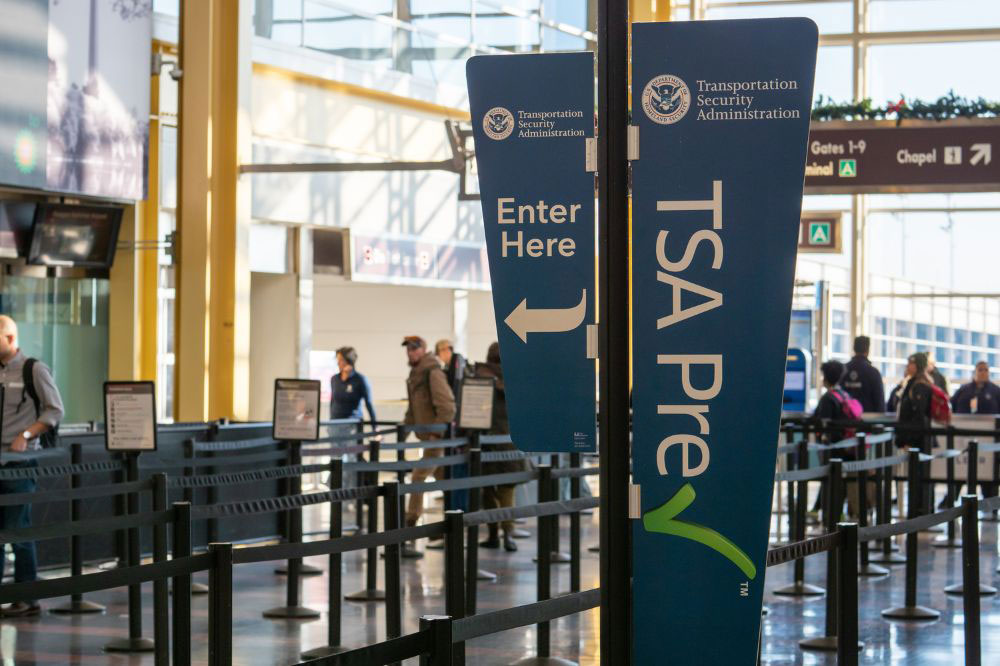
The Transportation Security Administration has launched a new program that could fundamentally change what airport security looks like across America. It is called TSA Gold+, and three airports have just signed on.
The questions it raises about safety standards, transparency, and who really controls what happens at the checkpoint, are ones every American traveler should be asking.
What is TSA Gold+?
TSA unveiled Gold+ in May as an expansion of its existing Screening Partnership Program (SPP), which currently contracts private companies to conduct passenger screening under TSA oversight at 20 U.S. airports.
The existing SPP model has been around for years. What makes Gold+ different is the scale of what private contractors can now control.
Under the traditional SPP model, TSA owns and procures screening equipment while contractors provide the workforce. With Gold+, contractors would manage both the workforce and the technology.
In short, private companies would not just be staffing the checkpoint. They would be choosing and running the equipment too, all while still technically operating under TSA standards.
The TSA says the model is intended to help airports modernize checkpoints more quickly while maintaining federal security standards.
The agency frames it as a way to move faster than the federal budgeting process typically allows, stating on its website that Gold+ “unlocks new revenue streams, empowers local decision-making, and accelerates the deployment of cutting-edge solutions nationwide.”
The three airports that just joined
Tampa International Airport (TPA), Charleston International Airport (CHS), and Des Moines International Airport (DSM) have been selected to participate in the program.
These are not the largest airports in the country, which is notable. The program appears to be starting with mid-sized hubs before any potential wider rollout.
The agency has not yet announced when travelers will begin seeing the full range of Gold+ screening technologies at participating airports. For now, the timeline remains unclear.
What this means if you are a traveler
One thing worth clarifying immediately: TSA Gold+ is not something passengers can sign up for. It is not a lane upgrade like TSA PreCheck or CLEAR.
It is a public-private partnership that airports can choose to opt into. Airports that opt in will install a tailored security screening service based on their needs and space, with support from the TSA and private vendors, at no additional cost to travelers.
The practical impact, however, could vary significantly depending on where you fly.
Scott Robinson, co-founder of Against Giants Labor Advocates, explained that because airports that opt in will have the flexibility to use technology and processes adapted to their own facilities, the experience for travelers may vary widely depending on the airport.
“Transitioning to frameworks that rely heavily on local or private capital risks creating a split, two-tier security system across the country,” he said.
“Passengers at smaller or less funded airports could face drastically different technology baselines and checkpoint efficiency compared to major hubs.”
That is a significant concern. A fragmented screening system where the experience at a small regional airport looks entirely different from a major hub is not a hypothetical. It is, according to critics, a likely outcome.
The labor groups sounding the alarm
Not everyone is on board. Some labor groups remain critical of the initiative, arguing that the TSA has not been sufficiently transparent about how the program was developed or how it could affect the federal screening workforce.
Against Giants Labor Advocates, a Norfolk, Virginia-based consultancy that represents TSA employees, contends that the initiative was never disclosed to the U.S. Congress or the TSA’s own workforce while the agency’s top officials developed and pitched the program.
The group was direct about how this landed with frontline officers.
“TSA officers worked without pay twice this fiscal year,” Against Giants said in a May post. “They showed up anyway. Now they are watching a privatization architecture being built around them that was never disclosed to Congress and was not communicated to them until last week.”
The American Federation of Government Employees, which represents TSA officers, has also opposed expanding privatized screening, arguing that security decisions should remain the responsibility of a federal workforce rather than private contractors.
The Boston experiment running alongside it
TSA is also testing other ways to modernize airport screening beyond Gold+.
The agency recently launched a remote security screening pilot serving select flights from Boston Logan International Airport, allowing eligible travelers to clear TSA screening at an off-site facility before heading to the airport.
Passengers on select flights out of Boston Logan can now go through a TSA screening outpost in Framingham, Massachusetts, avoiding the security process at Boston Logan altogether.
After clearing security at the Logan Airport Remote Terminal, shuttle buses transport passengers approximately 25 miles to the airport, where they are dropped off beyond the security checkpoint.
The service is initially available only for passengers on Delta Air Lines and JetBlue flights departing between 5:30 a.m. and 4 p.m. It can be booked up to 90 days in advance and costs $9, with free access for children traveling with a ticketed family member.
The bigger picture
TSA Gold+ is still in its early stages. Three airports does not a national rollout make. But the direction of travel is clear, and the debate it has sparked is worth paying attention to.
The core tension is straightforward. Supporters say private investment and local control will speed up modernization and create a better experience at the checkpoint. Critics say it risks fragmenting a system that, whatever its frustrations, has operated under consistent federal standards since 2001.
What happens at Tampa, Charleston, and Des Moines over the coming months will tell a much larger story about the future of airport security in the United States.