
Millions of Americans board long-haul flights every year and reach into their carry-ons for the same little pill. Doctors want them to know it is not doing what they think it is.
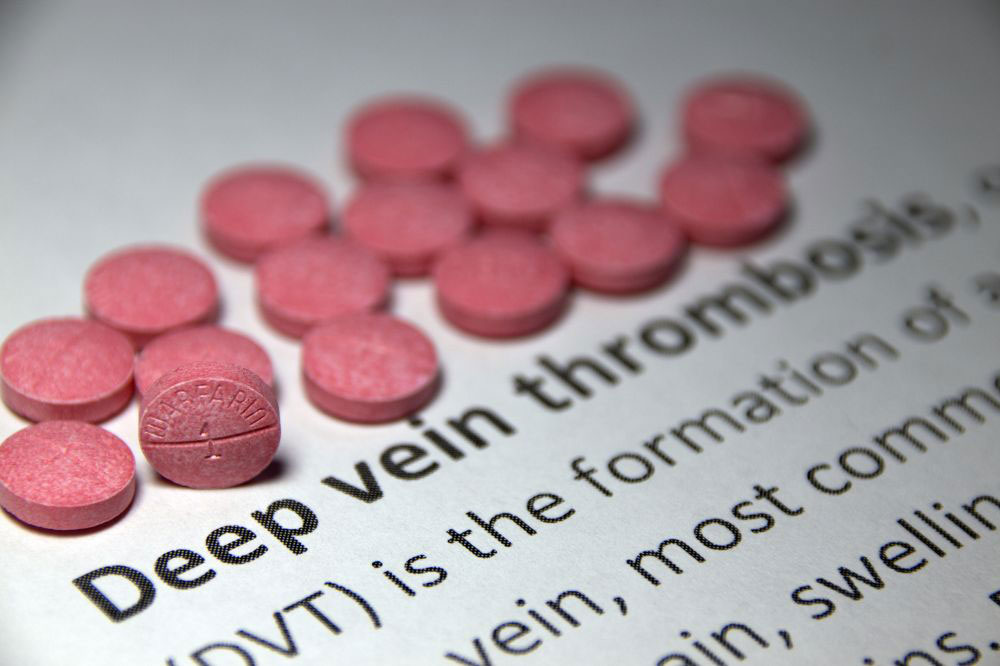
Every time a long flight stretches past the four-hour mark, the risk of a blood clot quietly rises. It sounds dramatic, but deep vein thrombosis (DVT) is a genuine medical concern for air travelers, not a rare worst-case scenario.
And somewhere along the way, the idea took hold that an aspirin before boarding would keep it at bay.
The problem? The evidence simply does not support it.
What actually happens to your blood on a long flight
Deep vein thrombosis refers to blood clots that typically form in the legs. The risk goes up the longer you sit still, and modern economy cabins are not helping anyone.
Harvard Medical School professor Dr. Lin Chen, former director of the Travel Medicine Center at Mount Auburn Hospital in Cambridge, Massachusetts, puts the threshold at four hours, with the more significant risk beginning at eight hours or longer.
The mechanics of why it happens come down to basic vascular biology.
Dr. Danielle R. Bajakian, a vascular surgeon at New York-Presbyterian/Columbia University Irving Medical Center, explains that veins rely heavily on movement to push blood back toward the heart, particularly the calf muscles.
When the body stays immobile for a long stretch, blood can pool in the veins.
There is also a pressure angle. Dr. Bajakian points to a theory that the differential air pressure inside the cabin leads to decreased oxygenation of blood, which may further increase clotting risk.
A January 2025 report from the American Heart Association supports this, noting that lower oxygen levels and reduced pressure at altitude contribute to DVT development.
The CDC also identifies individual risk factors, including obesity, being over 40, recent orthopedic surgery, pregnancy, increased estrogen from birth control or hormone replacement therapy, active cancer, and a prior history of DVT.
The clots themselves can be dangerous beyond the discomfort of a swollen leg. They can travel to the lungs and cause life-threatening blockages known as pulmonary embolisms.
Why aspirin is not the answer
The aspirin theory has been circulating for years, built on the drug’s well-known blood-thinning properties. But the medical consensus is firm.
The CDC does not recommend taking aspirin prior to a long flight for the purpose of preventing blood clots.
Dr. Alisa Wolberg, a pathology and laboratory medicine professor at the UNC School of Medicine and a figure linked to the American Society of Hematology, told AFAR there is no evidence that taking an aspirin before a flight will prevent DVT.
The UK’s National Health Service agrees, stating directly that aspirin has not been shown to be effective in reducing the risk of traveler’s thrombosis.
Both Dr. Bajakian and Dr. Chen say there is simply not enough data to suggest it makes any meaningful difference for fliers.
Dr. Bajakian notes that while some physicians may recommend it, the suggestion comes not from aviation or travel medicine research but from orthopedic literature, where aspirin has shown some promise in patients recovering from hip surgery.
That context does not translate to blood clot prevention at 35,000 feet.
Dr. Chen takes a slightly softer position. She does not actively encourage aspirin use, but she stops short of ruling it out entirely for patients who have no contraindications and no tolerance issues.
The guidelines do not support it, she says, but if a patient wants to take it with their doctor’s knowledge and no medical reason against it, she would not categorically refuse.
Prescription anticoagulants are a different matter. For travelers with higher risk factors, physicians may recommend injectable low molecular weight heparin or an oral alternative before a long flight, but only under direct medical supervision.
What actually works
The good news is that the most effective prevention strategies cost nothing and require no prescription.
Movement is the single most important factor. Dr. Bajakian recommends walking up and down the aisle roughly once an hour when it is safe to do so. When that is not possible, calf raises and leg stretches in the seat do the same job on a smaller scale.
Luggage strategy matters more than most people realize. Dr. Bajakian advises storing bags in the overhead bin rather than under the seat in front, specifically to maximize legroom and allow for more movement.
Hydration keeps blood from thickening, and avoiding sedatives that lock the body in place for hours is worth considering on very long routes.
Compression socks are where most of the clinical weight sits. The CDC, the American College of Chest Physicians, and the American Society of Hematology all recommend compression socks for travelers at higher risk of DVT.
They have also been shown more broadly to improve blood flow back to the heart. Dr. Bajakian extends the recommendation beyond high-risk travelers, saying she would suggest them for anyone facing a long flight.
The overall risk of DVT on a long flight remains fairly low, with Dr. Bajakian citing odds of roughly one in 5,000. But that is not an argument for ignoring it. It is an argument for understanding it clearly, so the response is actually proportionate to the risk.
Reaching for aspirin feels like doing something. The research says it mostly is not.