
The little blue book that once opened almost every door in the world is quietly losing its grip. And the reason why might surprise you.
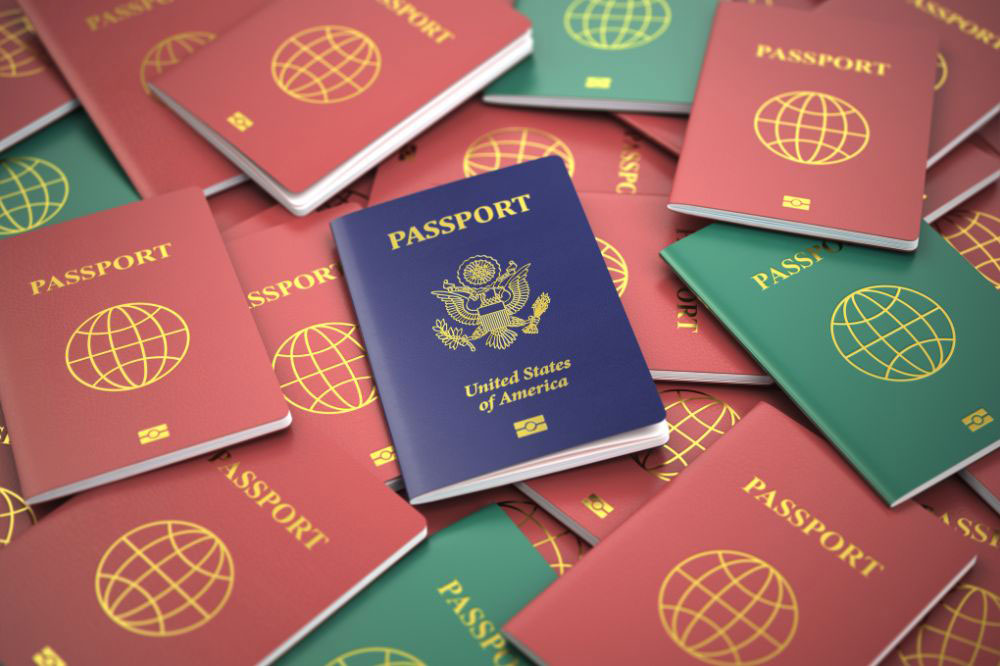
For decades, holding a US passport felt like holding a golden ticket. Americans could land almost anywhere on earth with barely a second glance from border officials. That era is fading fast, and the 2026 Henley Passport Index makes it impossible to ignore.
The Henley Passport Index ranks passports by the number of destinations their holders can access without obtaining a visa before arrival.
It is one of the most widely referenced measures of global travel freedom, and the 2026 results have delivered a wake-up call for American travelers.
The US Is Barely Hanging On to the Top 10
In 2025, for the first time since the Henley Passport Index launched over two decades ago, the US passport was not among the world’s 10 most powerful. This year, it crawled back to 10th place from 12th in 2025, giving Americans visa-free or visa-on-arrival entry to 180 destinations.
That sounds like a lot. And in absolute terms, it is. But context matters here.
Because multiple countries share the same score, there are 37 countries with more powerful passports than the United States. Eleven European countries alone are tied at fourth place. Eleven.
Who Is Actually at the Top?
Singapore holds the number one spot, with visa-free access to 192 of the 227 countries and territories tracked by Henley. Japan, the UAE, and South Korea tied for second with access to 188 destinations.
Sweden comes in at third with 187 destinations. A long list of European nations follows close behind.
The United States, a country that once led this index, now sits below Iceland, Liechtenstein, Lithuania, Croatia, Estonia, Australia, Canada, Malaysia, New Zealand, and a dozen others.
How Did the US Get Here?
The slide did not happen overnight, and it is not the result of one dramatic policy shift.
The US passport’s power ranking has been in steady decline for more than a decade. In 2014, the United States was ranked number one on the index, tied with Germany, the UK, Finland, and Sweden.
The decline stems from a rapidly increasing erosion of reciprocal travel agreements. While countries like Singapore and South Korea have aggressively pursued new visa-waiver partnerships, the United States has been making it more difficult and significantly more expensive to visit.
That approach has consequences.
“The declining strength of the US passport over the past decade is more than just a reshuffle in rankings,” said Christian H. Kaelin, chair of Henley & Partners. “It signals a fundamental shift in global mobility and soft power dynamics. Nations that embrace openness and cooperation are surging ahead, while those resting on past privilege are being left behind.”
The Reciprocity Problem
Passport strength is essentially a diplomatic bargain. Countries agree to let each other’s citizens travel freely, and when one side of that deal gets stingier, the other side notices.
In April 2025, Brazil withdrew visa-free access for US citizens due to lack of reciprocity. Destinations including Vietnam, Papua New Guinea, and China have expanded visa-free privileges for other nationalities but excluded the United States.
The USA itself grants visa-free entrance to only 46 nationalities, placing it at 74 out of 199 on Henley’s openness ranking.
That number tells its own story.
Politics Are Playing a Role
Annie Pforzheimer, a career US diplomat and senior fellow at the Center for New American Security, noted that the United States’ retreat is at least partially rooted in politics.
“Even before a second Trump presidency, US policy had turned inward,” she said. “That isolationist mindset is now being reflected in America’s loss of passport power.”
In December 2025, the US suspended visa issuance to travelers from 12 nations, introduced higher visa fees including a $250 visa integrity fee that began in October 2025, and implemented tougher screening for travelers hoping to enter the country.
Other nations took note. And some responded in kind.
A Remarkable Riser: The UAE
While the US has been sliding, one country has made a jaw-dropping climb in the other direction.
The United Arab Emirates has jumped from 38th place in 2016 to number two as of July 2026. That is not a small jump. That is a complete transformation of the country’s global standing, driven by years of aggressive diplomatic outreach and bilateral visa deals.
It is a useful reminder that passport power is not fixed. It is earned, and it can be lost.
The Full Picture: Strongest and Weakest
There is a wide gap between the access offered at the top versus the bottom of the Henley index.
Afghanistan sits last at 103rd place, with passport holders able to access just 23 destinations. Syria and Iraq rank only slightly higher, with access to 26 and 29 destinations respectively.
The gulf between those figures and Singapore’s 192 is staggering. It is a reminder of just how much the document you carry at birth shapes what the world looks like to you.
The 2026 Henley Passport Index Rankings
1. Singapore (192 destinations)
2. South Korea, Japan, and United Arab Emirates (188 destinations)
3. Sweden (187 destinations)
4. Belgium, Denmark, Finland, France, Germany, Ireland, Italy, Luxembourg, Netherlands, Norway, and Spain (186 destinations)
5. Austria, Greece, Malta, Portugal, and Switzerland (185 destinations)
6. Hungary, Poland, and the United Kingdom (184 destinations)
7. Australia, Canada, Czechia, Latvia, Malaysia, New Zealand, Slovakia, and Slovenia (183 destinations)
8. Croatia and Estonia (182 destinations)
9. Liechtenstein and Lithuania (181 destinations)
10. Iceland and the United States (180 destinations)
A Second Index Tells a Similar Story
Henley is not the only organization tracking this data. The Passport Index by Arton Capital takes into account the same 199 passports but excludes territories annexed to other countries and updates its rankings in real time.
It also considers factors such as visa requirements and a country’s standard of living as measured by the UN Development Programme Human Development Index.
On Arton’s ranking, the United Arab Emirates comes in first with access to 182 destinations, followed by France and Spain tied at second with 175. The United States places ninth with access to 168 destinations.
Two different methodologies. The same uncomfortable conclusion.
What This Means for American Travelers
This is not just an abstract geopolitical shift. It has real consequences for anyone planning an international trip with a US passport.
More destinations now require advance visas that previously did not. Application fees are rising. Processing times are longer. And the informal goodwill that once smoothed the way for Americans abroad is, in some corners of the world, harder to count on.
The ranking will keep shifting. Henley updates the index monthly to reflect changes to visa policies. But the broader trajectory over the past decade points in one clear direction, and reversing it will take more than wishful thinking.