
This Northern Spain itinerary by train takes you through some of the most underrated cities in the country. Find out how easy it is to travel around Northern Spain by train, and discover four off-the-beaten-path cities that will captivate you.
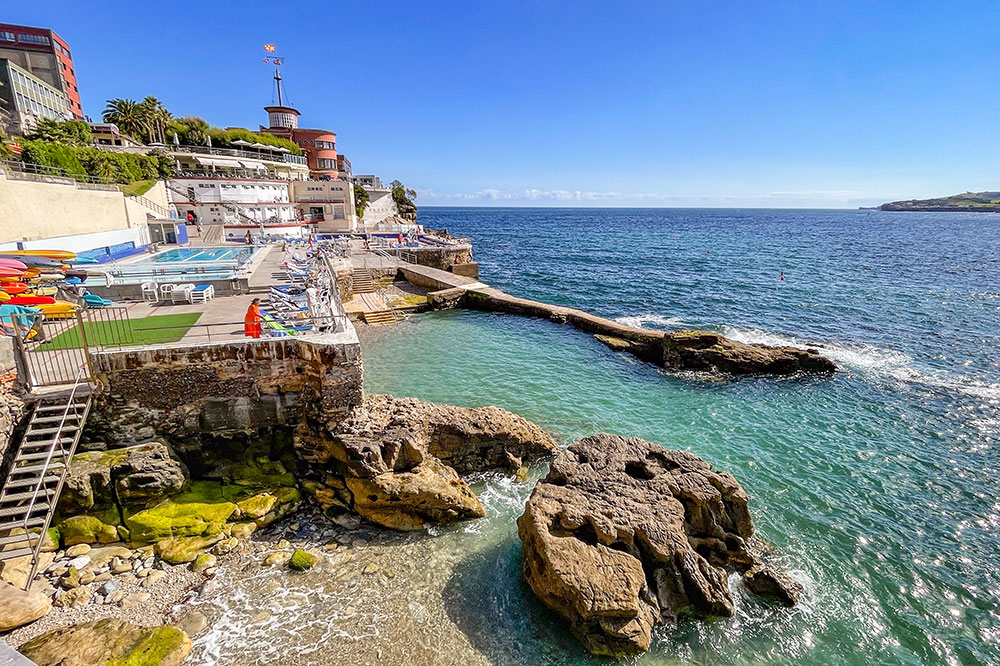
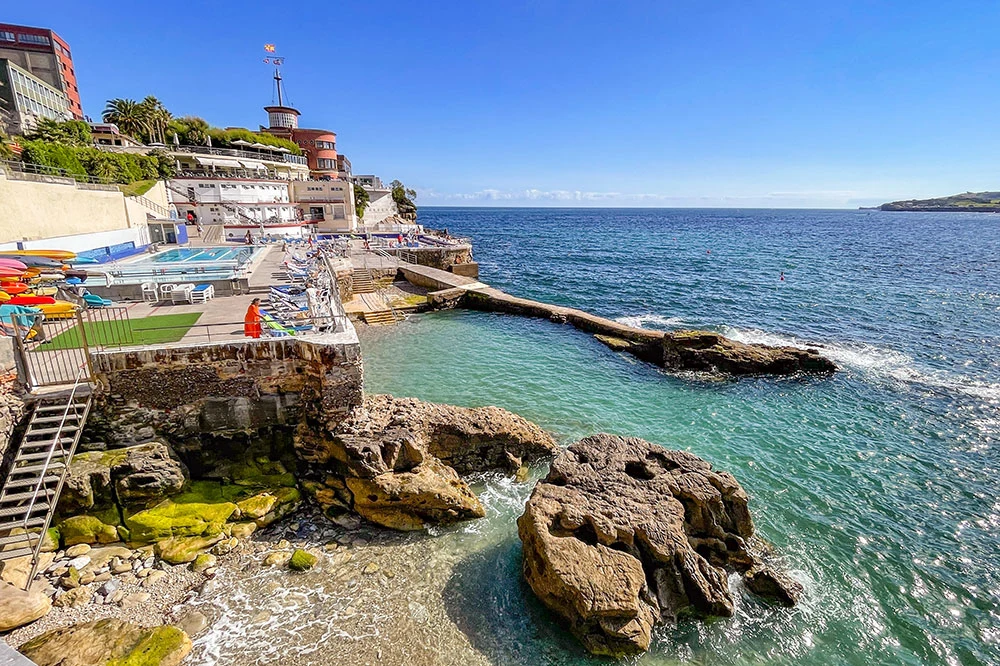
As Agatha Christie once said, “Trains are wonderful…. To travel by train is to see nature and human beings, towns and churches, and rivers, in fact, to see life.”
And I have to agree with her. Train travel is the most wonderful way to travel and you do indeed get to see the world around you in a way that you wouldn’t from any other mode of transport.
Not only is it a very romantic way to travel, but train travel is the most sustainable and eco-friendly way too. So there’s no better way to explore this lesser known area of Spain.


This 5-day Northern Spain itinerary by train includes a little bit of everything – from coastal cities and mountain views, to foodie destinations and architectural gems.
Whether you’re into history, culture or good hearty food, this North Spain itinerary has something for you.
5-day Northern Spain itinerary by train
Day 1 – Arrival in Asturias
Asturias is not the easiest region in Spain to get to, but with some of the best of Northern Spain on offer here, the extra effort is sure to be more than worth it.
The quickest way to get here is by flying into Asturias airport from London. Vueling is the only international airline that flies directly, but you can fly from all over the world via Madrid.
> Check the best deals on flights on Skyscanner here


If you would like to avoid flying, you could take a ferry from Plymouth to Santander. Once there, take the train from Santander to Gijón, where this 5-day Northern Spain itinerary by train starts.
Another alternative would be to take the ferry from Portsmouth to Bilbao. Getting from Bilbao to Gijón by train is not straight forward, so if your first port of call in Spain is Bilbao, I would recommend doing this itinerary in reverse and starting in Valladolid.
You can get to Valladolid by train in 3h 20mins.
> Check the best deals on train fares on Omio here
Day one of this North Spain itinerary is mostly a travel day, so take the opportunity to take it easy and settle in after you’ve arrived.


I stayed at the Abba Playa Gijón Hotel, which is right by the beach. If you stay here, you can take a leisurely walk along the promenade, and end the day with a cocktail or two on their rooftop bar. It has wonderful views over the bay.
> Book Abba Playa Gijón Hotel here
Day 2 – Gijón, ancient coastal city
Gijón is an industrial port with a history that goes back to Roman times. It is the biggest city in Asturias and the perfect place to start this itinerary of Northern Spain by train.
Discover Medieval Gijón
What started off as a small fishing village called Cimadevilla, is now a bustling city with a vibrant atmosphere. And the best way to get a feel for Gijón is to wander around both the Old Town and neighbouring areas.


The Old Town, still called Cimadevilla, was traditionally the fishermans’ quarter of Gijón. It’s located next to what once was the fishing port and is now the marina.
Cimadevilla’s picturesque streets and squares have been witness to historical events through the ages – from Roman times, through the Middle Ages, to current times.


During the day it feels like a sleepy village, but these seemingly quiet streets come alive at night, with people gathering around the many bars and restaurants in the area.
Enjoy the best views of the bay
As you walk through the Old Town, head to Cerro de Santa Catalina (St Catherine’s Hill). On your way to the top, you will find Batería de Santa Catalina (St Catherine’s Battery), a 19th century gunnery, now the home to a skate park.


On the highest point of the Cerro is Chillida’s enormous concrete sculpture ‘Elogio del Horizonte’ (Tribute to the Horizon). Its size and abstract shape have led it to be dubbed as ‘King Kong’s Toilet’ by humorous locals.


This striking monument has become the symbol of the city, and from here you can enjoy sweeping views of Gijón and San Lorenzo Bay.
As you walk down from the Cerro towards San Lorenzo Beach, make sure you stop at the Roman Baths, where you can learn how the Romans used public baths. Entry is free.


Explore the Modernist architecture
If you are a fan of European cafe culture, you must not miss Cafe Dindurra, Gijon’s answer to European traditional cafes. This elegant modernist cafe can easily rival cafes in Vienna or Paris, with its majestic columns.


Built at the start of the 20th century, Cafe Dindurra was built as part of an ambitious block, whose centre was a theatre. The cafe was designed to connect directly with the theatre. Jovellanos Theatre now occupies the centre of the block.
Modernist architecture is ubiquitous in Gijón. It reveals how forward thinking the city was at the start of the last century. And this attitude has carried forward with a city that has reinvented itself from being an industrial hub to being a city designed with its residents in mind.


Corrida Street is a pedestrianised street where these two aspects of Gijón’s character come together. Don’t forget to look up as you walk down the city’s liveliest street.
Where to stay in Gijón
Stay a second night at Abba Playa Gijón Hotel for convenience and comfort. Alternatively, here are a couple of highly rated options:
Train from Gijón to Oviedo
Gijón to Oviedo journey time – approximately 27 mins
Train type – ALVIA high-speed train
> Check prices and book your tickets here
Day 3 – Oviedo, city of bagpipes and cider
Founded in the 8th century, Oviedo was once the capital of the ancient Kingdom of Asturias. Although no longer a Kingdom, Asturias is a Spanish principality with a strong local identity, and Oviedo is still its capital today.
Hunt for statues that tell stories
As you arrive in Oviedo, you will see that it is very different from Gijón. Oviedo’s Old Town oozes charm in every corner, and you will want to wander aimlessly through its narrow streets, getting lost and discovering hidden squares and picturesque lanes.


Oviedo invites you to walk, and as you wander around you will notice an abundance of statues. There are over 170 scattered all over the city! Every other street, crossroad, and square has a statue offering a tribute to elements of Asturian culture.
A couple that stood out for me were ‘La Lechera’ (The Milkmaid) in Trascorrales Square, which celebrates the milkmaids that used to distribute milk across the city with their donkeys. This practice continued until the 1970s.


I would also like to mention the statue of ‘La Regenta’ (The Regent’s Wife), which can be found in the Cathedral Square. She is the character of a 19th century Spanish fictional novel. It is a classic that most Spaniards have read at school.

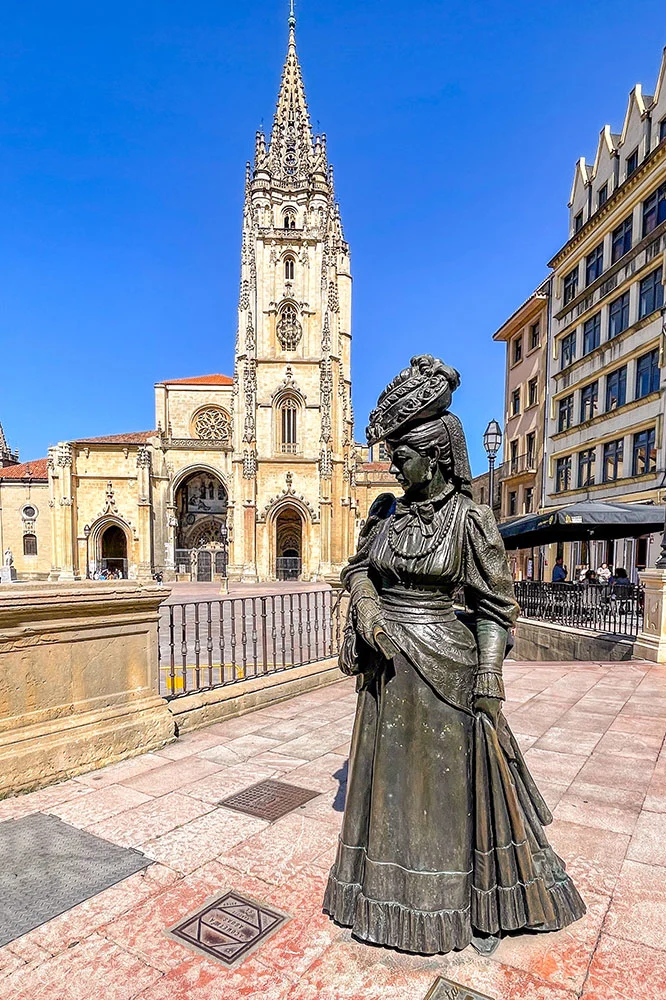
While you are in the Cathedral Square, make sure you visit Oviedo Cathedral. It is an important symbol of Spanish Gothic architecture, and the Holy Chamber is a UNESCO World Heritage Site. You can climb up to the top of the tower for 360 degree views of the city.
Catch the bagpipe bands
If you are in Oviedo on a Saturday or Sunday, there is a good chance that you will come across one of the local bandas de gaitas (bagpipe bands) while you are in the vicinity of the Cathedral Square.


You may be surprised to see and hear bagpipes, but this wind instrument, often exclusively associated with Scotland, is an important part of music in Celtic cultures such as Asturias, Galicia, and Brittany.
Try the local cuisine of Asturias
Another element that is deep rooted in the Asturian culture is the local cuisine. Known for its seafood and its hearty mountain stews, there are a few dishes that every visitor to Oviedo (or Asturias) should try.
The most famous local dish is fabada, a heavy but delicious bean and meat stew that will leave you feeling like you’ve just had the warmest of hugs. It is the epitome of comfort food.


Another traditional Asturian dish is cachopo, the Asturian version of cordon bleu. And for dessert, arroz con leche (local rice pudding) is as Asturian as it gets.


A well known place to try any of these dishes is La Corte de Pelayo Restaurant. Their fabada has been a finalist multiple times in the fabada competition, and their cachopo has won the best cachopo award with a recipe from 1947.
Immerse yourself in cider tradition
When it comes to drinks, cider is king in Asturias. In fact, you cannot visit this Northern Spanish region and not go to a sidrería (cider house), where cider is served by an escanciador (cider pourer). It is one of the most popular things to do in Oviedo.


Cider in Asturias is flat, so the act of escanciar involves pouring it from a height to create bubbles that help enhance the flavour of the cider. Each pour is about two fingers’ worth of drink. More than that and the carbonisation is lost by the time you drink it.
Asturias, land of cheeses
For me, the highlight of the food I tried while in Oviedo was the cheeses.
Asturias is often referred to as the land of cheeses. With over 40 types, it is Spain’s largest cheese producer. The variety and quality is astounding!


Don’t leave without trying a local cheese board. Sidrería Tierra Astur El Vasco has more than 40 varieties of cheese on offer, so the biggest problem you’ll have will be choosing which ones to try.
If you like strong and slightly spicy cheeses, try Casín. For blue cheese lovers, I recommend trying the world-famous Cabrales. And for those who prefer mild cheeses, Afuega’l Pitu is a fantastic choice!


If after a busy day (and a full stomach) exploring Oviedo you still have the energy for more, head to Mon Street, the heart of Oviedo nightlife. With plenty of bars and pubs to choose from, you are guaranteed a good night out. But this is Spain, so make sure you don’t turn up before 11pm!
Where to stay in Oviedo


I stayed at the Gran Hotel España in Oviedo. It is located at the edge of the Old Town and within a short walk from the main attractions. My room had a big balcony with great views over the city and the surrounding hills.
It’s also conveniently located opposite Camilo de Blas, a traditional sweet and patisserie shop where you can buy carbayones, a local specialty similar to eclairs.
> Book Gran Hotel España here
Train from Oviedo to León
Oviedo to León journey time – approximately 2h 20mins (ALVIA) or 2h 53mins (Regional)
Train type – ALVIA high speed or Regional train
> Check prices and book your tickets here
Day 4 – León, medieval wonders and Gaudí
Although it was my second visit to León, it was the first time I got to appreciate this historical city properly. My first visit was a quick overnight stay on my way to Santiago de Compostela while I walked the Camino.


Despite not being a religious or spiritual person, the Camino was the most important experience I’ve ever had and I’d go as far as to say it is one of my personal seven wonders of the world.
Discover a city built for pilgrims
León was, and still is, an important stop for pilgrims walking the Camino de Santiago. And this has left an important legacy in the city.
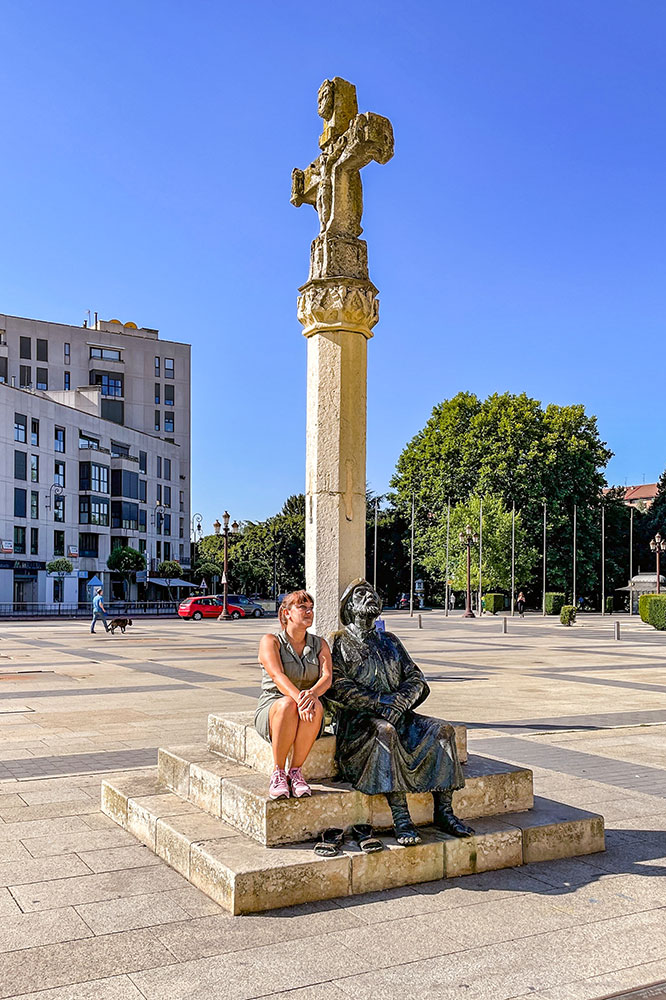

Proof of this is the Convento de San Marcos, a former convent originally built in the 12th century as a shelter for pilgrims.
It was rebuilt in the plateresque style in the 16th century, giving it its current grand appearance. Today it is a luxury hotel run by the state-owned Paradores brand.


Enter the House of Light
Another clue of how important the city has been for the Camino de Santiago, is the magnificent León Cathedral. Its grandiosity is breathtaking, but the interior will truly blow you away.


The light coming through the 1,800 sq metres of stained glass windows will make you gasp as you walk in and look up, earning it the nickname of House of Light.
I was impressed by the largest expanse of stained glass in the Cathedral in York, but León Cathedral takes things to the next level. It is one of the largest collections of medieval stained glass in the world, so admiring it is one of the top things to do in León.


What’s even more impressive is that around 80% of the stained glass is original, with the oldest glass dating back to the 13th, when the cathedral was built. You can clearly see that its construction was inspired by French Gothic cathedrals in Reims and Amiens.
Admire the Sistine Chapel of the Romanesque Art
Another important building in medieval León is the Real Colegiata de San Isidoro de León. The original church dates from the 9th century, but it was rebuilt in the 11th and 12th centuries after being destroyed.


The church houses the tomb of St Isidore, Patron of Seville. But make sure you don’t miss visiting the Panteón Real (Royal Patheon), known as the ‘Sistine Chapel of Romanesque Art’.
This vaulted chamber contains the tombs of kings and nobles of the ancient Kingdom of León. The stunning frescos that cover the ceiling are a medieval masterpiece. Incredibly, they’ve never been restored, they have only been cleaned up.
Find reminders of Roman León
The Middle Ages was the time when León flourished, thanks to the pilgrim-related trade. But León’s beginnings go further back in time. Founded as a Roman camp, the name does not come from the word ‘lion’, but rather from the word ‘legion’, which refers to its origins.


As you walk around the Old Town, you will come across sections of the medieval walls built on top of the original Roman city walls.
One curiosity is that locals have found a way of integrating the walls in everyday life. Walk down Serradores Street and you will see how residential houses have been built into the ancient walls.


Discover Leon’s Gaudí surprise
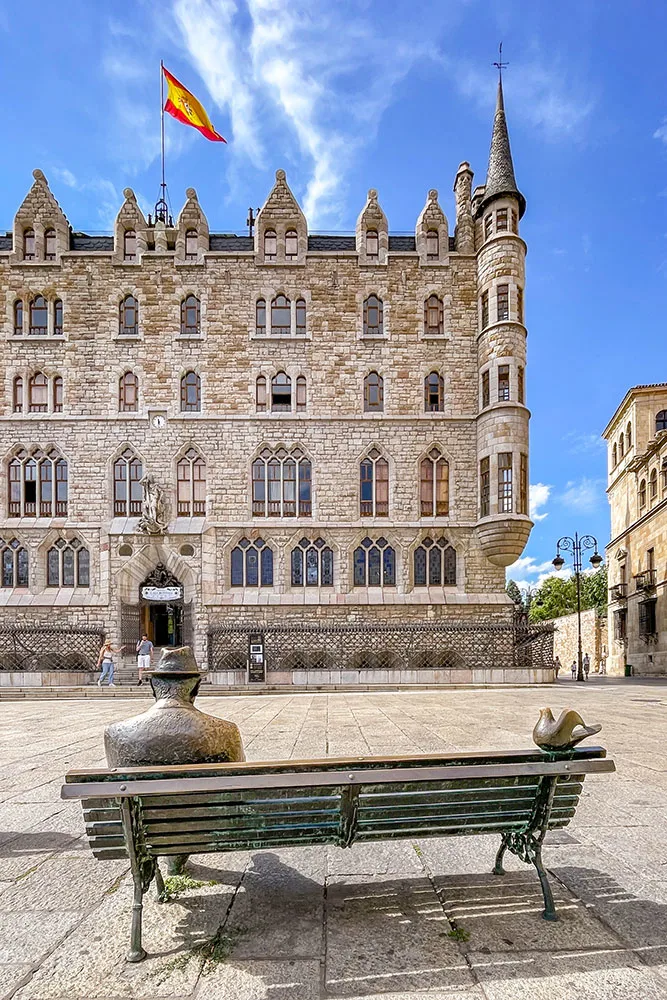
One of the biggest surprises that León has in store for visitors, is one of only three buildings designed and built by Gaudí outside Catalonia – Casa Botines.


Known for his modernist buildings in Barcelona such as Casa Batlló, Gaudí was commissioned to design a building by two cloth merchants in 1891. The building would serve as a residence for two families and a textile warehouse.
The result was a modernist building in the medieval style. Today the building houses a Gaudí museum about the building and his work, and also a small art gallery with works by artists such as Dalí, Goya and Chillida.

Get lost in the Barrio Húmedo
Once you finish exploring the cultural aspects of León, head to the Barrio Húmedo, literally translated as ‘wet quarter’ due to the large number of bars and restaurants located in a relatively small area.
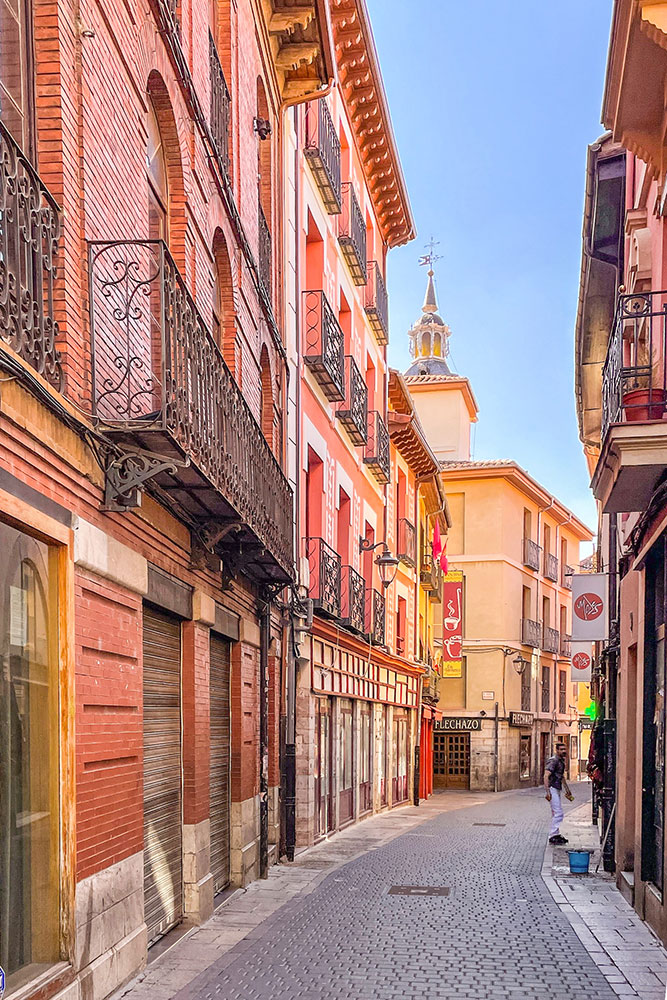

The Barrio Húmedo is centred around Plaza de San Martín (San Martin Square), and is one of the liveliest areas in the city. It’s the perfect place to get a taste of León nightlife, and to try the local tapas and the local wines.


Make sure you try Leonese cecina – like serrano ham but from beef. It is a lot leaner, drier, and has a more intense in flavour than serrano ham.
Where to stay in León


With so much history around León, it was only fitting that I stayed at the Hotel Real Colegiata de San Isidoro, once part of the old monastery. The rooms were once monastery cells, although you wouldn’t guess it now. All the rooms have views over the old cloister or the roman walls.
> Book Hotel Real Colegiata de San Isidoro here
Train from León to Valladolid
León to Oviedo journey time – approximately 1h (AVE) or 1h 11mins (ALVIA)
Train type – AVE high speed or ALVIA high speed train
> Check prices and book your tickets here
Day 5 – Valladolid, a vibrant university city
Valladolid is often overlooked as a destination by overseas visitors travelling on a Northern Spain itinerary, unless they are interested in the world famous Easter Week celebrations.


But Valladolid was once so important that it was the capital of Spain not only once, but twice – under King Charles I in the 16th century, and again between 1601 and 1606 under King Philip III.
It has always been at the centre of the Catholic heartlands in Spain, and this is apparent in the dozens of churches scattered around the city, and the abundance of religious art on display in its museums.
Visit the site of the first human rights debate
To understand Valladolid’s part in Spain’s religious history, it is important to visit at least one of the city’s museums, and my recommendation would be to visit the emblematic College of San Gregorio, today the National Sculpture Museum.


The museum contains an expansive collection of religious art from the Middle Ages through to the 19th century. But even if you are not into sculpture as an art, the building itself is worth visiting.
The intricate carvings on the façade will have you staring at it and admiring the elaborate details. Inside, the 15th century cloister is stunning, and the ceilings of each room throughout the museum are also worth noting.


It was in this building where the very first debate about human rights in European history took place in 1550-1551. Known as the Valladolid Debate, it concerned the rights and treatment of indigenous people by European colonisers.
There were a number of opposing views about the way natives of the Americas were being integrated into Spanish society, their conversion to Catholicism, and their rights.
Admire Valladolid’s architectural jewels


As you wander around the city, it is worth highlighting two churches. Convent Church of San Pablo, with its plateresque-style façade, is one of Valladolid’s most famous buildings. Santa María La Antigua Church is a 14th century church with the tallest Romanesque tower in Spain.
Enjoy a bird’s eye view of Valladolid


Another important building in Valladolid is the Cathedral, a large Renaissance building that was never finished due to lack of funds. You can go to the top of the tower for great views of the city and the countryside beyond.
Have a meal (or two) with wine pairing
Valladolid has one of the most recognised wine growing regions in Spain, the Ribera del Duero. It is a Denominación de Origen Protegida (DOP – protected designation of origin) and it’s a region that has been producing wine for thousands of years.


Because of this, Valladolid is a great city to do some wine tasting. But why not take it a bit further and enjoy the wine by pairing it with the local food?
For a lunchtime wine pairing experience, try Vinoteca Señorita Malauva, a wine pairing boutique run by Gustavo Calvo, an expert in wine tourism that also has his own winery. The food is made with local ingredients and is delicious too.


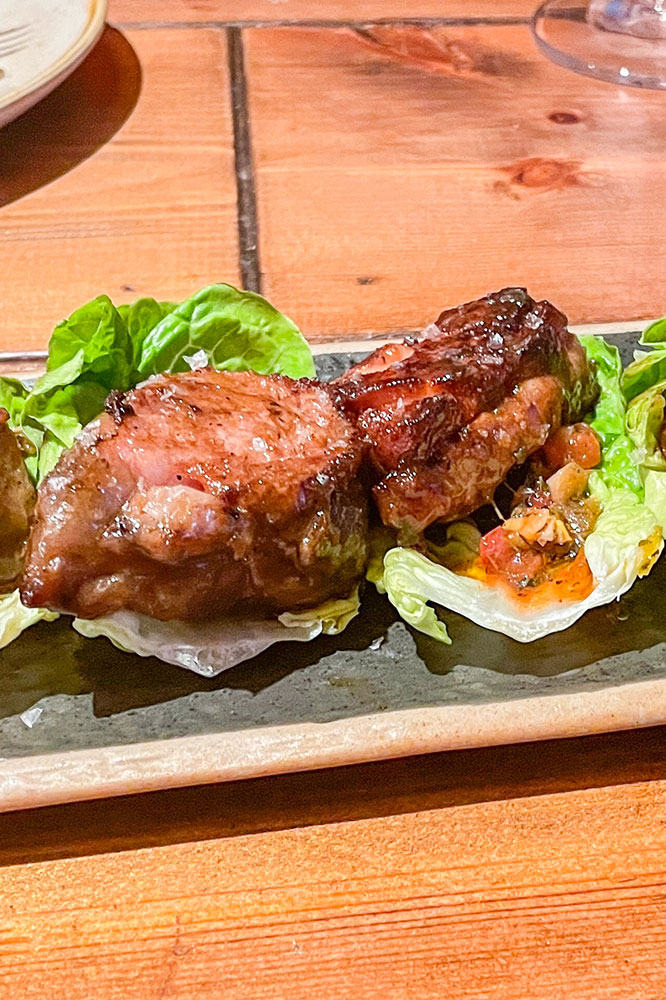
For dinner, don’t miss Restaurante Mêlel, an innovative space where hedonism and becoming a bon viveur is at the centre of everything. This eclectic place serves surprising and creative food with well paired wines from all over Spain. My favourite thing? The beef heart ssam.

Experience the Valladolid’s bars and nightlife
Valladolid is a university city. In fact, Valladolid University is one of the oldest in Europe, dating back to the 15th century. And where there is a large university, you are guaranteed a vibrant nightlife too.


Valladolid is a city of bars and pubs. Head to Calle Paraíso, which is lined up with bars, and follow the crowds. You can’t really go wrong. Just make sure you are not out too early, as Valladolid’s party scene kicks off late.
Where to stay in Valladolid


I stayed in Boutique Hotel Gareus, an elegant boutique hotel in an early 20th century building. It is located in the historic centre of Valladolid, so it was very convenient for the main attractions of the city and for the train station.
> Book Boutique Hotel Gareus here
Do you have any questions about this Northern Spain itinerary by train?
Let me know in the comments!
Like this post? Pin and save for later



Disclosure: This post has been created as a partnership with Spanish Tourism. As always, all views are my own.