
If you are wondering what the food in Valencia is like and what to eat during your visit, here are the essential dishes and drinks you shouldn’t miss in this foodie city.


Located on the Mediterranean coast, Valencia will blow you away with everything it has to offer. There are many reasons to visit Spain’s third biggest city, but it’s the food in Valencia that makes it one of the top European destinations.
Whether it’s your first visit to Valencia or you’re returning for the tenth time, sampling Valencian food is an essential part of enjoying this wonderful city. It’s actually one of the best things to do in Valencia.
You could try and discover Valencia’s culinary offering through a food tour, but you can easily do it independently too.
From the world famous paella and an array of rice-based dishes, to unique seafood delights and refreshing drinks, here is a selection of traditional Valencian food and drinks you must try.
Must try food in Valencia
Paella


People think of paella as a quintessentially Spanish dish, when it is, in fact, a traditional Valencian dish.
Located 12 miles south of the city, the Albufera National Park is a freshwater lagoon and the rice growing region where paella first originated. So there is no better place in the world to try this iconic dish.
In fact, often the paella you get outside of Valencia is not authentic paella, but a variation of this now iconic dish. Authentic Valencian paella is made with rabbit and snails. And sometimes chicken.
There is a lot of confusion around what is and what isn’t paella, so one way to try it and learn all about the real thing is by having a go at making your own at a paella workshop in the city.
READ MORE
Learning the Secrets of Real Paella
Where to eat paella in Valencia
Paella originates in the rice growing region of the Albufera, and one of the best places to try it is the small village of El Palmar, 35 minutes by bus from the city centre. Any of the restaurants in El Palmar will serve delicious paella.


I’ve visited Arrocería Maribel and Restaurante Mornell and they were both stunning!
If you can’t make it to El Palmar, Restaurante La Maritima in the Veles e Vents building in Valencia Marina, and La Pepica, on the beachfront, are two of the best in the city.
Clóchinas


Clóchinas are the Mediterranean variant of the mussel. They have been cultivated on the city’s beaches since the 19th century, and it is the Mediterranean Sea that gives this mollusc its texture and a more intense flavour than regular mussels.
They are only in season for four months a year – months without an ‘r’, May to August. So if you get offered clóchinas outside of these months, it’s worth knowing that they will not be fresh.
The traditional way to prepare this Valencian delicacy is steamed, cooked in their own juice, and seasoned with a little lemon and olive oil. They are delicious as a tapa.
Where to eat clóchinas in Valencia
Located in El Carmen neighbourhood, La Pilareta, specialises in clóchinas. In fact, it is also known as ‘La Casa de las Clóchinas’ (The House of Clóchinas).
Stand at the long zinc bar, order some clóchinas and enjoy the historic atmosphere. At your feet you will see a long line of buckets ready to receive your clóchina shells.
Why not try lots of different food in Valencia
by joining a food and tapas tour?
Read about my experience here
Tellinas


Another mollusc typical in Valencian cuisine is the tellinas.
They are small bivalves with golden and purple shells that are eaten as a tapa. They have been part of the local diet since Roman times, and they are one of the most popular Valencian dishes.
They are traditionally cooked in a clay pot with garlic, white whine, parsley, olive oil, and served with a squeeze of lemon.
Where to eat tellinas in Valencia
Any of the restaurants lining up the beachfront in Valencia are a great choice to sample this delicacy of Valencian food. Some stand out places are Casa Carmela and Casa Navarro.
Arroz a banda or arroz del senyoret


Traditionally, arroz a banda and arroz del senyoret were slightly different rice based dishes, both cooked on a paella dish.
Arroz a banda was a rice dish that was cooked by fishermen on fishing boats with the fish that was not good enough for selling. The fish was cooked separately with the rice served on the side (a banda).
Arroz del senyoret was a rice dish that was cooked by servants to the first born of an upper class family. It was made with bone-free fish and shell-free shellfish, made to his particular specifications.
Today, both dishes are so similar that the names are interchangeable. If you see either of them on a menu, I would recommend you try it. It is often accompanied by a bit of alioli and a slice of lemon, and it’s probably one of my favourite Valencia dishes.
Where to eat arroz a banda or arroz del senyoret
The best place to try arroz a banda or arroz del senyoret is one of the fisherman’s neighbourhoods like El Cabanyal. La Taberna Casera is a top spot for it.
Alternatively, a great place for this traditional Valencia food is Restaurante Planta Azul in the fishing village of El Palmar, in the Albufera rice growing region.
Arroz negro


As you may have guessed by now, when it comes to food in Valencia, rice takes the centre stage. And arroz negro (black rice) is another of those classic dishes that must be tried as part of your Valencia cuisine adventure.
It is cooked in a paella dish and it’s made with cuttlefish ink, which turns it black. Other ingredients added to arroz negro include cuttlefish, a tomato sauce base, onion, and garlic. All this with rice cooked in a fish broth.
Where to eat arroz negro in Valencia
You can eat good arroz negro in any good paella restaurant. I tried it in Restaurante Navarro in the city centre and it was delicious.
Why not try lots of different food in Valencia
by joining a food and tapas tour?
Read about my experience here
Arroz al horno


Following the Mediterranean diet, food in Valencia is light and healthy by nature. But if you are craving something hearty, Valencian cuisine has something that will hit the spot – arroz al horno (oven baked rice).
It’s another popular rice dish, however arroz al horno is not cooked on a paella rice. It is baked in the oven in a shallow clay pot and it was traditionally made with leftovers. Today it’s made with morcilla (blood sausage), pork belly, pork ribs, chickpeas, and potatoes.
Where to eat arroz al horno in Valencia
Alqueria del Pou is a whitewashed farmhouse near the City of Arts and Sciences that offers classic Valencian dishes, with arroz al horno being one of their specialties.
Fideuà

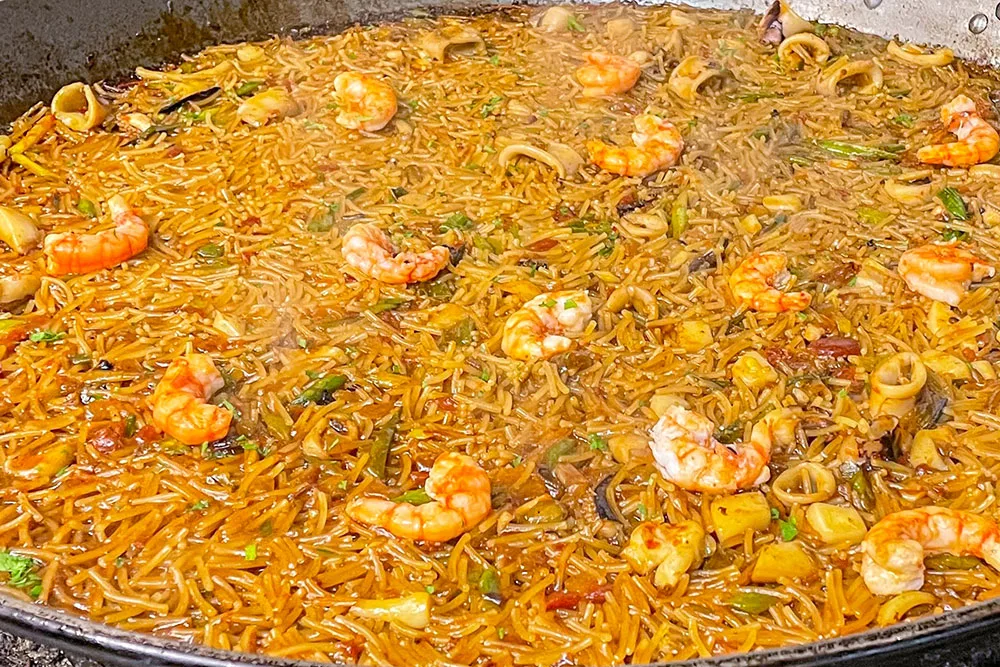
The fideuà is similar to arroz a banda, but instead of being made with rice, it’s made with hollow pasta noodles. In fact, the word fideuà comes from the Valencian word fideuada, which means ‘large amounts of noodles’.
It is made on a paella pan and, aside from noodles, the main ingredients are fish, cuttlefish, and shellfish.
Where to eat fideuà in Valencia
When it comes to where to eat in Valencia, Casa Carmela is a bit of an institution, and a restaurant that delivers good quality and tasty Valencian dishes made with the best ingredients. And of course, it’s no exception when it comes to fideuà.
All i pebre


When you think of Valencian food, paella and other rice dishes come to mind as the typical local dishes. But there is one dish that is not well known outside of Valencia called all i pebre, and no visitor to the city should miss it.
It originates from the Albufera wetlands just outside the city, and the name literally means ‘garlic and pepper‘. It refers to the sauce of this hearty stew, which consists of olive oil, garlic, and paprika. It is made with eel, potatoes, and paprika.
Where to eat all i pebre in Valencia
One of the best places to try all i pebre is the small village of El Palmar in the Albufera. It’s only 35 minutes by bus from Valencia city centre and it’s where this traditional valencia dish originated. Any of the restaurants in El Palmar will serve delicious all i pebre.
Esgarraet


Esgarraet is a refreshing cold salad that is made with roast red pepper, salt cod, and, sometimes, black olives. It is then dressed with minced garlic and olive oil and left to soak up the flavours for at least 24 hours. It is usually eaten as a tapa.
The name comes from the way that the peppers and the fish are torn in fine strips. It is one of those Valencia dishes that are loved by locals but that are little known outside the city, so it feels like a real discovery.
Where to eat esgarraet in Valencia
You will find esgarraet in any good tapas bar or restaurant specialising in traditional Valencian food. If you are going to La Pepica for paella, make sure you try it as a starter.
Why not try lots of different food in Valencia
by joining a food and tapas tour?
Read about my experience here
Espencat


Espencat is another typical Valencian food that consists of roasted vegetables. It is very similar to esgarraet, but in addition to roasted red pepper, it also has roasted aubergine.
It is always served cold, with bread, and as a starter or side dish during the summer season.
Titaina


Food in Valencia goes way beyond paella or other rice dishes, and titaina is one of those dishes that was a real discovery for me.
Typical from the fishermen’s neighbourhood of El Cabanyal, titaina is a sofrito made with tomato, roasted red pepper, pine nuts, garlic and tonyina de sorra (salted tuna belly).
It’s very intensely flavoured, so it’s normally served in small quantities. If you like umami flavours, you will love titaina.
Where to eat titaina in Valencia
The best place to try titaina is in El Cabanyal neighbourhood, and one of the best restaurants for it is Taska La Reina. Here they serve titaina on a coca, a spongy pizza-like base.
Buñuelos de calabaza (pumpkin doughnuts)


Buñuelos de calabaza (pumpkin doughnuts) are associated with the world famous Valencian festivities of Las Fallas.
It is during Las Fallas festival that this Valencia street food is eaten, sometimes accompanied by a cup of thick hot chocolate, and sometimes eaten on their own.
These moreish Valencian sweets can be traced back to Arab times in Spain, but it was in the 19th century when they became more popular, coinciding with the time when the Las Fallas festival started.
Where to eat buñuelos de calabaza in Valencia
One of the most famous buñolerías in Valencia is El Contraste in the Ruzafa neighbourhood. Make sure you go early, though. They are so good that the queues can be long, and they may even sell out before you get to the front.
Pasteles de boniato (sweet potato parcels)


Pasteles de boniato (or pastissets de moniato in Valencian language) are of arab origin, and they have become a must have Christmas food in Valencia. However, they can be found in food markets and bakeries all year round.
They look like mini-empanadas coated in sugar, and they are filled with a sweet potato puree. They are absolutely delicious and you’ll want to eat a whole box of them in one sitting.
Where to eat pasteles de boniato in Valencia
The best pasteles de boniato you will find in Valencia are in Horno de San Bartolomé, a bakery that has been going for over 40 years. Locals will come from far and wide to buy these Valencian sweets from this renowned bakery.
Must try Valencia drinks
Horchata and fartóns


Horchata is the typical Valencian drink par excellence. It is made from chufas (tiger nuts) which are grown only in a few regions of the world, one of which is Valencia.
It is a refreshing creamy white drink comparable to almond milk, and it’s usually accompanied by a fartón. This light and sweet pastry stick is delicious. Dip it into your horchata and enjoy!
Where to have horchata and fartóns in Valencia
There are many horchaterías in Valencia, but one of the best and most famous is Horchatería Santa Catalina, a 200 year old Valencian institution that oozes history and tradition. Don’t let the queues put you off. The horchatería is huge inside so it moves pretty quickly.
Agua de Valencia


Agua de Valencia (literally translated as Valencia water) is a refreshing cocktail typical from Valencia that uses local ingredients such as cava, freshly squeezed orange juice, and a bit of a gin and vodka kick.
But don’t let the innocent name fool you. It’s dangerously good, and so easy to drink!
Where to drink Agua de Valencia in Valencia
Each bar and restaurant has their own recipe when it comes to quantities, so it’s definitely worth trying it in different places across the city.
But my favourite place is the now famous Cafe de las Horas, an opulent cafe that combines elements of a Spanish literary cafe, a Parisian cafe, an English tea room and an American cocktail lounge. It’s a real experience.
Fresh orange juice


Last but not least, it’s a staple of the Valencian diet – fresh orange juice. Normally consumed with breakfast, most bars in Valencia will have freshly squeezed orange juice on offer.
The region of Valencia has been growing oranges for centuries, and they are famous all over the world for their sweetness. So including freshly squeezed Valencian orange juice in your daily breakfast is a great way to start the day.
FAQs about food in Valencia
The food in Valencia features local produce that has been grown in the fertile lands surrounding the city, as well as fish and seafood caught in the Mediterranean coast. This makes Valencia one of the top foodie destinations in Europe, and it celebrates its local gastronomy throughout the year.
The first thing that comes to mind for most people when you think of Valencia is paella. And it does, indeed, originate here. Valencia is also famous for other rice based dishes such as arroz a banda, and for its seafood such as clóchinas (Mediterranean mussels) and tellinas.


Right outside the city of Valencia you will find the Albufera, a rice growing region. So a lot of rice based dishes, with the most famous being paella, are the most traditional Valencian food. All i pebre, an eel and potato stew, is also a very traditional Valencian dish.
It is not uncommon to see people cooking paella in the street during Las Fallas Festival. It is also very popular to eat sweets such as buñuelos de calabaza (pumpkin doughnuts). They are the ultimate Valencia street food.
Have you tried any of this food in Valencia?
Let me know in the comments below!
Like this post? Pin and save for later


Disclosure: This post has been created as a partnership with Visit Valencia. As always, all views are my own.