Something most travelers never think about is quietly costing them hundreds of dollars every single time they fly. Before you tap that upgrade button at the gate, you need to read this.
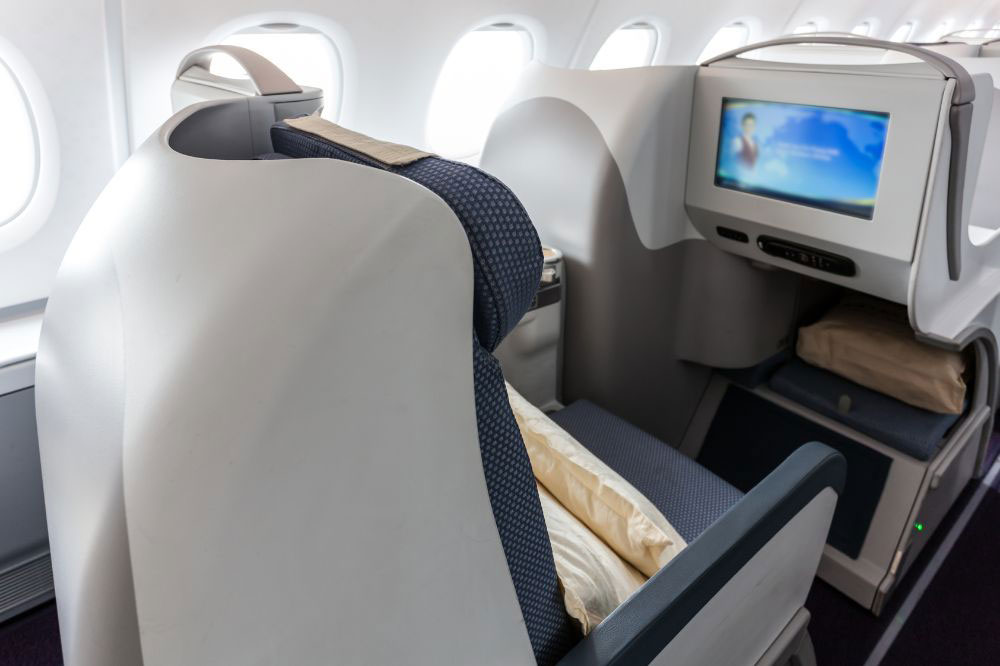
Flying business class is the dream. The wide seat, the real pillow, the meal served on actual crockery. And on almost every international flight I take, that tempting upgrade offer appears right there in my inbox or at check-in, asking me to make a fast decision with a lot of money.
Most people either upgrade without thinking or never upgrade at all, and both groups are leaving serious money on the table.
Here is exactly what I consider before I spend a single dollar chasing a lie-flat seat.
The Length of Your Flight Changes Everything
This is the first question I ask myself every single time. Under seven hours? I almost never upgrade. Over ten hours? The math shifts completely.
My personal rule is to pay no more than $100 per hour of flight time, and I try to stay closer to $60 per hour. On a ten hour overnight that puts my ceiling at $1,000. On a five hour daytime hop, almost nothing justifies the expense.
The reason is simple. On shorter flights you are barely getting into a rhythm before you are already descending.
Even on an overnight transatlantic flight from the East Coast, once you factor in taxi, takeoff, the meal service, and landing prep, you are realistically looking at maybe four or five hours of sleep. A decent neck pillow and an exit row seat can cover that just fine.
Flying from the West Coast to Europe is a completely different calculation. Those flights can run thirteen hours, and suddenly lying completely flat starts to feel less like a luxury and more like a medical necessity.
One more thing worth knowing on this point: premium economy is almost never worth it.
In most cases it is not meaningfully cheaper than business class, and it sits in an awkward middle ground that rarely satisfies. If you are going to spend extra money at all, go directly to a lie-flat seat or stay in economy.
A Daytime Flight Is a Completely Different Animal
The time of your departure matters enormously, and it is something most upgrade guides skip over entirely.
I travel frequently for work and I get a real amount done on daytime flights. My laptop is open within twenty minutes of takeoff. A business class seat does not make me more productive, it just makes me more comfortable while I do the same things I would have done in economy.
On a daytime flight where two thirds of my journey takes place in daylight, I stay put, keep my miles, and work through the cabin wifi exactly like everyone else.
Red-eye flights that land in the morning are a different story entirely. Arriving somewhere at 7am after a genuine night of sleep in a flat bed changes your entire first day. That kind of rest is worth something real, especially if you have somewhere to be that afternoon.
Not All Business Class Seats Are the Same, Not Even Close
This one surprises a lot of people. Business class is not a single product. It is a range of very different experiences depending on the airline, the aircraft, and sometimes even the specific plane operating your route that day.
The big American carriers, American Airlines, Delta, and United, each run several different business class configurations. Some are genuinely excellent. Some are aging products that technically recline flat but feel more like a yoga position than a bed.
Before you upgrade, you need to know exactly which one you are buying.
I always check seat maps before committing. A tool called AeroLopa shows detailed seat diagrams and descriptions for most airlines and aircraft types. It takes about three minutes and has saved me from purchasing business class seats I would have deeply regretted.
The specific thing I look for is direct aisle access. If I have to climb over another passenger to get to the bathroom at 3am, I am not interested regardless of how good the rest of the seat is.
Also worth noting: a lie-flat seat on a widebody jet like a 787 or 777 is physically roomier than the same classification on a narrowbody aircraft. The footwell situation on narrowbody long haul products can be genuinely unpleasant.
An Empty Row in Economy Beats a Full Business Cabin
I check the seat map obsessively before making any upgrade decision. If there is an open seat next to me in economy, or better yet an entire empty row, my thinking changes instantly.
Lying across three seats on a quiet overnight is not glamorous but it is genuinely comfortable, and it costs you nothing.
On a Dublin to Las Vegas flight earlier this year I had an entire four seat row to myself. The upgrade would have cost $400. I stayed put, got a solid block of work done, stretched out for a nap, and landed feeling completely fine. That was the right call.
On the other hand, when a flight is clearly full and the price is right, I take the upgrade without hesitation. A cramped middle seat for twelve hours is its own kind of punishment.
A tool called ExpertFlyer can help you estimate how full a flight is likely to be before you make your decision, which is worth checking before you commit either way.
The Purpose of Your Trip Should Drive the Decision
Last and genuinely not least: why are you actually on this plane? Work trips and vacation trips should be evaluated completely differently.
If I am flying somewhere for meetings, arriving rested is not optional. It is part of the job. The upgrade becomes an investment in my performance rather than a personal indulgence, and that math is easy to justify.
If I am flying for vacation, the equation flips entirely. Every dollar I spend on a better seat is a dollar I cannot spend on the thing I actually flew somewhere to do. Unless the deal is genuinely exceptional, I would rather save those miles for experiences on the ground.
The trips that mix business and leisure require the most honest self assessment.
Will I be functional enough after a rough overnight to make my first meeting? Will I have the energy to explore a new city if I land exhausted? Sometimes the upgrade earns back far more than it costs, and sometimes it is just an expensive nap.
Run through all five of these before you click anything. The right answer is genuinely different every single time, and that is exactly the point.