
Graz is one of those cities where the more you look, the more interesting it becomes. And that goes for its surroundings too. Here are four day trips from Graz that most visitors never do (but should), and why the Graz Uncovered app made it easier to go on them.
Most people planning a trip to Graz are working from the same shortlist: Schlossberg, the Altstadt, and maybe a wander through Lend if they’ve done their research. And there’s nothing wrong with that list. Those places are definitely worth your time.
But Graz sits inside a region that has a lot going on, and most of it goes completely unvisited. It’s not because places are hard to reach, but because there’s no obvious reason to go unless someone has already told you it’s worth it.
That’s exactly what the Graz Uncovered app does. It was built by award-winning travel writer Dan Clarke after he spent almost three months in Graz researching and slow travelling through the city and its surrounding area as a sustainable destination.
The app is essentially a local’s guide in your pocket. The routes take you out of the city centre and into places that rarely make it to popular travel guides, let alone on to visitors’ lists.
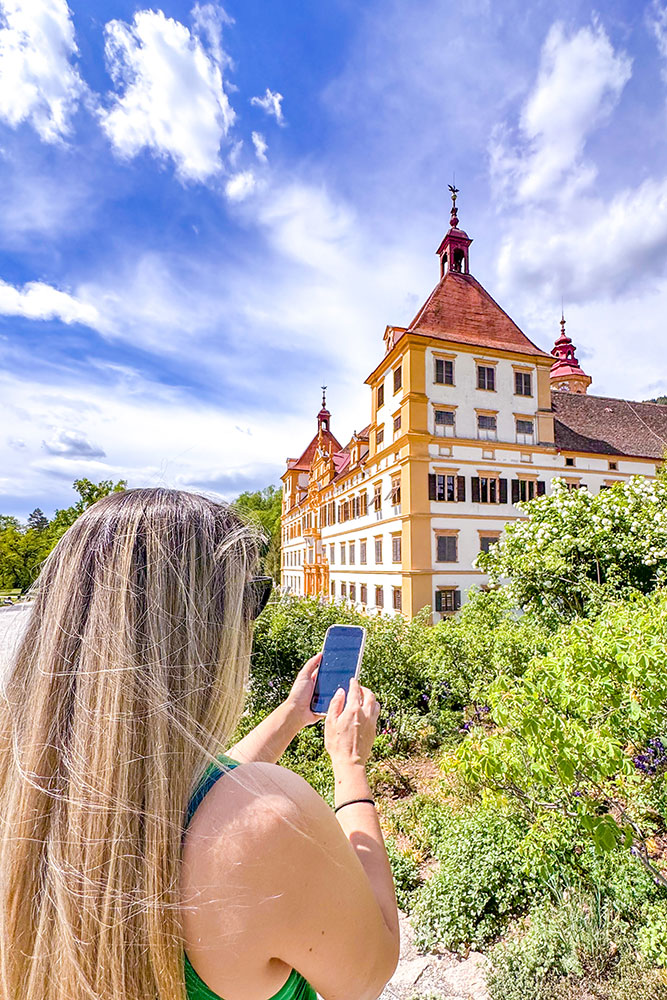
Graz Uncovered recommends a number of ‘Afternoons Out’, and I have highlighted four of them here. These are day trips that I absolutely loved and I’m really surprised they’ve been kept such a secret from visitors.
I know you are thinking… Why not include them all here? Well… where’s the fun in giving everything away all at once? You’ll just have to download the app on your next visit to Graz!
So here’s my pick for four amazing day trips from Graz that everyone should include in their itinerary.
Thal: An otherworldly church and the Schwarzenegger connection
Thal is a sweet sleepy village by a beautiful serene lake, only 7km outside of Graz. It can be easily reached by public transport using the Graz Card, and even though it’s small, it packs in a few stops that will definitely be worth your while.
Thal, in fact, holds one of Graz’s best kept secrets and perhaps my favourite discovery of this whole trip.
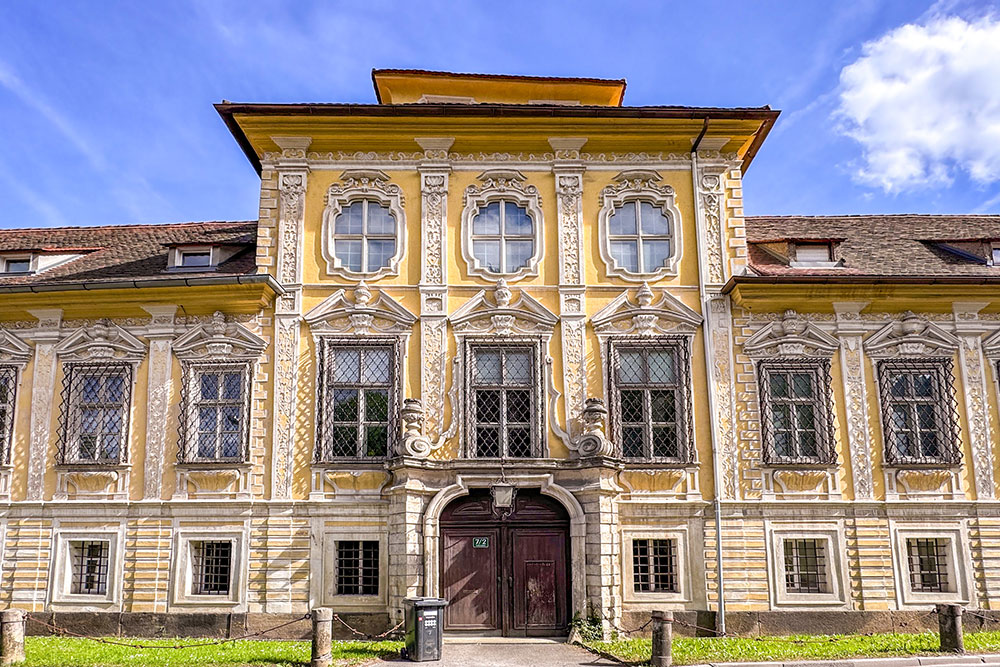
The route from Graz to Thal passes through Gosting, where you can make a short stop to admire the beautifully ornate facade of Schloss Gosting.
As it’s privately owned, this stunning Baroque residence is not open to the public, but it’s still worth a short break to appreciate its beauty from the outside.
Continue on to Thal, the birthplace of Arnold Schwarzenegger. As a ‘proud parent’ of such a famous son, the town has plenty of Schwarzenegger-related places to visit.
There is a walking route you can follow that takes you to his childhood home, now the Schwarzenegger Museum, the pull-up bars set between two trees where he started training, and the real surprise of the day (and of the whole trip for me), his baptismal church.
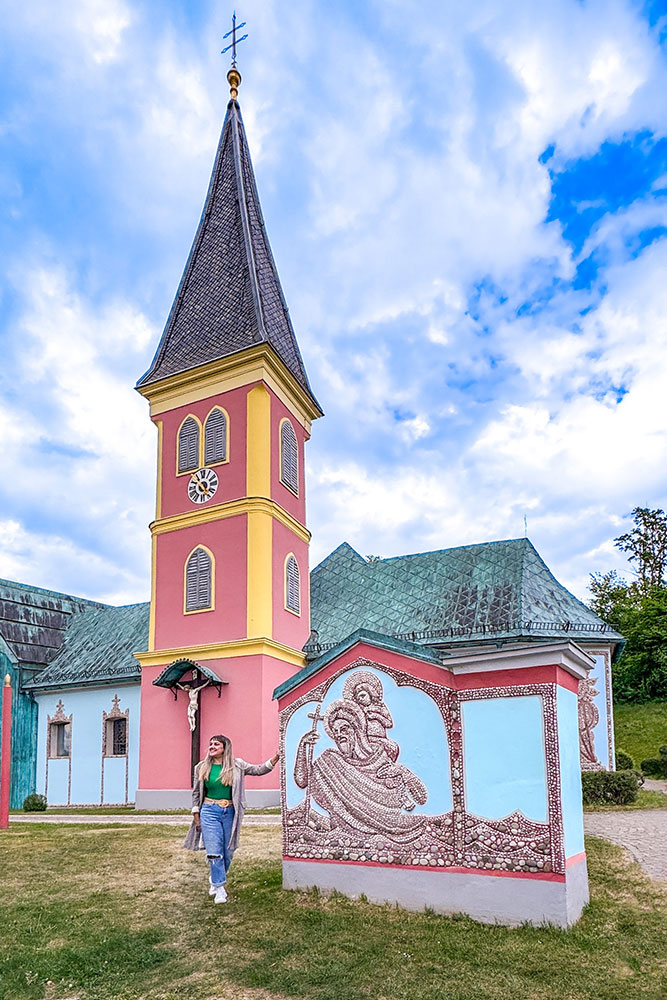
St James’ Church looks unassuming from the outside. Pretty pastel coloured walls, relatively small, and sitting on a hill as a lot of village churches do, nothing about the exterior prepares you for what’s inside. Even the modern extension attached to it doesn’t give you a clue for what’s to come.
Walking through the door, it’s like walking into some sort of psychedelic dream. The interior was designed by artist Ernst Fuchs, one of the founding figures of the Vienna School of Fantastic Realism. And that Fantastic Realism is present everywhere you look.
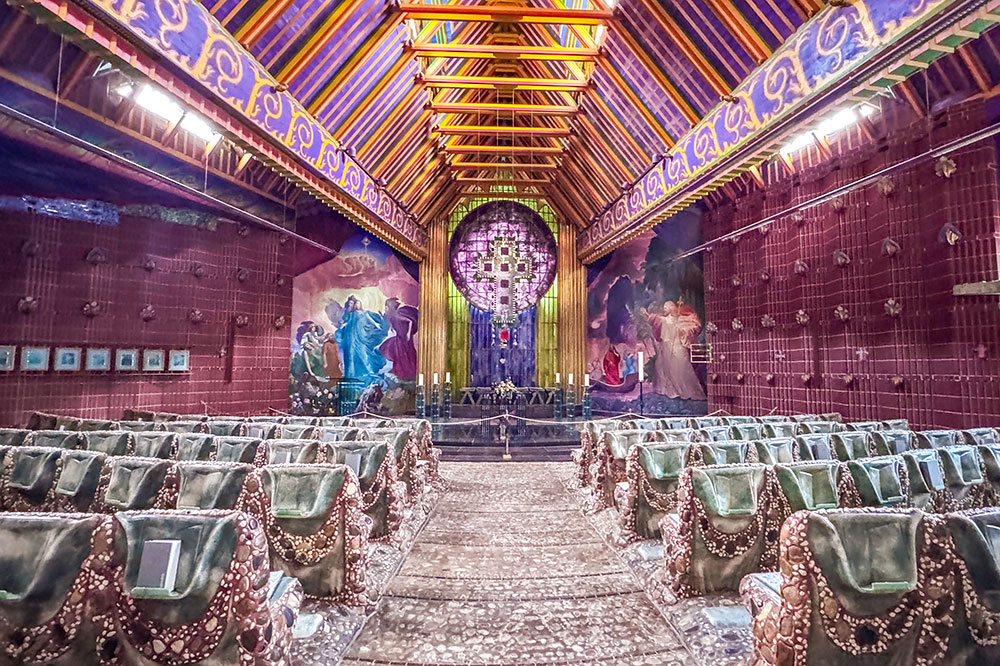
I spent a good hour completely mesmerised by the details, trying to take it all in. But there’s so much going on that I could have easily spent another hour. Rainbow ceilings, a crystal glass altar, a floating Swarovski crystal cross, pebble-encrusted floors and shell-shaped seats.
This is an assault to the senses, especially if minimalism is your thing. But even if this sort of extravagance is not for you, I’m confident you’ll appreciate the artistry and imagination that went into creating such a special place.
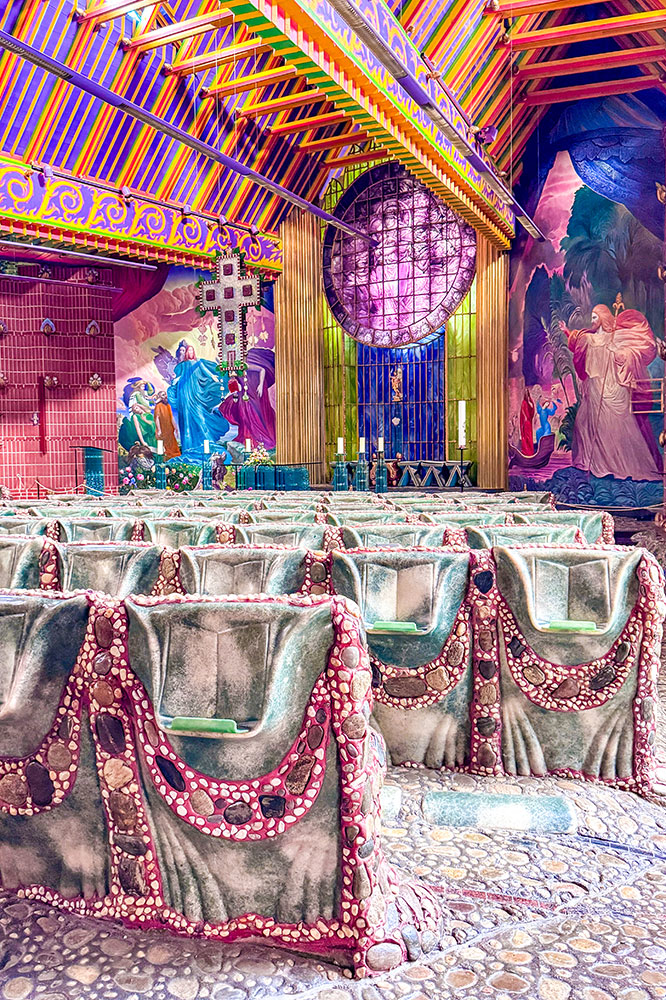
Either way, it is impossible to walk out of it unaffected.
The church also happens to be the starting point of the West Styrian Way pilgrimage route, which eventually connects to the Camino de Santiago all the way to Santiago de Compostela, a detail that gives the place an added layer of significance for anyone who has walked the Camino.
The Fürstenstand hike: Graz’s best and most rewarding view
I do love a hike, and I’m always trying to find an excuse to go on one whether I’m at home or on my travels. Saying this, when I visited Graz for the second time, going hiking was not on my original plan.
But after exploring Graz off the beaten path, I saw that one of the ‘Afternoons Out’ recommended in the Graz Uncovered app included a hike, so I just had to do it.
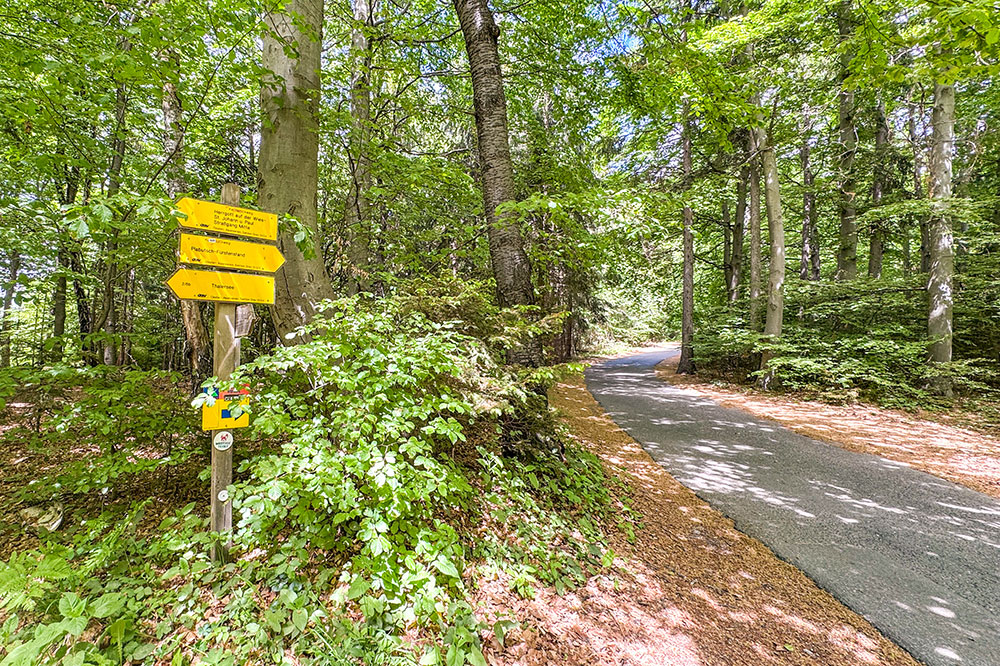
This hike takes you to the Fürstenstand, the highest point of the Plabutsch, the ridge that borders Graz to the west, where it sits at 754 metres high. You can get there from different points like Thalersee, Eggenberg Palace or Gosting.
Whichever route you choose, it will have a combination of gravel and wooded paths, and one thing is for sure. It will be steep! So make sure you take it slow and have plenty of water to hand, especially on a hot day.
It does eventually level off though. The whole route goes through dense, shaded forest until you get into a clearing at the top.
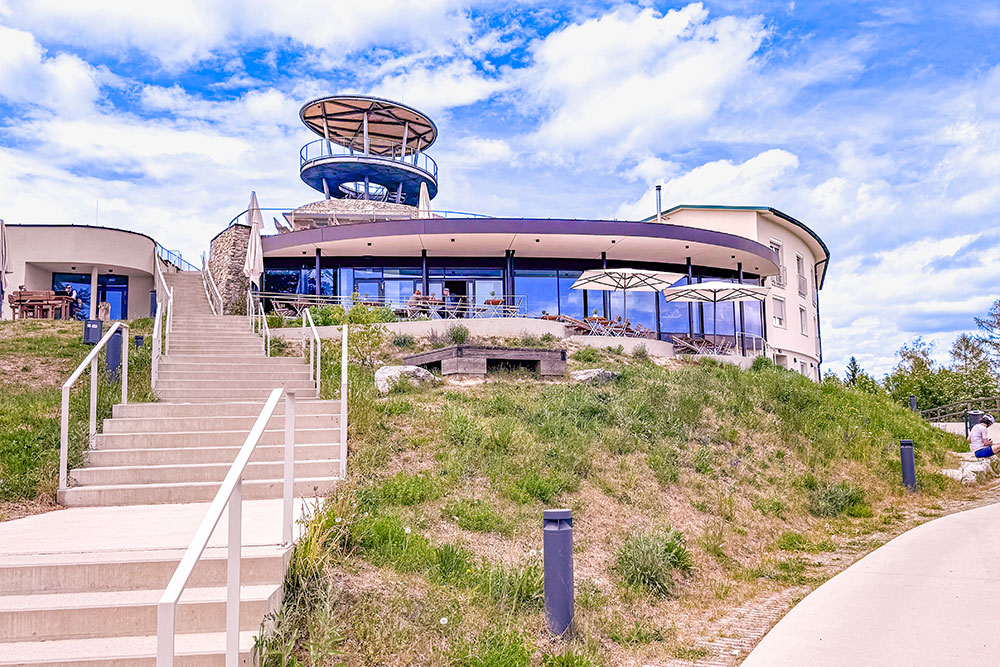
What’s waiting there is an observation tower, recently built on top of a historic stone structure that had been there since 1852, although the history of the place goes back even further. Emperor Franz I stood here in 1830 and looked out over his territory.
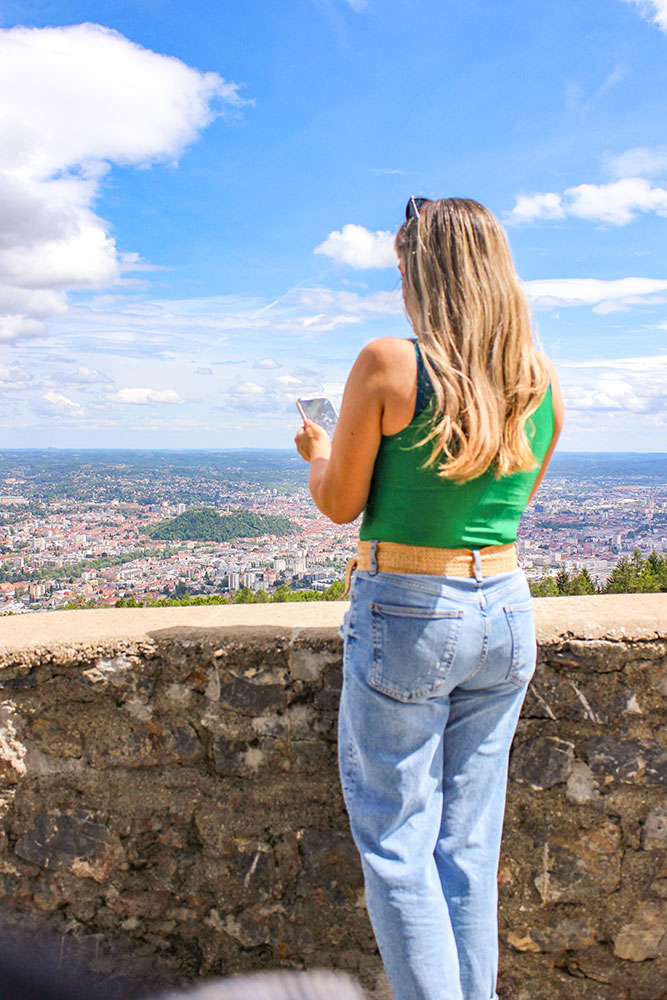
So if it’s a good enough view for an Emperor, it’s a good enough view for me! But seriously, the views over Graz and the surrounding mountains make all that sweat, blood and tears up those steep paths really worth it.
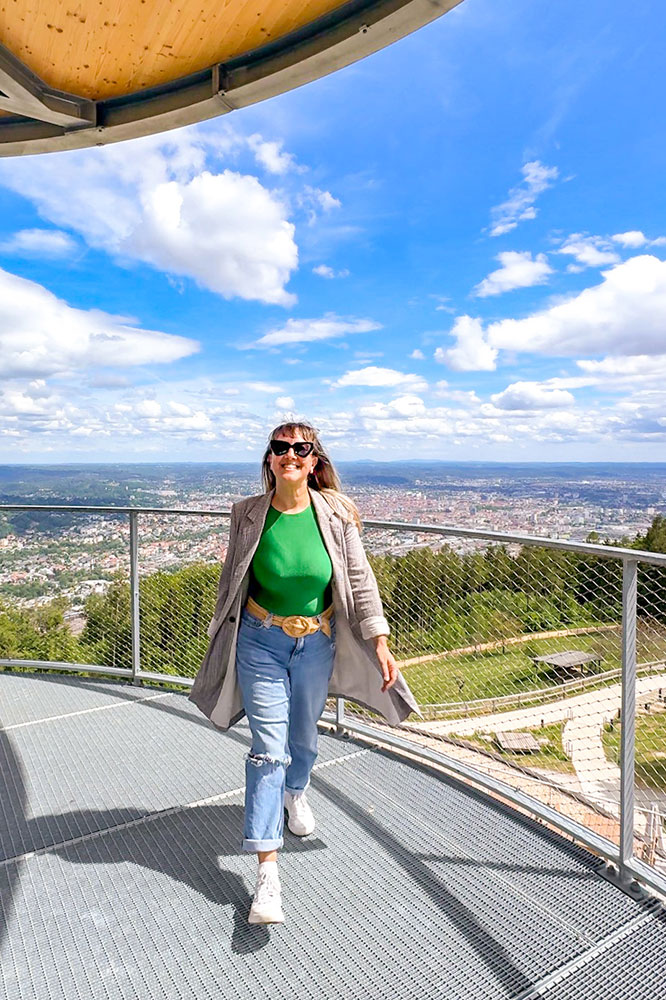
On a clear day you can see across the whole of the city, the Mur River valley, the Schöckl mountains, and on the clearest of days you can even see Slovenia.
Graz Uncovered app has this hike as part of another tour, but I would start the tour with the hike so you can get to the viewing platform in time for lunch.
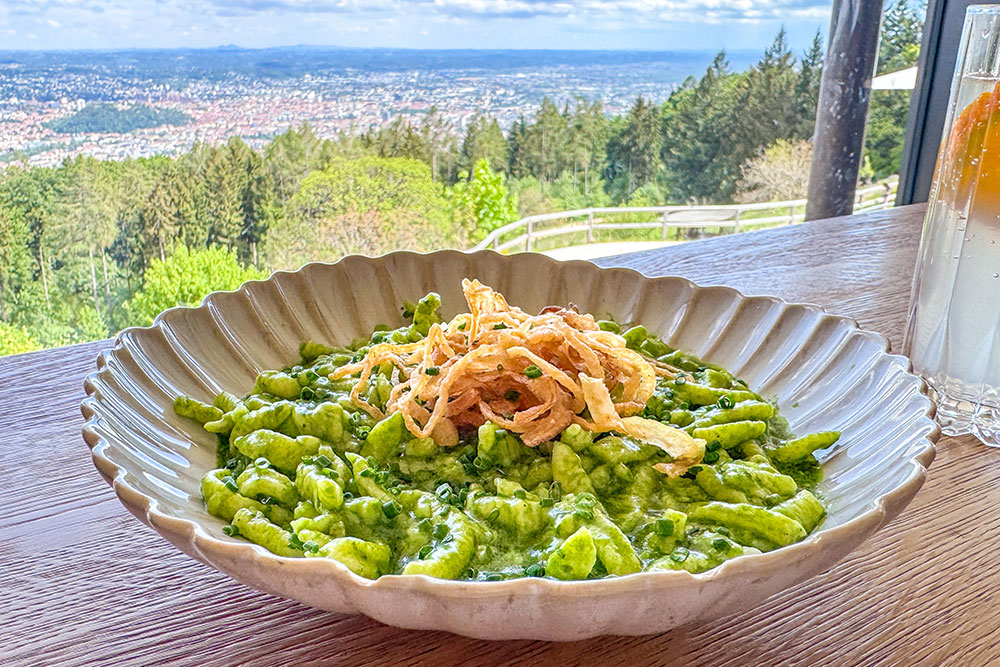
There is a restaurant here where you can eat (I recommend the kasespatzle with wild garlic) and enjoy the views at the same time. It’s the perfect way to recover!
Frohnleiten: A picturesque Medieval town gone unnoticed
I say this town has gone unnoticed, but only by visitors. Local people know fine well that this really beautiful town is a lovely day trip from Graz, and they have been keeping it to themselves.
Frohnleiten is only half an hour by train from Graz Hauptbahnhof, so it’s not like it’s hard to get to. But for some reason it has not come under visitor’s radar. Luckily, Graz Uncovered is giving little secrets like this away to those who want to go beyond the main things to do in Graz.
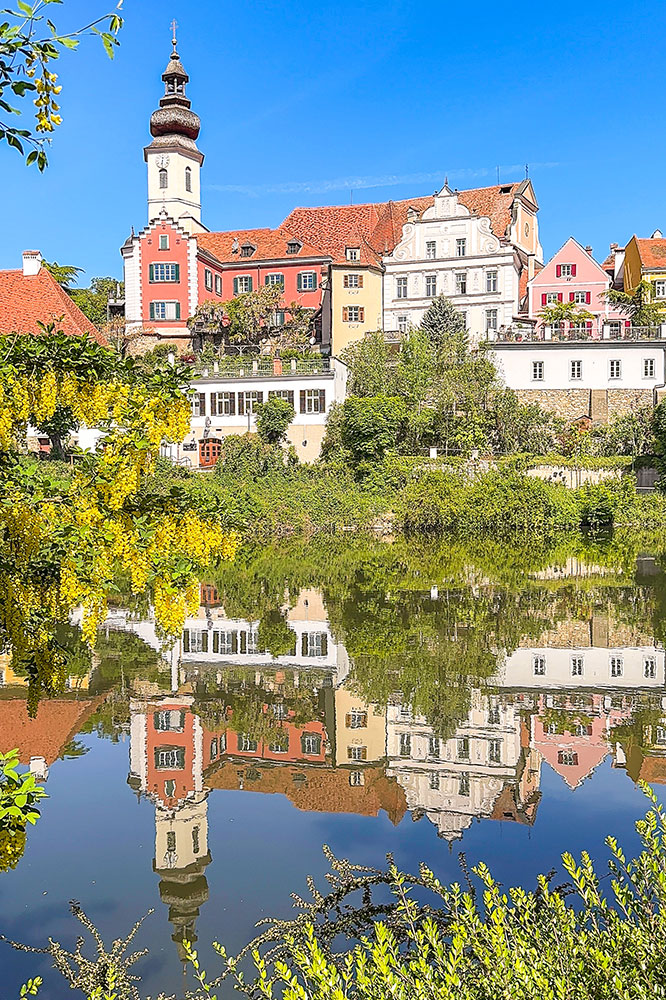
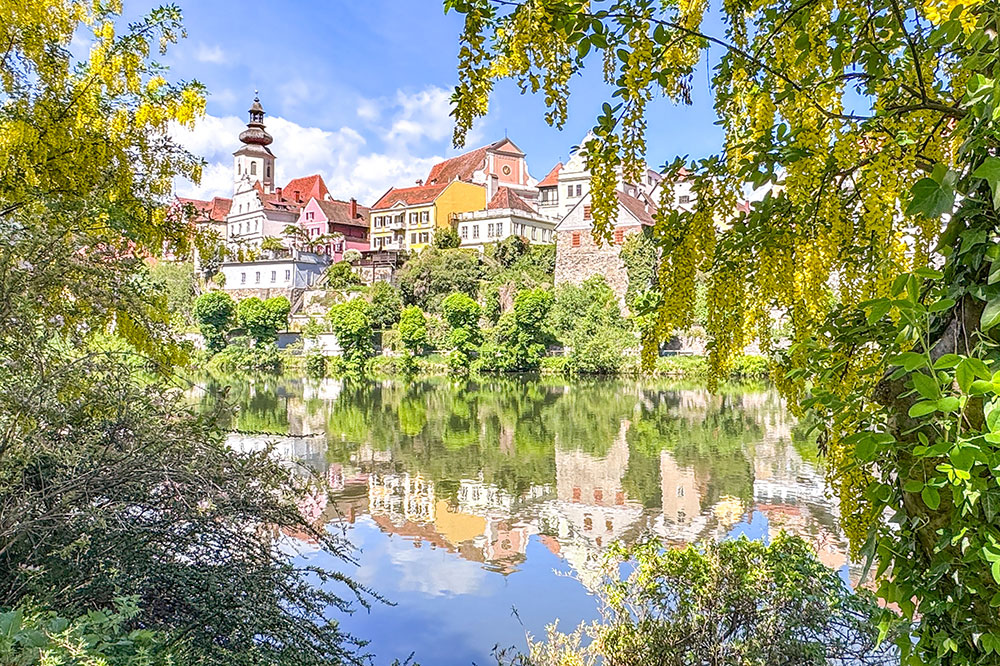
As you walk towards the town from the train station, the fairytale-like skyline reflected on the River Mur will literally stop you on your tracks. A lot of its architecture dates from the 15th and 16th centuries, with Baroque gabled buildings added to older constructions.
Frohnleiten was originally founded around 1280 as a fortified market town to protect the only bridge between Bruck and Graz. Evidence of that history is still visible in the Tabor gate, the remnants of the original fortification walls, and an old well in the main square.
As pretty as Frohnleiten looks from the other side of the river, visiting the main square is a must. It’s considered one of the prettiest in the region of Styria, with beautifully restored townhouses, colourful flower arrangements, and cafes with terraces where you can watch the world go by.
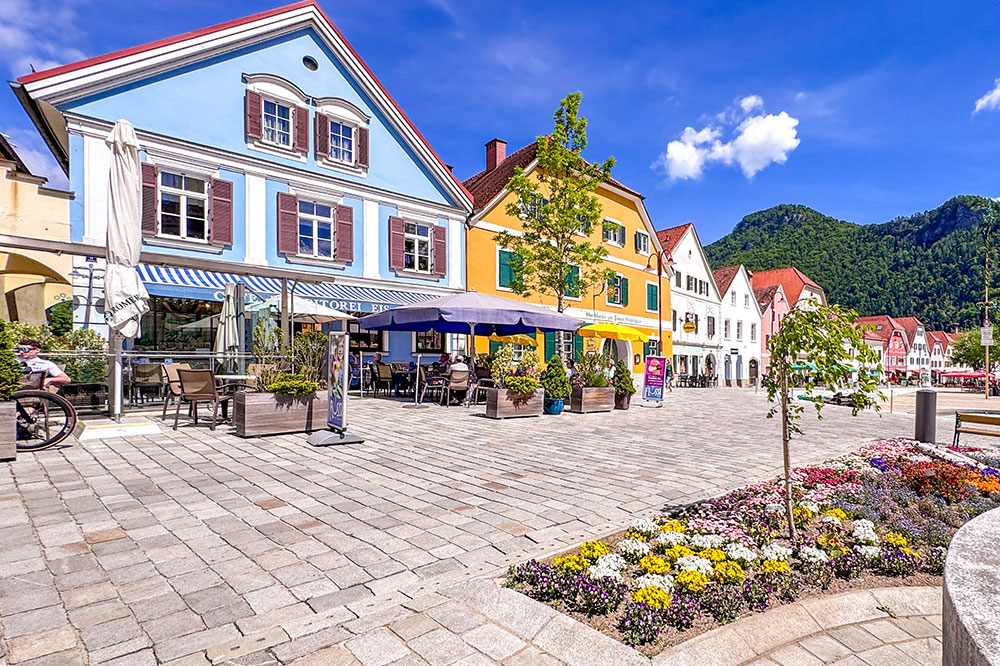
It’s a very small town, but it’s so lovely that you could easily while away the time taking in everyday life, or going for a walk on the Murpromenade along the river.
Frohnleiten is an easy half day trip and you could combine it with Rein Abbey, another ‘Afternoon Out’ recommended in Graz Uncovered. It would make for a great day trip from Graz with very little planning involved.
Rein Abbey: The oldest Cistercian monastery in the world
Visiting an abbey may not sound like the most exciting of day trips. But hear me out, because Rein Abbey is really worth the little effort it takes to get there.
Rein Abbey (Stift Rein) was founded in 1129 and it’s one of Austria’s most significant religious sites. Despite this, most people visiting Graz have no idea it exists.
It is the oldest Cistercian monastery in the world that has been in continuous use. Every other monastery founded before it has since closed, while this one has stayed open for almost 1,000 years.


Step inside the basilica and the scale of it hits you immediately. The building was constructed over a Romanesque core, but what you see today is overwhelmingly Baroque. And I mean Baroque in the most maximalist sense of the word.
It’s a visual treat, but what I loved the most is that this place really plays with your mind.
The walls may look like marble, but in reality they are painted using stucco lustro, a technique that uses plaster mixed with red wine and applied in a way that looks exactly like… well, marble.
The ceilings use trompe l’oeil, another technique that makes it look like there are domes soaring overhead, when in reality it’s an optical illusion on a flat surface. It really is a marvel to see.


You can also visit the impressive library, where you’ll find Medieval manuscripts, including a Biblia Sacra from the 16th century, one of the oldest surviving Luther Bibles.
And somewhere beneath the chapel floor lies the tomb of the man who founded it all. Recent renovation work uncovered the skeleton of Margrave Leopold, and you can clearly see him through a glass panel on the floor, exactly where it was found.
You can easily combine Rein Abbey with a visit to Frohnleiten using public transport and following the directions recommended on the Graz Uncovered app.
About Graz Uncovered
Graz Uncovered is the best way to discover the secret corners and true hidden gems of Graz, going beyond the tourist trail, and exploring neighbourhoods and day trips that are not normally featured on travel guides.
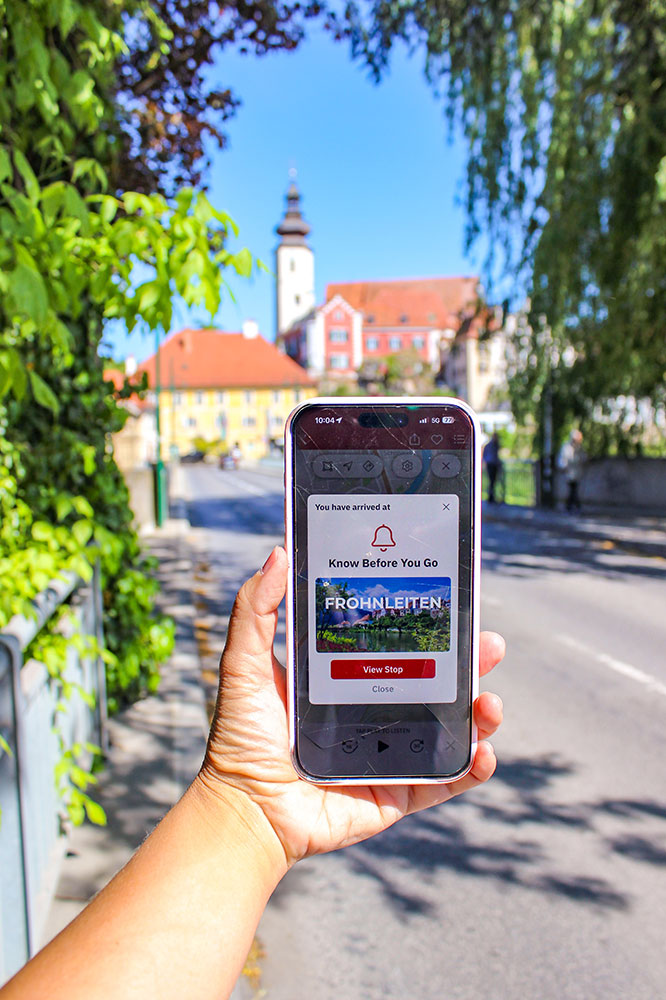
The app was developed in partnership with Graz Tourismus after award-winning travel writer and blogger Dan Clarke spent almost three months in Graz.
Dan’s relationship with Graz started with a flying visit in 2021 and deepened into a recent slow travel stint across the city and surrounding Styria. It’s this deep dive of the city that has resulted in the treasure trove of information now being shared with the world via Graz Uncovered.
The app is free to download and the content is completely based on personal experiences and real time spent in Graz, rather than just a list of attractions assembled from a desk.
Graz Uncovered is very easy to use and most importantly, very flexible. There are no fixed start times, no group sizes, and no guides to keep up with. You just need to download it, open it when you’re ready, and let it take you wherever makes sense for your day.
Do you have any questions about these day trips from Graz or about the Graz Uncovered app?
Let me know in the comments!
LIKE THIS POST? PIN AND SAVE FOR LATER
Disclosure: This post has been created as a partnership with Graz Tourismus. As always, all views are my own.