
Something major is happening at airport security checkpoints across the United States. And millions of travelers have absolutely no idea it affects them yet.
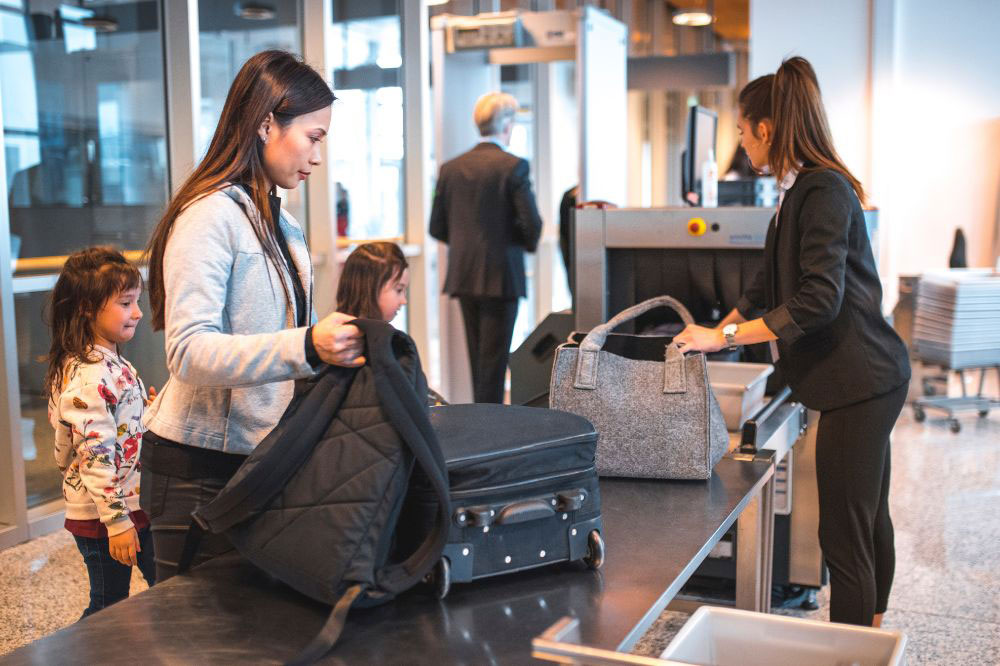
American airports are in the middle of the biggest security overhaul in years. The Transportation Security Administration has been quietly rolling out a new generation of CT scanners at checkpoints nationwide, and the changes are more significant than most people realize.
Some are genuinely good news. Others could catch you completely off guard at the gate.
Here is everything travelers need to know before their next trip.
What are these new CT scanners?
The new machines use computed tomography technology to generate high-resolution, three-dimensional images of bag contents. TSA officers can rotate these images and inspect them from multiple angles, which means far fewer bags need to be opened for manual checks.
As of early July 2026, the TSA had installed 1,162 CT scanners at 296 airports across the country, with plans to keep replacing older X-ray machines as funding allows.
This has been a long time coming. The TSA first tested CT scanners at a handful of airports back in 2018, and the rollout has been building steadily ever since.
The good news: laptops and liquids can stay in your bag
This is the part most travelers will welcome. In lanes equipped with CT scanners, passengers no longer need to remove their laptop or their quart-sized bag of liquids from their carry-on before it goes through the machine.
Both can stay packed. The 3D imaging is detailed enough that TSA officers can see exactly what is inside without needing items separated out.
Even with CT scanners in use, travelers are still required to place all belongings, including carry-on bags, jackets, and personal items, into a screening bin. The bin still goes through. It is just the unpacking ritual that is disappearing.
The catch that could affect your carry-on
Here is where it gets complicated.
The openings on CT scanners are smaller than those on many of the older X-ray machines they are replacing. The CT scanner opening measures 24.5 inches wide by 16.5 inches tall.
For most travelers with standard carry-on bags, this will not be a problem. But for anyone traveling with an oversized bag, a hard-sided case with chunky wheels, or a carry-on that has been packed well beyond its intended capacity, there is a real chance it will not fit through.
If a bag does not fit, TSA officers will either screen it manually or direct the traveler to a different security lane that still uses older X-ray equipment.
It is worth measuring your bag before you travel, especially if you are pushing the upper limits of what airlines allow.
What this means for TSA PreCheck members
One of the most talked-about perks of TSA PreCheck has always been the ability to keep laptops and liquids packed during screening. As CT scanners become standard in regular lanes, that advantage is gradually disappearing for the general traveling population.
The TSA is aware of this.
“As CT scanners become more common in standard lanes, TSA PreCheck retains unique advantages such as expedited screening, shorter lines, and fewer requirements for removing shoes, belts, and light jackets,” a TSA spokesperson confirmed.
On the shoe rule: In July 2025, the TSA eliminated the long-standing requirement for most passengers to remove their shoes at security checkpoints, citing improved screening technology.
Travelers can still be asked to remove them for additional screening or if they contain enough metal to trigger the detectors, but it is no longer a blanket requirement across standard lanes.
PreCheck still offers meaningfully shorter lines and a generally faster experience. But the gap between PreCheck and standard screening is narrowing.
“TSA will continue to adapt PreCheck as technology and traveler expectations evolve, and CT scanners are also being installed in some PreCheck lanes at select airports,” the TSA spokesperson added.
What to expect at the airport right now
The transition is still underway, which means the experience will vary considerably depending on which airport and which terminal travelers pass through.
Many airports currently operate a mix of traditional X-ray machines and CT scanners side by side. Travelers should follow the instructions of TSA officers at the checkpoint, since the rules for each lane depend on the equipment in use.
The direction of travel is clear though. As CT scanners continue to replace older machines, the unpacking ritual that has defined American airport security for years is on its way out. For most travelers, that is genuinely good news. Just make sure the carry-on fits first.