
What is responsible tourism? This vital and ever-evolving subject can be confusing for those trying to become better travellers. So here is a look at what responsible tourism actually means, including a few examples from travellers as well as travel companies and tourism boards.

We’ve all heard about sustainable, green, ethical and ecotourism. More and more destinations, tour operators, hotels and other tourism enterprises are branding themselves as eco friendly and sustainable.
In addition, sometimes we hear the term responsible tourism too, which can add a bit of confusion and make you wonder what it all means and whether there is a difference. So what is responsible tourism exactly?
Table of Contents
What is responsible tourism?
The tourism sector is an important driver of economic growth and job creation across the world, and, up until recently (hello COVID-19!) it accounted for approximately 10% of the global GDP.
More and more countries are turning to tourism for economic growth, and travel in itself has never been as accessible to as many people as it is today.
Parts of the world that were once hard to reach are now easily accessible, and the cost of travel is considerably lower nowadays compared to 20-30 years ago. Add to this, the rise in popularity of social media channels such as instagram encourages and inspires people to see the world more than ever.


As the world is becoming smaller, the increase in visitor numbers on destinations all over the world has had a considerable impact on resources, the environment and local communities.
Thankfully, more and more destinations, tour operators and other enterprises in the tourism industry are focusing on becoming more sustainable and encouraging responsible tourism. But what does this all mean?
In a nutshell, responsible tourism tries to both minimise and reverse the negative effects of travel. These can include overcrowding, the destruction of heritage and the environment, globalisation, detrimental social change and many others.
Responsible tourism vs. sustainable tourism vs. ecotourism – is there a difference?
There is a slight difference between responsible tourism and sustainable tourism and ecotourism, but these terms are normally used interchangeably, which can add to the confusion.
According to the Oxford Dictionary ecotourism is ‘tourism directed towards exotic, often threatened, natural environments, intended to support conservation efforts and observe wildlife’. Although it focuses predominantly in the environmental aspect of destinations, in practice it also involves being respectful of local communities.


Sustainable tourism goes a little bit further than that. According to the WTO (World Tourism Organization), an agency of the United Nations, sustainable tourism should:
- Make optimal use of environmental resources that constitute a key element in tourism development, maintaining essential ecological processes and helping to conserve natural heritage and biodiversity.
- Respect the socio-cultural authenticity of host communities, conserve their built and living cultural heritage and traditional values, and contribute to inter-cultural understanding and tolerance.
- Ensure viable, long-term economic operations, providing socio-economic benefits to all stakeholders that are fairly distributed, including stable employment and income-earning opportunities and social services to host communities, and contributing to poverty alleviation.
Responsible tourism, in turn, refers to the responsibility that both visitors and hosts take to ensure this sustainability is addressed and maintained. A responsible tourist will make decisions based on what is best for the local communities in the long term, making sure that the actions based on those decisions have a positive impact on those communities.


Responsible tourism makes travellers a (temporary) active part of that community, as opposed to them just being a spectator. Making meaningful connections with the visited communities is just as important as being respectful of the environment and the local customs.
In practical terms, however, sustainable tourism, responsible tourism, ecotourism, green tourism and similar designations, are more often than not used equally in the same context.
READ MORE
Bregenzerwald, the Austrian region living sustainably and in harmony with nature
Why is responsible tourism important?
Travelling responsibly doesn’t only have a positive impact in the destinations and communities we visit, but it provides us with enriching experiences that often stay with us and become the highlight in our memories.
Travelling is a way to open our minds to the world and the realisation that we are all different but we’re also the same. And doing it responsibly gives us an opportunity to learn through meaningful connections with local people and to get a better understanding of local cultural, as well as social and environmental issues.


But enough about what we get out of it. What do local communities, the planet and the wildlife get out of it?
According to the Cape Town Declaration, responsible tourism:
- Minimises negative environmental, social and economic impacts
- Generates greater economic benefits for local people and enhances the well-being of host communities, improves working conditions and access to the industry
- Involves local people in decisions that affect their lives and life chances
- Makes positive contributions to the conservation of natural and cultural heritage, to the maintenance of the world’s diversity
- provides more enjoyable experiences for tourists through more meaningful connections with local people, and a greater understanding of local cultural, social and environmental issues
- provides access for physically challenged people
- and is culturally sensitive, engenders respect between tourists and hosts, and builds local pride and confidence
These aspects of responsible travel will take a variety of forms depending on the community, its culture and the environment, but it’s a good place to start thinking about what we can do to do our bit and travel responsibly.
Responsible tourism examples
If you haven’t given responsible tourism a thought before, it’s hard to know where to start on your way to becoming a better traveller, and even to visualise how it can apply to your own travels.
For this reason, I wanted to give you a few examples of responsible tourism so I asked a few travel bloggers, experts in the matter, to let us know how they ensure they travel responsibly.
Responsible tourism from a traveller’s perspective
Engaging with local communities and reducing single-use plastic
By Steph from Worldly Adventurer
Responsible travel for me is all about changing your attitude towards travel and what impact you want to have. I know that when I travel to a new destination, I a) want to leave only a positive impact and b) want to come away with a richer cultural understanding of the destination and its people.
One way I minimise my impact is by always taking a portable travel water filter on trips to minimise my single-plastic use. But more importantly, I try and seek out experiences that allow me to engage with and spend my money in local communities.
Things like homestays or immersive tours to visit and learn from rural or indigenous communities, or even simply staying in locally-run accommodation rather than international chains, can be a great means of genuine cultural exchange and ensuring your money stays in-country.


Responsible travel that engages with local communities is also a humbling opportunity to learn from the people whose country you’re visiting. While I do travel to admire stunning landscapes, interacting with other people and hearing their stories of what life is like in their part of the globe is the most powerful way of learning while traveling.
Using your purchasing power by supporting local businesses
By Abbie from Speck on the Globe
One thing that really resonates with me when I hear the words “responsible tourism” is getting to the core of the industry through supporting locals and being mindful of where my money is spent.
Tourism leakage, or the act of our tourism dollars leaving the communities where we visit is a vital component within sustainable travel.
By staying in locally owned and operated hotels, eating in local dining establishments, purchasing goods made my local artisans, the more money I can keep in the hands of the people who live there the better the place will be.


Destinations that rely on tourism as a main source of revenue shouldn’t lose what they generate to other, usually more stable economies. I’m especially cognizant of my purchasing power when visiting or living in places like the global south where this can be a prominent issue.
Finding locally owned and operated places to spend my money means doing a little research when planning a trip to ensure that my time and money is making the greatest positive impact to where I’m visiting.
Often is a more cost effective, climate conscious choice as well, making it the more sustainable option in the long run.
Respecting the local ecosystem and leaving sand and shells on the beach
By Claudia from Strictly Sardinia
Like many others in Sardinia, the island where I was born and raised remains my favorite travel destination during the summer months, when I can enjoy the stunning beaches. I make it a point to visit a different one each weekend.
We Sardinians are truly proud of the beauty of our beaches, their transparent water and the beautiful sand.


One thing I do differently from others though, is respecting the delicate local ecosystem.
While most in Sardinia have finally come to terms with the idea that taking sand from the beach shouldn’t be done – and even then, they only got to understand that because massive fines are imposed on anybody caught doing that, or caught with the sand – most seem to be completely oblivious to the damage they are doing each time they pick up (and take away) a shell or walk on the sand dunes.
It took millennia for those sand dunes to form, and walking on them destroys them. Likewise, the shells that are apparently just inanimate objects are precious nutrients for microorganism living at the beach – and thus should be left where they are.
I try to do my part to promote environmental protection of Sardinia beaches by pointing out behaviors that are damaging – ie when my 10-year-old niece asks me if I like the shell she’s just picked up, I tell her I do but that I’d like it better left on the beach.
The only thing I pick up from the beach is garbage left by others.
Another great example of Responsible Tourism
A Sustainable Travel Guide to Graz, Austria’s Greenest City
Responsible tourism from the travel industry’s perspective
As you can see, responsible tourism comes in many different forms. However, making sure that we travel responsibly requires a joint effort with the travel industry.
With that in mind, I’ve also highlighted a few success stories of the positive impact sustainable and responsible tourism brings to local communities and the environment, but this time these stories come from actions taken within the travel industry.
Kasbah du Toubkal, Morocco – Working with the local community
Kasbah du Toubkal is a Berber Hospitality Centre in the Atlas Mountains developed with the community in mind.
It was designed to be a flagship development for sustainable tourism in a fragile mountain environment, to be a viable business involved in the development of the Moroccan economy and its growth, and to contribute to the enhancement, viability and vitality of the life of the local community.


Built by a local workforce using locally sourced materials, it is now managed by local people and supported entirely by locally run services. You will have noticed that the key word here is local.
From its beginnings, establishing a sustainable local economy was important for the Kasbah du Toubkal, so it created Association Bassis d’Imlil, a self-financing association that now uses its funds for local projects such as rubbish clearing and the provision of an ambulance amongst others.
Kasbah du Toubkal is also involved in an initiative that makes education accessible to all, but in particular to girls, in a community where traditionally women are not educated.
The Kasbah has also put measures in place to ensure that local working animals are well looked after and that muleteers are paid a living wage so that, in turn, they’re able to care for their mules accordingly.
NBTC Holland Marketing – Spreading the load of overtourism
Amsterdam has long been a victim of its own success, and the influx of visitors to this popular European capital has shown no signs of slowing down. This has been good for the city in that it has established a strong tourism sector, but in recent years the problems that come with overtourism have started to show.
Overcrowding, disrespectful behaviour and the displacement of local people are only a few of the problems that have stemmed from this.
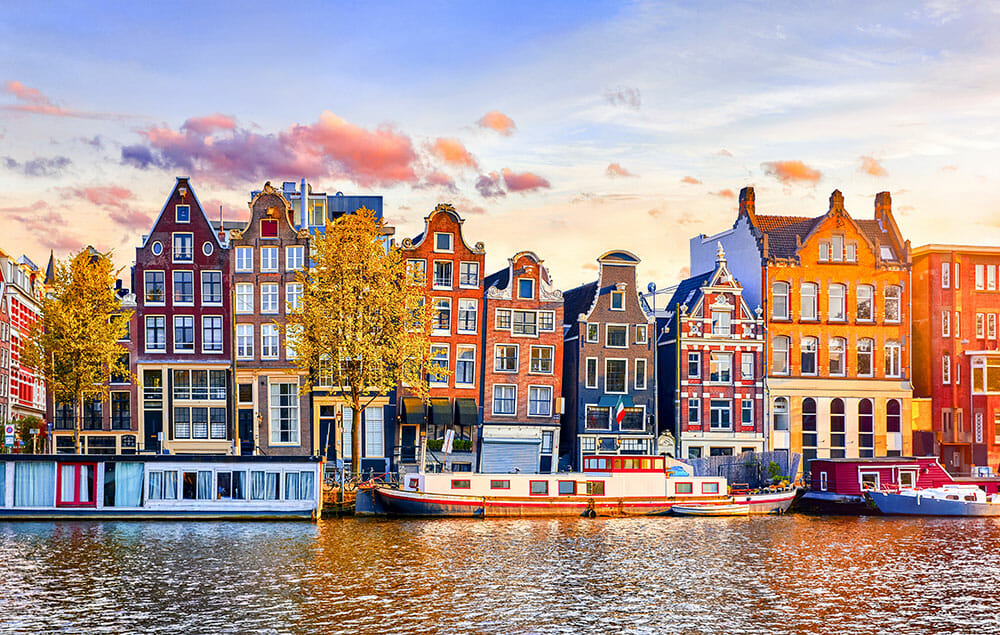

NBTC Holland Marketing, the destination management organisation of the Netherlands, has made a shift from destination promotion to destination management and development.
Their new vision aims to use tourism as a way to improve prosperity and welfare across all areas of the country, so that every Dutch citizen will benefit from tourism by 2030.
As you know, there’s more to the Netherlands than Amsterdam, with plenty of other beautiful cities and regions on offer.
One of the strategies that NBTC is using is to attract tourists to different parts of the country and, if possible, at different times of the year, so that more regions and residents will benefit from visitors.
You can find more information about NBTC’s vision and strategy here.
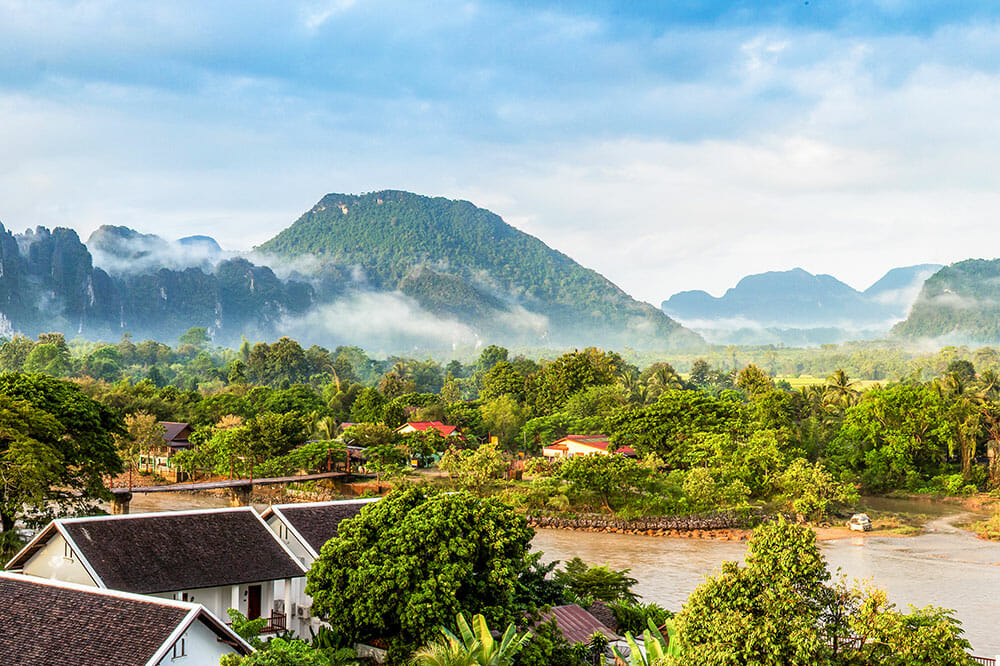
Vang Vieng, Laos – From hedonism to sustainable tourism
Vang Vieng was once known as the party capital of South East Asia, and a mandatory stop in every backpacker’s gap year itinerary.
For many years, travellers from all over the world flocked to Vang Vieng’s infamous party and tubing scene, but quickly things got out of control. Alcohol and drug excess coupled with lack of regulations, turned Vang Vieng into a wild hedonistic town and a deathtrap, claiming 27 lives in 2011 alone.
A year later the government stepped in and closed most of the riverside bars, where the majority of the shenanigans took place. Rumours that tubing was dead spread quickly and backpackers stopped coming. It was a blow for the local economy.
Vang Vieng has had to reinvent itself, and it chose to do it with a long-term vision in mind.
The town’s location is its best asset, on the banks of the Nam Song River and surrounded by towering karst limestone mountains, caves and inviting lagoons.
This dramatic landscape has helped in the rebrand of a decadent party town, into a place where the surrounding countryside is once again the star attraction. Local enterprises now offer alternative, more sustainable activities that attract a more responsible type of traveller who seeks to enjoy nature.
I hope this article about what is responsible tourism will give you enough food for thought about the impact our choices have when it comes to travel.
Like this post? Pin and save for later


Paul Cox
Friday 10th of January 2025
Thank you for sharing valuable insights on responsible tourism and educating me about its importance in promoting sustainable travel.
Tanvi Shah
Monday 24th of May 2021
Great information!! Thanks for sharing this informative information about responsible tourism. I really enjoy reading this blog information.
Teresa Gomez
Sunday 30th of May 2021
Thank you so much! I'm really happy you found it useful :)
Kishor Kumar
Tuesday 2nd of March 2021
Great article. Nicely written
Teresa Gomez
Tuesday 2nd of March 2021
Thank you. I'm glad you enjoyed it :)
Maria
Thursday 10th of December 2020
Thanks for doing so well at defining responsible travel! It can be so confusing with all the different terms that people throw around. I loved what the other bloggers had to say too :)
Teresa Gomez
Saturday 19th of December 2020
Thank you! I'm really glad you found it useful. I also feel that all the different terms around sustainable and responsible travel can be a bit confusing, so I'm glad I was able to give some clarification :)
Jen Ambrose
Friday 25th of September 2020
Oh I love that you mentioned Vang Vieng in this post! I lived in VV for a few months teaching yoga, and I had such a nice time there. I feel like I'm constantly telling people, "No it's different now!" (or least it's trying to be lol)
Teresa Gomez
Sunday 27th of September 2020
How cool! I loved Vang Vieng! And I'm so glad it's changed for the better! :)