
Discover some of the most amazing and surprising things to do in Umbria, and get to know the distinct character and lifestyle of this charming Italian region.

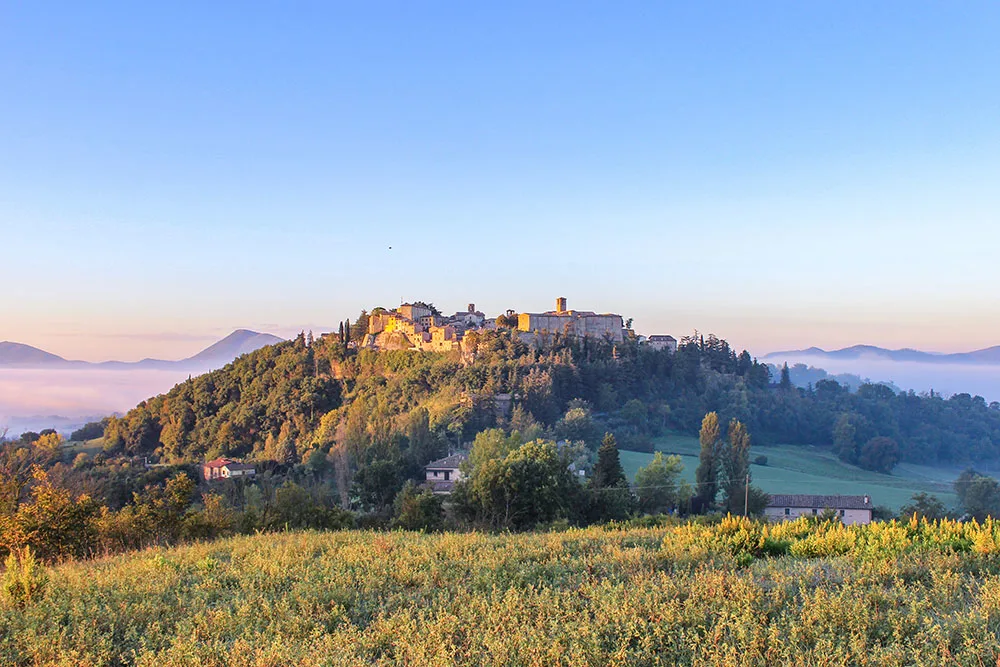
Located in the heart of Italy, and nestled between the Apennine Mountains, and the regions of Tuscany, Lazio, and Marche, Umbria is one of the smallest and least known Italian regions.
It is the only region in the country that doesn’t have a coastline or a border with another country. Surrounded by mountains, hills, valleys, and plains, this central region has managed to preserve its ancient traditions, which are some of the oldest in Italy.

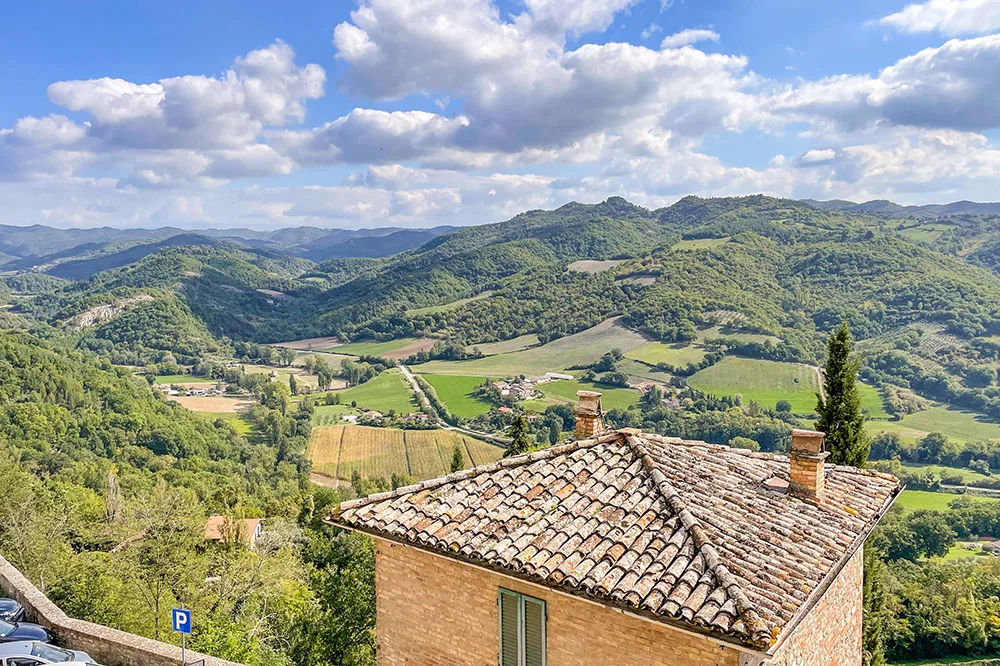
Umbria is known as Italy’s Green Heart, not only because of its central location but also because of its green landscapes and lush vegetation.
It is a land of medieval hill towns, many of them with Etruscan origins, which were built as fortresses to protect themselves from foreign invaders. They are often surrounded by thick defensive walls and look impenetrable.

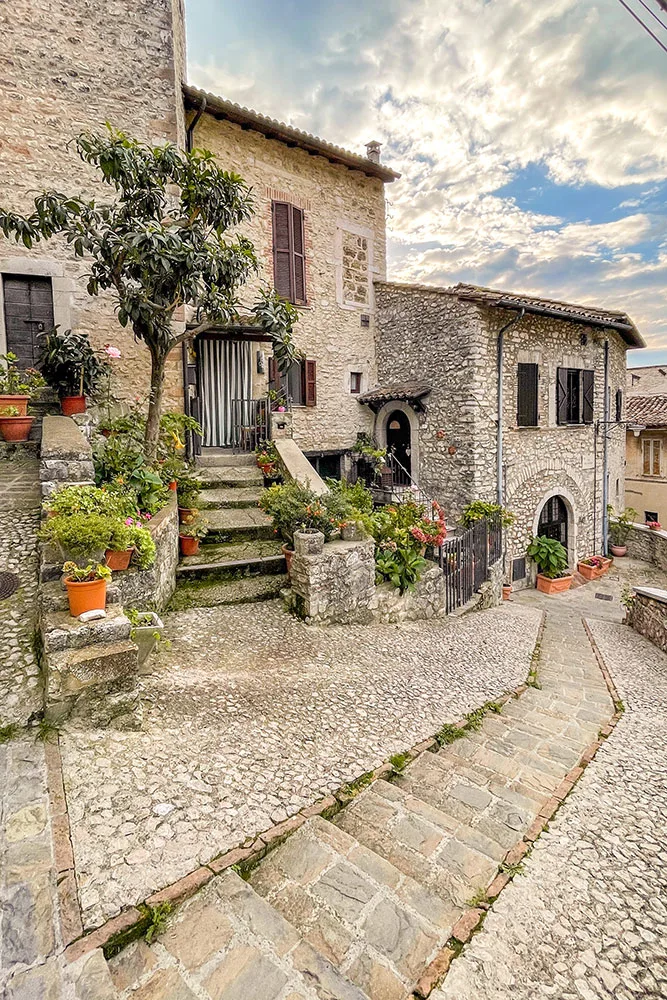
There are never ending options for things to do in Umbria that will help you discover this fascinating region. And there is something for every kind of traveller too.
Whether you are interested in enjoying the outdoors and active adventure, sampling mouthwatering local delicacies, or discovering a treasure trove of art and culture, Umbria has got you covered.


Here are my top recommendations for the best things to do in Umbria. But before that, here is a little bit of an overview on this stunning Italian hidden gem.
Table of Contents
- 1 An Overview of Umbria
- 2 Best time to Visit Umbria
- 3 How to get to Umbria
- 4 Getting around Umbria
- 5 Where to stay in Umbria
- 6 Amazing Things to do in Umbria
- 6.1 Get lost in the medieval hilltop town of Montone
- 6.2 Stay and eat in the home of a medieval historical figure in Montone
- 6.3 Learn to make Umbrian pasta in Montone
- 6.4 Discover the hidden medieval pathways of Citerna
- 6.5 Visit Bufalini Castle in San Giustino
- 6.6 Learn about Italy’s last anarchist republic in Cospaia
- 6.7 See Alberto Burri’s works in Città di Castello
- 6.8 Walk through Italy’s narrowest alley in Citta della Pieve
- 6.9 Sample the most expensive spice in the world in Città della Pieve
- 6.10 Admire the works of Perugino in Città della Pieve and Panicale
- 6.11 Explore Panicale, the most beautiful terrace on Lake Trasimeno
- 6.12 Learn about Ars Panicalensis, an art unique to Panicale
- 6.13 Attend a show in one of Italy’s smallest theatres in Panicale
- 6.14 Go kayaking on Lake Trasimeno
- 6.15 Climb La Rocca di Passignano for the best views of Lake Trasimeno
- 6.16 Get lost in the secret alleys and arches of Stroncone
- 6.17 Taste truffles, Umbria’s black gold, in Stroncone
- 6.18 Visit Marmore Waterfalls, the tallest man-made waterfall in the world
- 6.19 Discover the medieval castle of Arrone
- 6.20 Explore the outdoor murals of Calvi dell’Umbria
- 6.21 Marvel at the stunning Duomo di Orvieto
- 6.22 Discover Orvieto Underground
- 7 Map of Umbria
An Overview of Umbria
Umbria is named after the ancient Umbri tribe who dominated the area from around 1,000 BC, and it has had a number of civilisations leave their mark.


The Etruscans, who were the Umbris’ biggest rivals, together with the Romans, who came later, had a very big impact in Umbria. In the Middle Ages, the region joined the Papal States, and, the Renaissance was an important period of prosperity in the areas of culture, art, business and politics.
Today, Umbria’s capital, Perugia, is considered one of the most beautiful cities in Italy. But I want to look beyond the big cities and focus on the less known areas of Umbria.
Despite being one of the smallest regions in Italy, Umbria is blessed with a large number of medieval hill towns. They are magical places that transport you back in time, and also give you an insight to a slower pace of life that is to be savoured day by day.


Umbria is, in fact, all about slow travel, slow food, and soaking in all those experiences in Italy’s Green Heart.


Best time to Visit Umbria
The best time to visit Umbria is from April to June and from September to October.


It doesn’t tend to get unbearably hot in the summer, however temperatures are more comfortable in the spring and autumn. Travelling in the shoulder seasons also has the advantage that you avoid the crowds.
In spring you will get to enjoy the lush green landscapes at their most vibrant, with fields bursting into colour with wildflowers. Umbria is known as ‘the Green Heart of Italy’ for a reason.


Autumn is the time of the grape and olive harvest, and it’s also truffle and porcini season, so it’s perfect if you are interested in food festivals. There are plenty of them across the region that celebrate the most precious local products.
How to get to Umbria
San Francesco d’Assisi International Airport in Perugia has connections with a lot of major European cities, including London, from where you can fly with British Airways or Ryanair. Alternatively, Rome and Florence airports are just over two hours away by car or by train.
Check the best flight deals on Skyscanner here
Getting around Umbria
You can travel around Umbria by public transport between the main towns and villages. Uber in Italy is only an option in the biggest cities, so I would recommend hiring a car in order to make the most of your time and to not be limited by public transport schedules.
Compare the best car hire deals here
Where to stay in Umbria
I loved driving around Umbria and exploring the different areas. Despite being a small region, some of the roads can be narrow and winding, so it can take a bit longer to get to places.


So my recommendation would be to pick more than one place to base yourself in Umbria, according to the areas you are planning to explore. Here are my suggestions for the best places to stay in Umbria.
Northern Umbria
Locanda del Capitano, Montone


The Locanda del Capitano is a charming boutique hotel with a big focus on sustainability, located in the heart of Montone, a sweet medieval hilltop town. I loved how much character this intimate hotel had, and how welcoming the owners were.
Badia Il Vingone, Città di Castello


Badia Il Vingone is located in a restored 10th century Benedictine Abbey, 5 miles from Città di Castello. Its rural location comes with stunning views over the Umbrian countryside. They have both rooms and apartments.
Lake Trasimeno Area
Chez Nous B&B, Città della Pieve


Located in the heart of Città della Pieve, one of the most beautiful villages in Italy, Chez Nous is a charming B&B within a former medieval palace. There are only two rooms, which have been decorated with a lot of character without compromising in comfort.
Hotel Lidò, Passignano sul Trasimeno


Hotel Lidò is a modern hotel located on the shores of Lake Trasimeno in the beautiful historic village of Passignano sul Trasimeno. The views over the lake from the rooms are truly spectacular, particularly at sunset.
Southern Umbria
Porta del Tempo, Stroncone


Set in a 16th-century renovated prison, Porta Del Tempo offers rooms in the centre of the medieval village of Stroncone, a 15-minute drive from Terni. The rooms are full of charm with wood-beamed ceilings and terracotta floors.
Hotel Duomo, Orvieto


True to its name, Hotel Duomo is located in the heart of Orvieto, a few steps from the magnificent Duomo. It’s a modern hotel set in a renovated Art Nouveau building with very comfortable rooms, and it’s perfect as a base in Southern Umbria.
Amazing Things to do in Umbria
Get lost in the medieval hilltop town of Montone
Montone is a charming Umbrian village that dates back to the 9th century. It rises proudly on a hill over the valley of the Carpina River and the Upper Tiber Valley. It is a classical medieval village that has been preserved and has remained unchanged for centuries.


The steep and narrow streets paved in flagstones, and the ancient architecture of the village will make you feel like you are in an open-air museum. But Montone is no museum. Montone is very much alive with a strong sense of community.
The streets lined up with blue and yellow flags offer a glimpse of a recent festival. Windows framed by flower boxes, and doors flanked by potted urban gardens give you a sense of the pride locals have for their village.


This old-world charm has earned Montone the accolades of one of the most beautiful villages in Italy (I Borghi più belli d’Italia), and the prestigious Orange Flag of the Italian Touring Club, an environmental tourism quality mark awarded to villages with excellent quality offer and hospitality.


Places not to miss in Montone include Piazza Fortebraccio, the beating heart of the village, the 14th century ancient Clock Tower and Prison, the wonderful viewpoint in Piazza San Francesco, and the Municipal Museum within the former Convent of San Francesco.
Stay and eat in the home of a medieval historical figure in Montone
Montone was the home of Andrea Braccio Fortebracci, Captain of Fortune and one of the greatest Italian commanders of mercenary troops of the Middle Ages.


His old residence is an elegant palace from the 1100 that has been lovingly restored and converted into a charming boutique hotel called Locanda del Capitano.
So why not stay in the heart of one of the most beautiful villages in Italy, in the home of the historic figure who had the vision of a united Italy, over 400 years before it actually happened?
The current owner of this lovely hotel is Chef Giancarlo Polito, who is also the owner of the osteria located within the same building. Chef Polito’s cuisine is creative, delicate and respectful of the past, and eating his food creations is an experience in itself.


He is a true spokesman for Umbrian cuisine and holds a very close relationship with local producers. His menus feature essentials of the region such as olive oil, truffles, free-range meats, and game.
There’s even a dedicated olive oil menu with the best oils from the region, including Chef Polito’s own branded olive oil, which, at the time of my visit, had been pressed only two days before.
The wine selection is also very impressive, with over 400 labels.
Learn to make Umbrian pasta in Montone
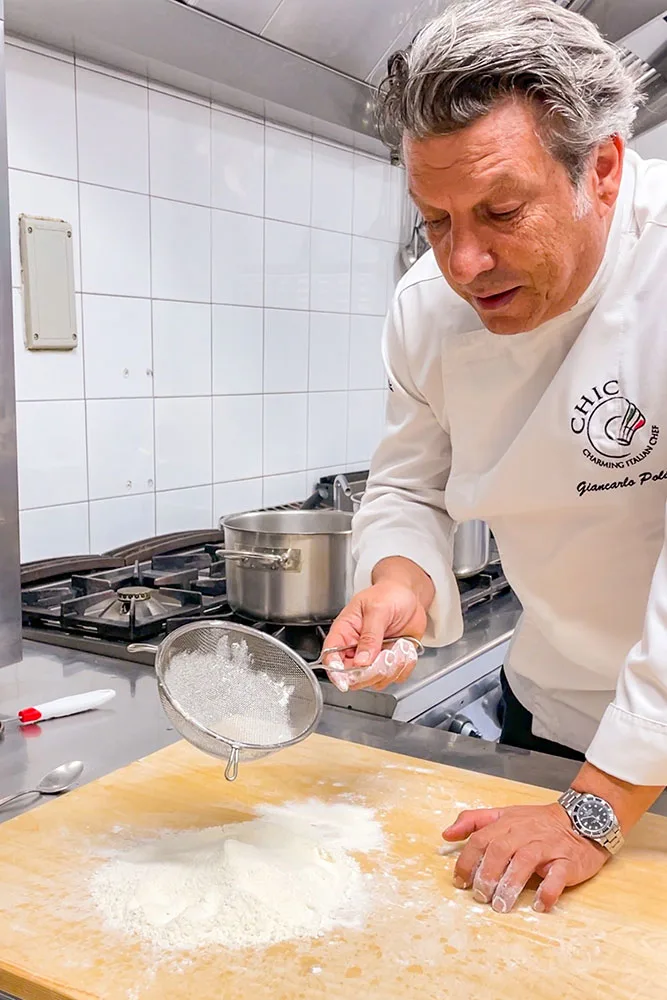
No visit to Italy is complete without a pasta making class, and Chef Giancarlo Polito also offers the opportunity to step into his kitchen and do just that!

But come with an open mind. Traditional Umbrian cuisine has very rustic roots and it’s often called ‘cucina povera’, or peasant cooking.
It uses minimal ingredients and methods of preparation that rely on readily available local products such as grains, vegetables, herbs, and olive oil. This minimal approach is reflected in the pasta dishes that are traditional to Umbria.


I learnt about ‘cucina povera’ in the kitchen of Chef Polito, where together we made frascarelli, a type of pasta made with only flour and water. No eggs.
Frascarelli were traditionally made with leftover flour, after servants made egg pasta for their masters. It is often referred to as the world’s easiest pasta. And as easy as it is, it is really fun to make and even more delicious to eat after.
Contact Chef Giancarlo Polito to book your pasta workshop here


Perched strategically on top of a hill overlooking the Upper Tiber Valley and very close to the border with Tuscany, Citerna is a village with a history covering multiple civilisations.


During the Middle Ages it was heavily contested by local ruling families, and it’s from this time that a lot of the village dates from.
One of the things that Citerna is famous for is its unique medieval walkway or Camminamento Medievale, a set of covered passageways dating back to the Middle Ages.


These passageways follow an ancient walking route that goes below the buildings that make up the defensive walls of the village.
As you walk through the dark passages, the views through the arches or loggias over the Umbrian hills are stunning, so make sure you stop every so often to take them in.


Walking through these passageways at sunset is absolutely magical.


Visit Bufalini Castle in San Giustino
San Giustino is located right next to the border with Tuscany, and it’s famous for the imposing castle that sits in the heart of this ancient village.


Originally a fortress built in the Middle Ages, Castello Bufalini was turned into a grand castle by the Bufalini family. The renovations that gave its current appearance occurred in the 16th century, and resulted in a commanding yet elegant castle with a refined garden.
The garden was completely remodelled at the end of the 17th century, with the creation of rose gardens, green galleries, fountains and niches with mosaics, and a box hedge labyrinth.


You can still find these features in the garden today, including the 400-year-old box maze and hedges trimmed in the shape of the Bufalini family’s coat of arms.
The interior of the castle is just as opulent, with a grand Great Hall containing a throne, and a rich Baroque room called Gallery of Strong Women, which celebrates both historical and contemporary prominent female figures. This was, of course, my favourite room.


It is only open for visits on weekends, but I was there on a weekday and was really fortunate to have been given a tour of the castle and gardens by Elio, the castle caretaker, who very kindly offered to show me around.
Learn about Italy’s last anarchist republic in Cospaia
Just outside of the village of San Giustino, we can find a place with a curious history. This place is the minuscule former Republic of Cospaia, a strip of land just 4 kilometres long and 700 metres wide.


This Republic was the result of a human error when establishing the borders between the Papal States and the Grand Duchy of Tuscany back in 1440. This error created an independent and anarchic ‘no man’s land’ that lasted over 400 years.
The Republic of Cospaia was the very first place in Italy where tobacco was planted with seed brought from Spain. This new crop brought a lot of prosperity to the area and tobacco became an integral part of San Giustino’s industries.
However, tobacco was banned in the Papal States, so the Republic of Cospaia attracted a lot of smugglers. Today, you can relive those times by walking the Smugglers Trail that goes through Cospaia.


If you are interested in learning more about the tobacco industry in the area, you can visit the Museum of the Science and History of Tobacco, where you can learn how it changed the local landscape and economic opportunities in the area.


See Alberto Burri’s works in Città di Castello
Città di Castello is the birthplace of world-renowned artist Alberto Burri, one of the most prominent abstract painters of the 20th century.


His work has been exhibited in some of the best galleries all over the world, and now they can also be enjoyed in his hometown.
In 1978, Burri designed his own museum across two sites in Città di Castello. The first site is Palazzo Albizzini, an elegant Renaissance building from the second half of the 15th century, which opened to the public in 1981.


The second site is the Ex-Seccatoi del Tabacco, a set of former tobacco drying hangers that have been repurposed as a striking art gallery.
Both sites are part of the Palazzo Albizzini “Collezione Burri” Foundation, and, with about 130 of his art pieces, it is the most comprehensive collection of Burri’s work.
These galleries are two of the best places to visit in Umbria for modern art lovers.
Walk through Italy’s narrowest alley in Citta della Pieve
Perched on a hilltop at 500m above sea level, Città della Pieve is steeped in history, charm and stunning views over Lake Trasimeno.


It’s a delightful medieval village with Etruscan origins, with a welcoming feel and warmth that is accentuated by the amber hue of its historic buildings. This has earned it the Orange Flag of the Italian Touring Club for historical landscape conservation.
One of my favourite things to do in Città della Pieve was to just wander around its narrow streets and alleys, discovering hidden corners and the many viewpoints over the countryside of Umbria, Lazio and Tuscany.


There are actually two routes that you can follow that will cover the most interesting points.
One of these routes is the Alleys Walk (Percorso dei Vicoli), which will take you through the most quaint and interesting alleyways, including the famous Vicolo Baciadonne, one of the narrowest streets in Italy.


The Vicolo Baciadonne (Kisswomen Alley) is believed to have originated because of a dispute between neighbours, and the name is a result of the wild imagination of Città della Pieve’s residents.
The second route is the Landscape Walk (Percorso del Paesaggio), which will take you around the village following the ancient walls.


Sunsets in Città della Pieve are spectacular, so my suggestion would be to follow this route as the sun goes down when you can see the countryside change colour and the village warm tones turn fiery.
My favourite viewpoint was the panoramic balcony that hugs the outside of the Church of San Pietro.
Sample the most expensive spice in the world in Città della Pieve
Città della Pieve is a great destination for foodies, particularly if you like spices. Città della Pieve is famous for the cultivation of saffron, which has been harvested by hand from crocus flowers since at least the 13th century.


Initially, saffron was used as a tanning agent for linen, silk, wool, and it was even used in paintings. The renowned Renaissance painter Pietro Vannucci, more famously known as ‘Perugino’, is known to have used saffron on his canvas and frescoes.


While in Città della Pieve, tasting dishes that use high quality and locally grown saffron, such as saffron risotto, is one the top things to do in Umbria.
Also, if you happen to be in the area in mid-October, don’t miss the Zafferiamo festival, a celebration of the most expensive spice in the world. There are food stalls, workshops, demonstrations of saffron flower processing techniques, and plenty of tasting opportunities.
Admire the works of Perugino in Città della Pieve and Panicale
Pietro Vannucci, widely known as Perugino, was born in Città della Pieve in 1446, and was one of the most important Renaissance painters in the late 15th century and early 16th century.


He was a student of Piero della Francesca and Andrea del Verrochio, together with Botticelli and Leonardo Da Vinci, and later became Raphael’s master.
Perugino was famous for the elegance in his paintings, and for the effective use of symmetry and perspective to give balance and a three-dimensional effect to his images.
The Cathedral of St Gervasius and Protasius in Città della Pieve houses two of his pieces – the Baptism of Jesus (1510) and the Glory of Virgin Mary between the Patron Saints, Gervasius and Protasius, Holding the Town Standard, and Saint Peter and Saint Paul (1514).


The Oratory of Santa Maria dei Bianchi, also in Città della Pieve, is another place where you can find his work.
The Adoration of the Magi (1504), is a striking fresco that’s seven metres wide and six and a half metres high. What’s even more impressive is that it was completed in only 28 days.
But to see one of the most beautiful frescoes by Perugino in the whole of Umbria, we need to travel to Panicale, about 25 minutes’ drive from Città della Pieve.


Just outside the walls of this cute medieval village, we find the Church of San Sebastiano, which houses the magnificent The Martyrdom of Saint Sebastian (1505).
This church is also home to the Madonna Enthroned Among Musical Angels, which has been attributed to Raphael, Perugino’s student.
Explore Panicale, the most beautiful terrace on Lake Trasimeno
With its original medieval structure intact, Panicale is part of The Most Beautiful Villages in Italy (I Borghi più belli d’Italia) and also boasts the Orange Flag of the Italian Touring Club, as recognition of its cultural and landscape legacies.


With less than 150 residents, Panicale may be bijou, but it certainly packs a punch when it comes to history, things to discover, and of course, beauty. It is said to be the most beautiful terrace overlooking Lake Trasimeno.
At the centre of the village there are three squares at three different levels.
Through the Porta Perugina, at the lower level, we have Piazza Umberto I. Here it’s where we find a 15th century cistern turned into a fountain in the 1900s, and the location of the local market for centuries.


The middle level square is where the Collegiate Church of Saint Michael Archangel can be found. This 11th century church is home to the Adoration of the Shepherds, a painting by Renaissance artist G. Battista Caporali, who was a pupil of Perugino.
The third level, and highest point in the village, is Piazza Masolino, from where there are stunning views of the Umbrian and Tuscan countryside. Here is where you find the 14th century Palazzo del Podestà, which today houses the Historic and Legal Archives.


Exploring Panicale is one of the top things to do in Umbria, and the best way to do it is by wandering around its concentric streets.
You will come across the Porta Fiorentina, the two remaining towers of the old castle and the Church of Sant’Agostino, home to the Anita Belleschi Grifoni Museum of Embroidery on Tulle or Ars Panicalensis.
Learn about Ars Panicalensis, an art unique to Panicale
In Panicale you will find the deconsecrated Church of Sant’Agostino, home to the Anita Belleschi Grifoni Museum of Embroidery on Tulle, or Ars Panicalensis.


This type of embroidery originated with local nuns in the 18th century and is an art unique to Panicale.
The museum was named after Anita Belleschi Grifoni, who brought the art to the forefront by setting up an embroidered tulle school at the beginning of the 20th century, after the nuns had left the village.


The museum recounts the history of Ars Pancalensis and the exhibits include artefacts from the school, and a very long bridal veil among other items.
Panicale tulle is highly priced and it has been worn by many illustrious people, including the Savoys, the former Italian royal family.
Attend a show in one of Italy’s smallest theatres in Panicale
Despite being a tiny little village, Panicale offers a lot of things to do in Umbria, and one of those things is a little bit unexpected for a village of this size.


Panicale has a theatre – the Cesare Caporali Theatre. Built in the 17th century by a group of residents, it was originally made of wood, but it has been renovated since. With only 140 seats, including 24 boxes, it is one of the smallest theatres in Italy.


If you happen to be in Panicale when one of the weekly shows is on, I would highly recommend getting a ticket. There are not many theatres that resemble an opulent opera house in miniature, like the Cesare Caporali Theatre does.
Go kayaking on Lake Trasimeno
Even though Umbria doesn’t have direct access to a coastline, it has Lake Trasimeno to make up for it.


Lake Trasimeno is the largest lake in central Italy and the fourth largest in the country, only slightly smaller than Lake Como, but a lot less known. It’s a true natural paradise and a haven for a great variety of birds and other wildlife.
The lake is surrounded by a backdrop of rolling hills, sunflower fields, vineyards and olive groves. This idyllic landscape was once inhabited by the Etrucans, and today it’s surrounded by lakeside and hilltop medieval towns with a lot of history to discover.


The lake is a haven for active travellers too, and especially for those who enjoy watersports, Lake Trasimeno is ideal.
I joined Acqua Dolce Sailing in the village of Monte del Lago, where I hired a kayak and went out to explore the lake. It was incredibly calm and it was great to see birds such as duck, comrants, herons, and egrets.


I followed the shore towards the village of Passignano di Trasimeno, but you can also visit Polvese Island, the largest island in the lake. It’s a great way to spend a sunny morning or afternoon, and one of the best things to do in Umbria for active travellers.
Hire a kayak with Acqua Dolce Sailing here
Climb La Rocca di Passignano for the best views of Lake Trasimeno
Passignano sul Trasimeno is an ancient fishing village located on the shores of Lake Trasimeno. Surrounded by vines and olive trees, it is part of the network of the most beautiful villages in Italy (I Borghi più Belli d’Italia).


There is a very strong sense of history around Passignano, particularly in the oldest quarter, which dates back to medieval times.
The gates and towers that flanked the original walls have been preserved almost intact, including the rare triangular Torre di Ponente, which still bears the village’s coat of arms.


One of the top things to do in Umbria, not just in Passignano, is to climb to the highest point in the village, La Rocca.
La Rocca is a 5th-6th century fortress that has the most spectacular 360 degree views of Lake Trasimeno, the village, and the countryside around it. It is truly breathtaking and it’s pretty magical if you find yourself at the top when the church bells go off on the hour.


Within La Rocca you can also find a small Boat Museum, which tells you about the history and tradition of the Trasimeno fishing boats.
Get lost in the secret alleys and arches of Stroncone
Perched on top of a hill at 450 metres above sea level, and surrounded by olive groves, Stroncone is an incredibly charming medieval village. It was founded in the 10th century, during the so-called ‘fortifications period’, and it still preserves many of its ancient features.


Narrow meandering streets, beautiful stone doorways, and an ancient well are all surrounded by the imposing city walls that have protected this small village from its most ferocious enemies.
Arriving in Stroncone, you are greeted by a beautiful 16th century fountain built just outside the main city gate in the Piazza della Libertà.


Walk through the gate and you will feel like you’re entering a fortress. The first thing you see will be a small courtyard-like square with a medieval well, and the Oratory of San Giovanni Decollato.
This is the starting point for exploring this labyrinth of a village. And getting lost is, without a doubt, the best way to discover Stroncone’s hidden corners.


Stroncone is a place of magic, and as you wander through its narrow winding streets, you sense the fierce independence this town has developed. It’s very easy to lose your bearings as you twist and turn walking through steep steps and under hidden ancient gates and arches.


With so much character tightly packed in a small number of streets, it’s really surprising Stroncone still remains so off the beaten path. It’s a true hidden gem in Umbria, a region full of hidden gems waiting to be discovered.
Taste truffles, Umbria’s black gold, in Stroncone
Umbria is one of the main truffle producing regions in Italy, and with truffles, and especially Umbrian truffles, becoming famous all around the world, people are flocking in to try this delicious wonder of nature.


The most popular variety of black truffles is the Norcia and Spoleto Truffle, which can be found along the river Nera, in the hills behind Spoleto, in the Monti Martani, around Trevi, and on Mount Subasio, between November and March.
It’s often referred to as Umbria’s black gold, and it’s generally cooked before serving. They are normally used as a condiment for pasta as well as in game dishes.


If you are a foodie, black truffle is one of the things you must eat in Umbria, especially if you are in Stroncone or the River Nera area. Try it in pasta such as ciriole al tartufo.
If you’d like to do more than just eat truffles, and you’d like to live and understand the truffle hunting process, you can join a truffle hunting experience.
Visit Marmore Waterfalls, the tallest man-made waterfall in the world
The Marmore Waterfalls are one of the most popular attractions in Umbria for a reason. It’s a very impressive sight and one of the top things to do in Umbria.


Unlike the famous waterfalls of Iceland, Marmore Waterfalls are man-made. They were built by the Romans in the 3rd century BC to drain the marshes above the River Nera, and are a true feat of engineering.
The biggest waterfall is 165 metres high, and it’s the tallest man-made waterfall in the world. It is created by the water of the River Velino flowing into the River Nera, forming a number of waterfalls at different levels along the way.


There are a number of trails that you can follow within the park with viewpoints along the way so you can admire the waterfall’s different tiers.
You can spend a couple of hours here, but my recommendation would be to spend at least half a day. There are walking trails that take you to the best views and angles of the falls, and plenty of picnic spots, so you can bring a pack lunch with you.


The water has been used to generate hydroelectric power since the 19th century, so the water flow is controlled by being ‘turned on and off’ everyday in order to generate energy.
Time your visit for when it opens to see the flow at its peak – from 12pm to 1pm, and again from 4pm to 5pm.
Discover the medieval castle of Arrone
Located in the heart of the Valnerina, the valley of the River Nera, Arrone is a fortified village built on top of a craggy rock in the 9th century.


The village owes its name to the Arroni family, a Roman noble family that escaped the devastation of the Saracens and Hugarians.
This charming medieval village is part of the network of the most beautiful villages in Italy (I Borghi più Belli d’Italia).
Arrone is divided into two areas, the upper and older part, known as “La Terra”, which is where the original medieval castle was, and the Rione Santa Maria, which is the area that connects the castle to Mount Arrone.


In order to reach the older part of Arrone, you have to climb up a set of winding tiny alleyways and steep cobblestones that have the most spectacular views over the Apennine Mountains, and the hilltop villages of Montefranco and Casteldilago.


At the top of the village, the castle area is enclosed by ancient walls, where we find the Church of San Giovanni Battista.
This modest gothic building from the 13th-14th century is home to a set of very impressive 15th century frescoes that were commissioned by local families to protect them from diseases and misfortunes.


The highest point of the village is the Torre Civica, a square clock tower and the only remaining building from the fortress built by the Arroni family.
The tower is known as the Torre degli Ulivi (Olive Tree Tower) because of the ancient olive tree growing on top of it, and it has become the symbol of Arrone.
Explore the outdoor murals of Calvi dell’Umbria
Calvi dell’Umbria is another true hidden gem, not only in Italy, but in Umbria too. This quaint hilltop village is truly off the tourist trail, and its narrow and winding streets hide a little secret waiting to be discovered.


Located very close to the border with Lazio, Calvi dell’Umbria is a medieval village with origins that date back to the Bronze Age, although the first mention of it is from the 9th century.
My favourite thing to do in Calvi was wandering the cobblestoned streets, through winding alleyways and lanes so steep, steps had to be built to make it easier to go up and down. The streets take you through vaults, arches, and the ruins of the city walls and towers.


As I explored the hidden corners of Calvi, I discovered that the village has been turned into an open air gallery. The streets and the walls of the ancient houses are adorned with colourful murals of nativity scenes.
Calvi is known as the ‘Christmas Crib Town’ thanks to a 16th century Monumental Nativity Scene that can be found in the Oratory of Sant’Antonio. So well-known Italian and international artists have been coming to Calvi to paint their interpretation of a nativity scene every year since 1982.


With over 50 works of art, the village has been transformed into an outdoors art gallery, and to see them all you need to get lost in the maze-like streets. It’s the best way to discover this surprising secret Calvi hides.
Marvel at the stunning Duomo di Orvieto
Perched high up on a tuffa cliff, Orvieto’s origins go back to the Etruscan civilization, almost 3,000 years ago.


After being destroyed and abandoned by the Romans for over 700 years, Orvieto was repopulated and rebuilt, eventually becoming a rich and powerful city in the 13th and 14th century.


Orvieto’s art and cultural heritage is one of the richest in Italy. The Duomo (or Cathedral) is one of the most magnificent examples of Gothic architecture in the country, and a must visit to anyone travelling around Umbria.
The façade is absolutely stunning, with beautiful mosaics and bas-reliefs. It’s a real treat to admire!


Inside, the visual impact is pretty spectacular, thanks to the linear two-toned marble, that emphasises the walls and the columns.
Discover Orvieto Underground
Orvieto sits on top of a unique system of underground tunnels that date back to the Middle Ages. Discovered in the last 30 year, so far 1,200 tunnels have been found, but it’s believed that there can be as many as 1,000 more.


These tunnels were excavated in order to make more room in a city that was growing fast and running out of space on the cliff above the ground.


It is possible to visit these tunnels on a guided tour where you can see the remains of an old olive oil mill, an etruscan well, medieval rainwater cisterns, and dovecotes, which were used to keep pigeons for food.


It’s a fascinating hidden world that is slowly being rediscovered, giving us a glimpse of what life used to be like in medieval Orvieto.
If you enjoy all things underground, don’t miss the Pozzo della Cava and the Well of St Patrick.
And if you are spending a couple of days in Orvieto, it may be worth getting an Orvieto City Card, which gives you access to 9 local landmarks, including the Duomo, the Well of St Patrick, and Orvieto Underground among other important sights.
Map of Umbria


Do you have any questions about things to do in Umbria?
Let me know in the comments!
LIKE THIS POST? PIN AND SAVE FOR LATER


Disclosure: This post has been created as a partnership with iambassador for the ‘Viaggio Italiano’ Project (Italian National Tourist Board, Ministry of Tourism & Conference of Regions and Autonomous Provinces). As always, all views are my own.
Issy
Monday 31st of October 2022
You absolutely need to hire a car in Umbria. There are no connections and few trains. An impossible territory without a car.
Joan
Monday 31st of October 2022
Wonderful article on Umbria,I relived my trip there several years ago by reading your fantastic descriptions of the area. Thankyou for bringing back all those wonderful memories of a beautiful area.