
Mexican cuisine is so much richer and more diverse than what most people experience at home, with regional dishes and flavors that’ll completely transform your understanding of this incredible food culture. This essential guide reveals the traditional dishes you absolutely need to try and exactly where to find the best versions during your Mexican adventure.


Mexico is a country with breathtaking nature, incredibly diverse cultures, fascinating history, and, of course, irresistible food. Mexican cuisine is world famous for being diverse, fresh, and full of flavor.
Whether you eat at street food stands or upmarket restaurants, the food in Mexico will be one of the highlights of your visit.
There’s so much more to authentic Mexican food than tacos. The cultural diversity is reflected in the great variety of food, with a lot of traditional dishes corn based, a staple of Mexican cuisine. This is good news for gluten intolerant travelers.
From dishes consisting of homemade tortillas, and rich, warm soups, to fiery hot sauces and sweet desserts, Mexican cuisine is one of the world’s favorite for a reason.
Here is a list of traditional food in Mexico that you must not miss.
Table of Contents
Traditional food in Mexico you must try
Tacos
This is an obvious dish but it shouldn’t be ignored in any list of traditional Mexican dishes. Tacos are one of the most popular Mexican foods for a reason. They can vary from very simple tasty snacks to having more complex flavors and elements.


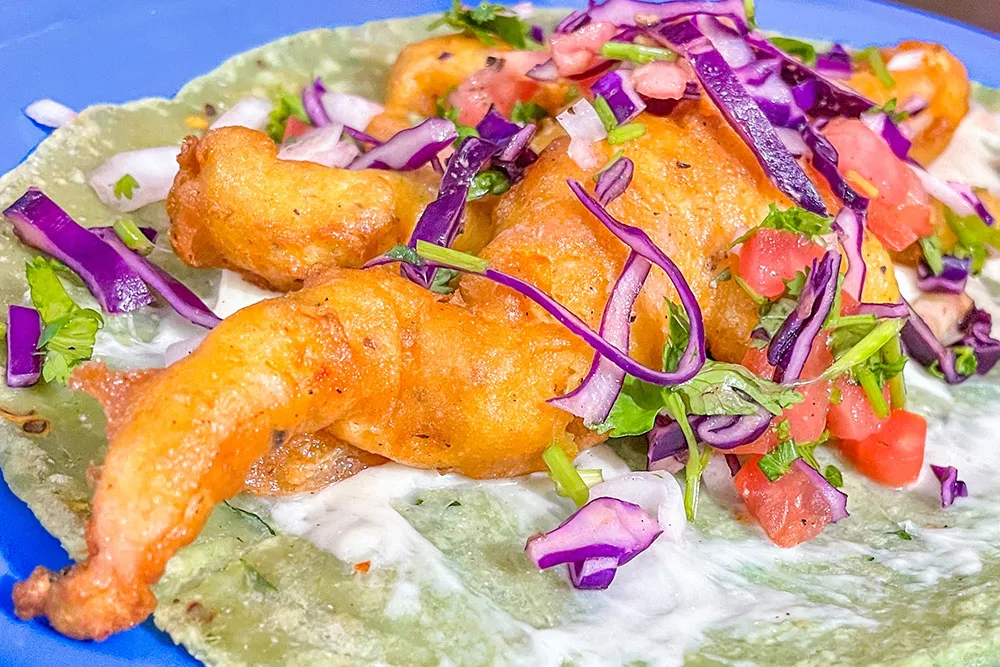
Tacos are as Mexican as it can get. They consist of two soft corn tortillas (although they can be made with flour tortillas too), filled with an array of savoury ingredients.
They’re served with a selection of garnishes which traditionally tend to consist of pickled cabbage, pico de gallo (tomato, onion, coriander, jalapeño and lemon juice) and guacamole. But it can include other things such as crunchy radish and even pineapple.
Then you have the sauces that add a little bit of a kick to the tacos – from green salsa, to chili sauce to red salsa.
The diversity of fillings makes each taco experience exciting, and leaves you wanting to try all the different types.

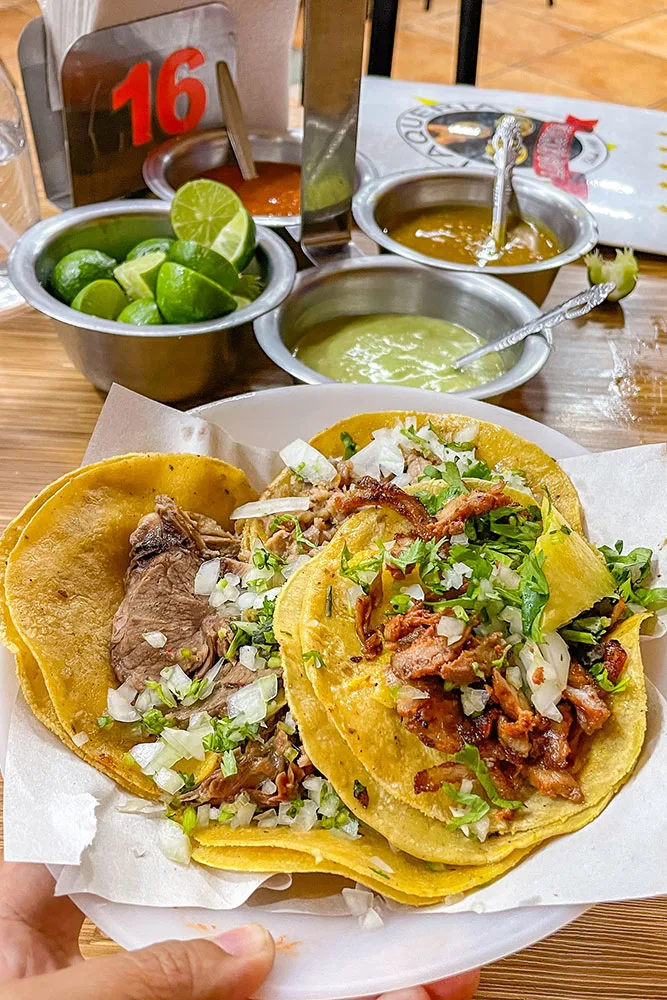
The most popular taco filling is al pastor. Introduced by Lebanese immigrants back in the early 20th century, no taquería (a Mexican restaurant that specializes in tacos) is complete without this all time favorite.
Translating to ‘shepherd’s style’, tacos al pastor feature marinated pork cooked and smoked on a vertical rotisserie, known as trompo.
The marinade is a mixture of widely used spices such as achiote paste, vinegar, chilies, cumin, and garlic among other spices, and sometimes region specific spices or twists, that add a distinct touch.
An example would be Mexico’s southernmost state. Chiapas is one of the regions that stacks pineapple to the trompo, adding a nice, sweet taste to the smoked meat.
Some other favorites include tacos de chicharrón (fried pork belly), tinga (shredded cooked chicken), cochinita pibil (Yucatan style slow-roast pork), and, if you are adventurous, tacos de lengua (beef tongue).
Where to eat tacos in Mexico?
The best places to enjoy tacos are normally street food vendors or local markets, found all over the country.
But nowhere in Mexico will you find more taco varieties than in the capital.


Two of the best taquerías in Mexico City are Taquería Orinoco in Roma Norte, said to make some of the best tacos in the country, and Los Cocuyos in Centro, featured on Netflix series Taco Chronicles, and the late Anthony Bourdain: No Reservations show.
Tamales
This Mexican comfort food is a big part of Mexican history and culture.

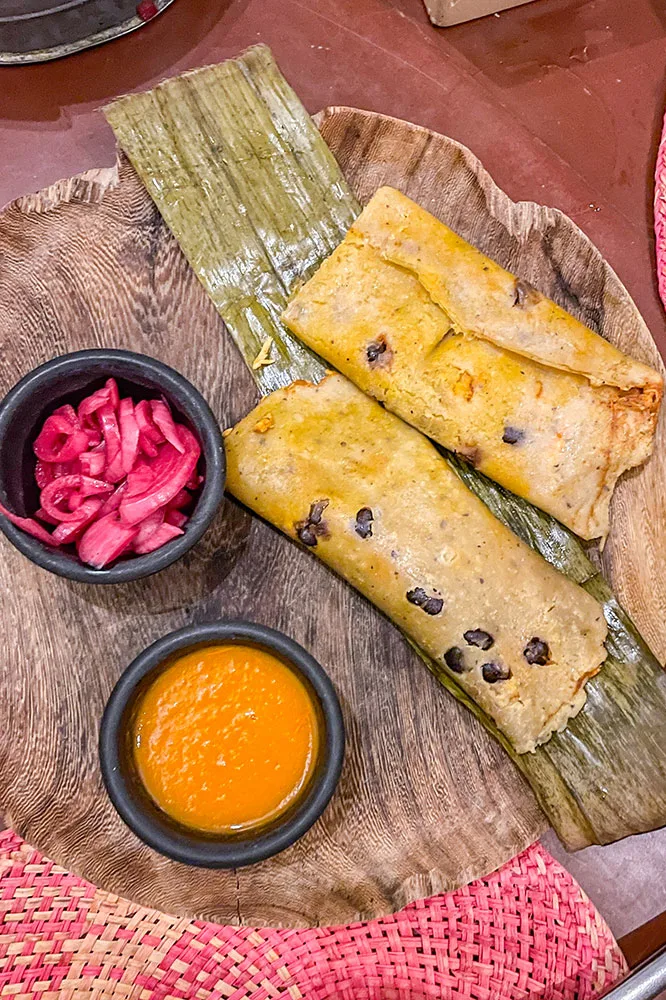
Tamales are a traditional Mexican dish, made using a Mesoamerican recipe that originated as early as 8,000 BC by the ancient civilizations that used to occupy areas of present day Mexico.
Today, 10,000 years later, tamales are one of the most beloved foods in the Mexican diet and are commonly consumed during festive seasons such as Christmas and Candlemas Day on the 2nd of February.
Tamales are also a popular breakfast food, but it can be eaten any time of the day, any day, all over the country.
Tamales are made out of masa (corn dough), the staple of most traditional Mexican dishes.
The dough is treated in lime water and mixed with a broth, before being filled, wrapped in corn husks or banana leaves, and steamed. This process is called nixtamalization and it makes the dough firm, which makes tamales great to eat on the go!


The earliest tamales consisted of simple ingredients such as beans and squash. It wasn’t until Europeans brought domesticated animals such as chickens and pigs, that tamales became more varied.
Today, the meat is slow-cooked and lightly seasoned. Some vegetarian options include potatoes or cheese.
Where to eat tamales in Mexico?
Tamales is perhaps the quintessential traditional food in Mexico, so it can be found everywhere in the country. Street food stands, markets and local restaurants sell different varieties of tamales that you must not miss on your trip in Mexico.

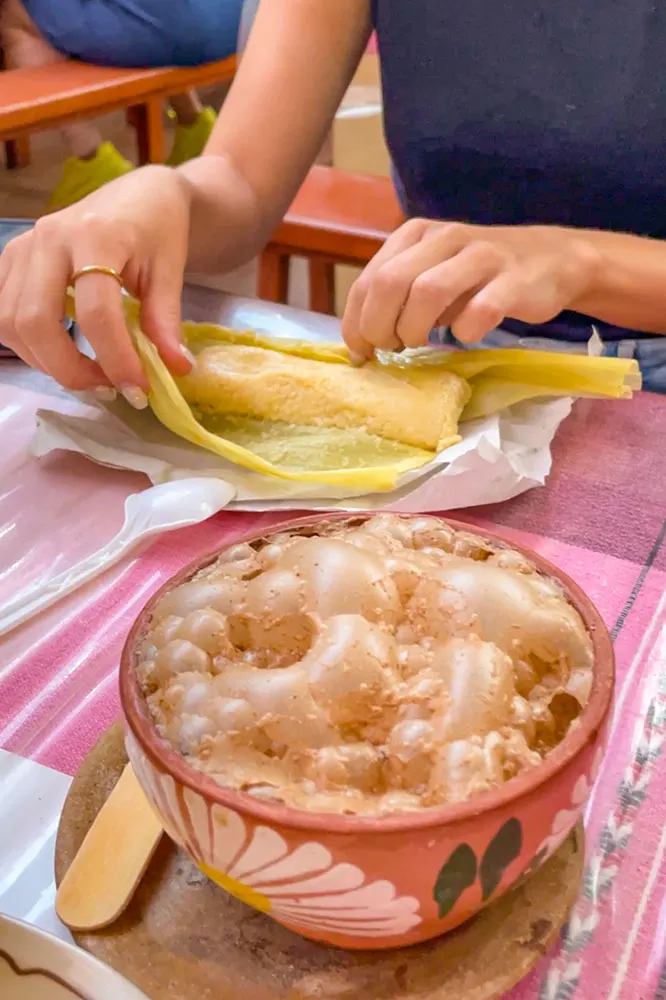
Doña Vero in Roma Sur, Mexico City, serves unique flavors of tamales, that include sweet and vegetarian variations. Her restaurant is especially bustling on the 2nd of February during Candlemas Day.
Mole
Mole is a sauce traditional to Mexico that is used in a variety of dishes.

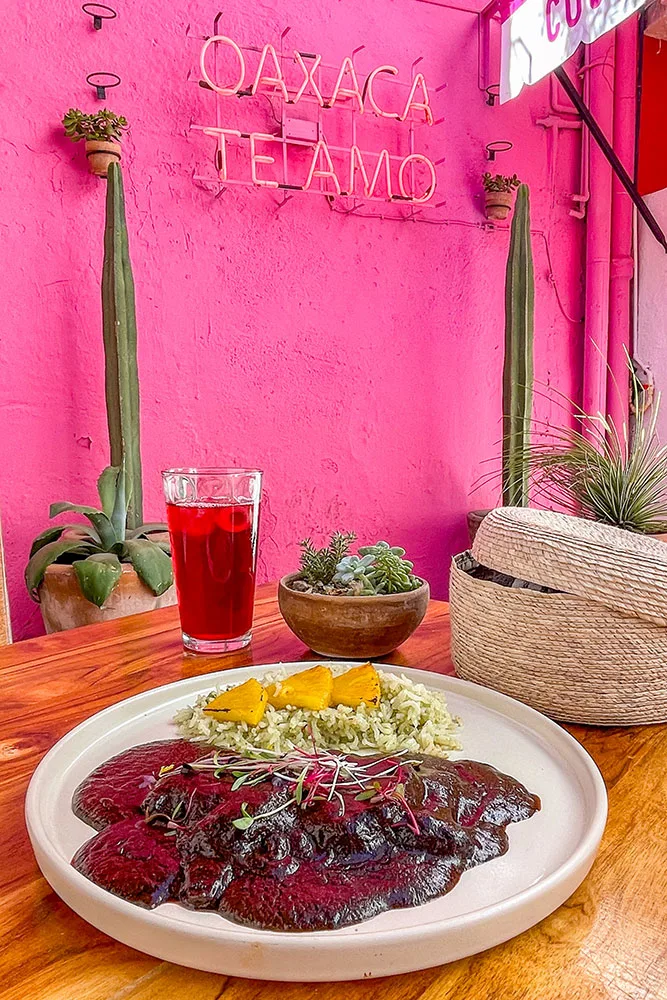
This traditional Mexican food consists of over 40 ingredients, making mole a sauce with rich, complex flavors, earthy undertones, and often a spicy kick.
First recipes of mole appeared after the War of Independence in 1810. But its exact origins are currently in dispute.
Two Mexican states claim mole as theirs – Oaxaca (Oaxaca mole) and Puebla (mole poblano), and the legend behind the origins of mole keeps everyone entertained.
It is believed that this incredible sauce was made by accident by a nun at Santa Rosa convent in Puebla.
After hearing that the Archbishop was visiting, she rushed to prepare a sauce with all the ingredients that she had at the time in the kitchen, which she then served with turkey. And so mole was created.

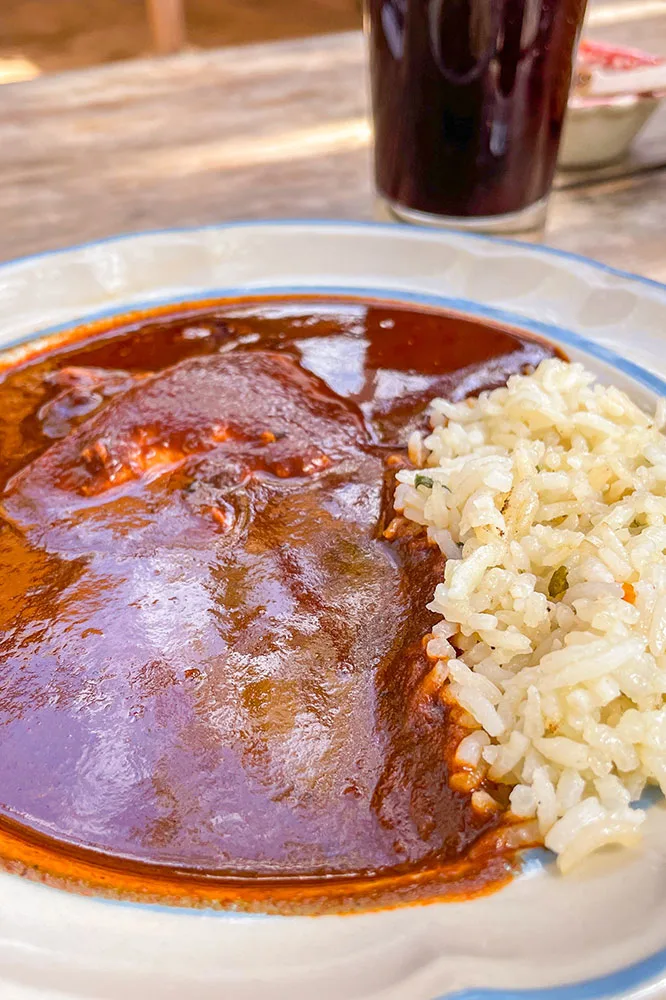
Thick, rich, and incredibly flavorsome, the main ingredients of this unique sauce are cocoa, chilies, tomatoes, nuts and seeds, cinnamon, and many more. The length of the ingredients list and the detail of preparation means that it takes a whole day to make!
Every ingredient is roasted and ground up with a stone mortar and pestle, before being made into a paste and then made into the perfect consistency by mixing with water and chicken broth. It is then simmered for hours.
Each Mexican family has their own unique mole recipe, but everyone follows a similar process.
Mole is most commonly served with chicken and rice and sprinkled with sesame seeds. Leftover mole can be used in tamales, or poured over enchiladas, among its other uses.
Chicken mole is one of my favorite traditional foods in Mexico. It’s an explosion of flavor, and I can’t recommend it enough!
Where to eat mole in Mexico?
Let’s talk about both moles – mole poblano and Oaxaca mole.
It is best to try mole poblano in Puebla, its place of origin. El Mural de los Poblanos is an upmarket restaurant and one of the best places to try the most authentic version of this dish.

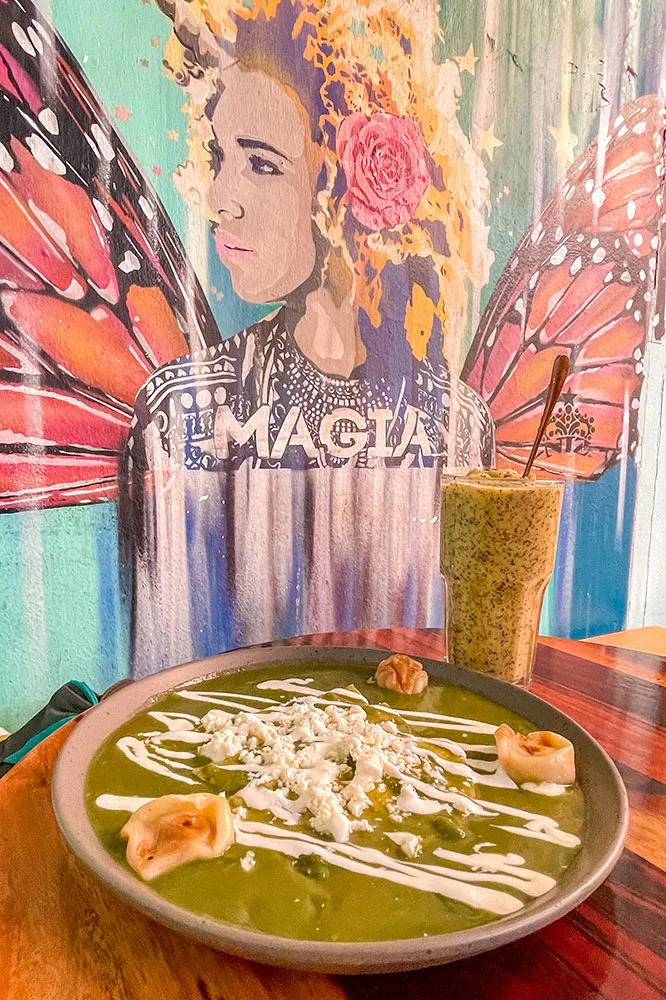
But you can find it in any local restaurant or market in Puebla, and it will be just as good.
In Oaxaca, you will find seven different kinds of moles – mole negro (black), colorado (red), verde (green), amarillo (yellow), manchamantel (table cloth staining) and chichilo.
A great way to make sure you try them all is by joining a food tour. There are all sorts of amazing tours in Oaxaca that you could do. But in this mezcal and mole tasting tour you will be able to try all seven moles.
> Book your mezcal and mole tasting tour here
Enchiladas
Another beloved traditional Mexican dish is enchiladas, whose roots go back to the powerful Aztec Empire, where the practice of rolling corn tortillas around foods was common.

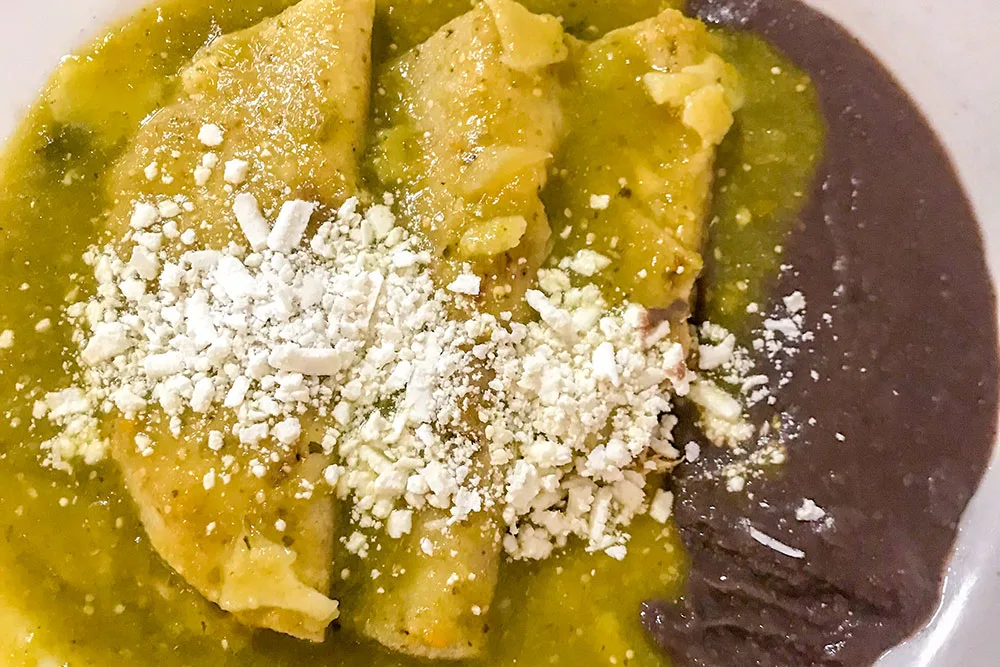
Originally served as plain tortillas dipped in chili sauce in the Yucatán peninsula, it has since evolved to become a nutritious and tasty meal.
It consists of a corn tortilla stuffed with your chosen filling (meat, cheese, or vegetables) that is then drowned with salsa roja before being covered with cheese and baked.
Salsa roja, or enchilada sauce, is a tomato sauce made out of chili powder or chili peppers, onion, garlic, tomatoes, cumin, and oregano, and blended with a broth.

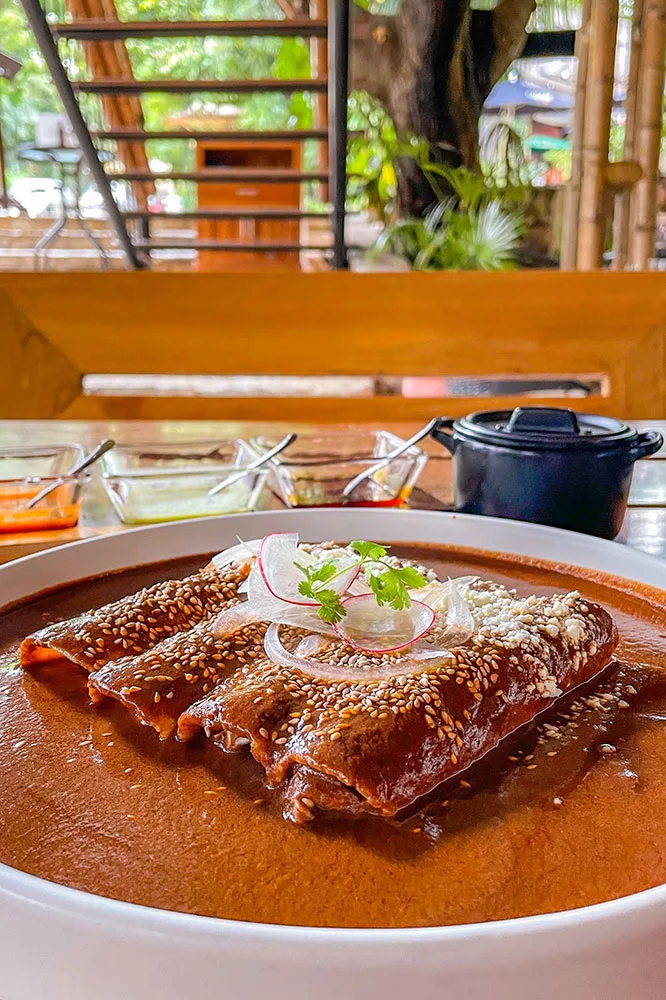
A variation of enchiladas are enmoladas, which are smothered in mole sauce and are a better option for those that might find the salsa roja too spicy.
This delightful meal is so adored around the country, that it even has its own day to celebrate. Enchilada Day is the 5th of May, when Mexicans gather together to make and eat as many enchiladas as they can.
Where to eat enchiladas in Mexico?
Enchiladas are commonly sold in most local restaurants and markets all over Mexico.
La Casa de las Enchiladas in Mexico City, offers enchiladas with a wide array of different sauces and toppings. One of the most traditional foods in Mexico, you must try them when travelling in this gorgeous country.
Tortas
A type of Mexican sandwich, tortas have an interesting and unique history. Unlike other traditional Mexican dishes, tortas have French, rather than Spanish influence.

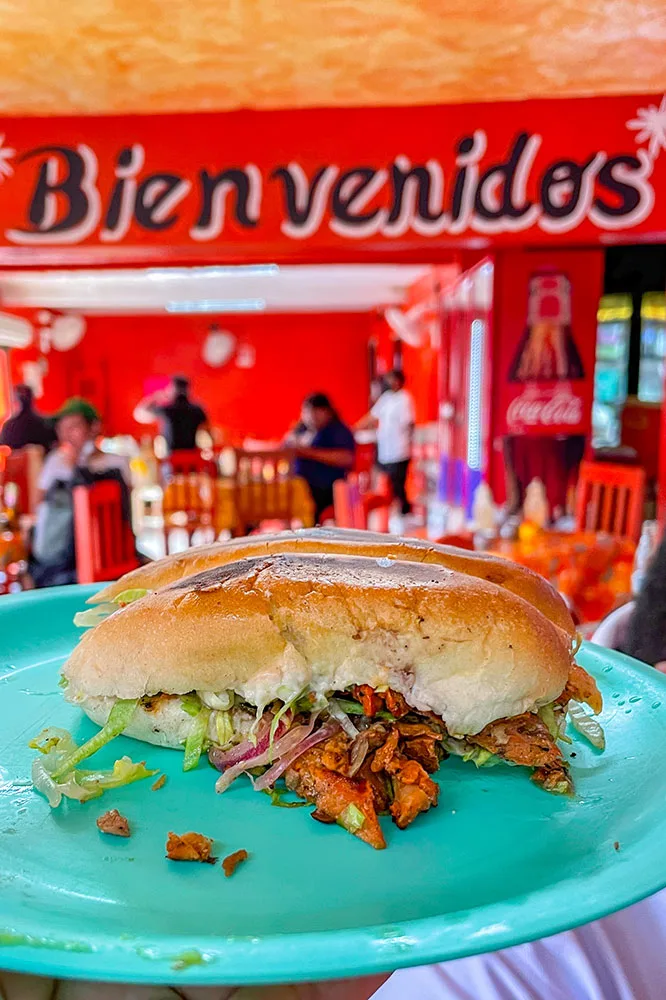
During the French occupation of Mexico from 1861 to 1867, Mexican bakers created teleras – a bread used in tortas, similar to French baguette. But what makes them Mexican, is what goes inside the torta.
Filled to the brink, Mexican tortas are extremely versatile and can be enjoyed both warm and cold. They can be filled with an array of ingredients varying from different meats, cheeses, vegetables, and even sauces.
The most popular one is torta de milanesa (chicken Milanese or breaded chicken).
In addition to the meat, most tortas come with cheese, making the sandwich even more tasty and filling. Oaxaca cheese is especially favored as its stretchy texture and unique flavor complement any filling really well.
Where to eat tortas in Mexico?
For tortas with a twist, try any local restaurant in Guadalajara, the capital city of Jalisco, where they serve tortas ahogadas (drowned sandwiches).

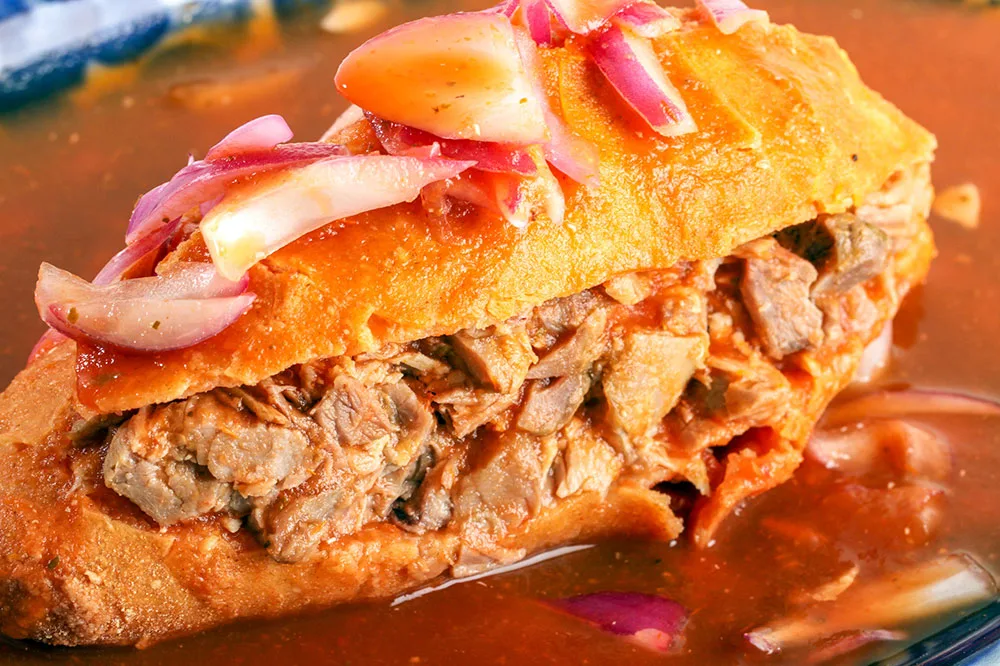
Tortas are ‘drowned’ in a sauce that is made out of chilies, tomatoes, garlic, oregano, and a few other ingredients often present in Mexican chili sauces.
But they are not exclusive to Guadalajara. Tortas are available all over Mexico.
Quesadillas
Another tasty traditional Mexican dish that consists of corn tortillas are quesadillas.

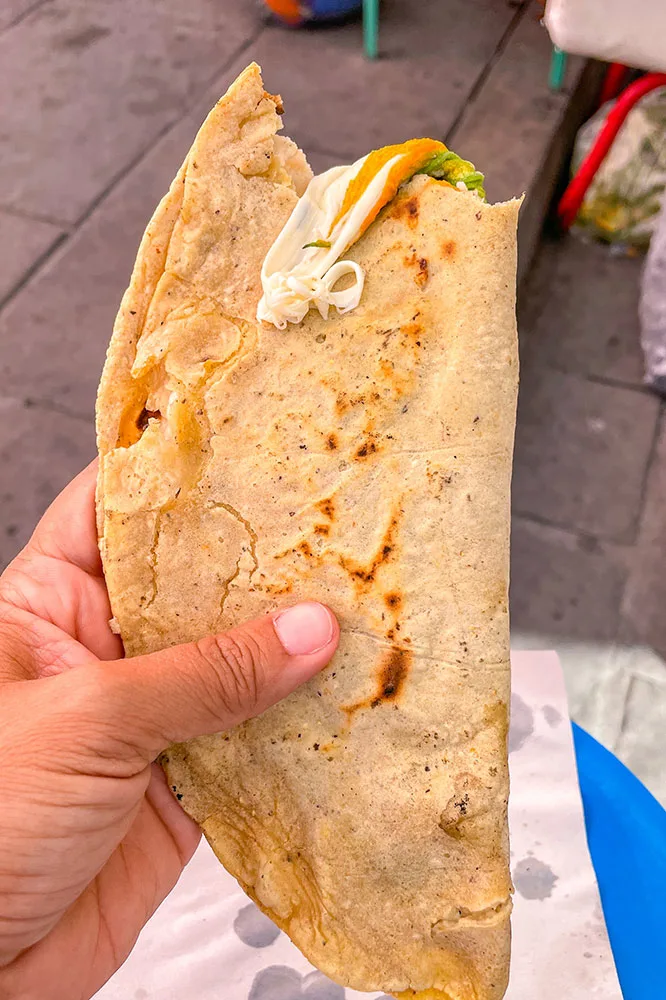
The name of this dish comes from the Spanish word queso (cheese), and was used because originally, quesadillas were only made from tortillas and cheese. This dish has evolved over time, and nowadays it includes fillings, sauces and… even more queso!
Simple yet delicious, quesadillas were invented in the northern state of Sinaloa, where they quickly spread south to the rest of Mexico, and north into the United States.

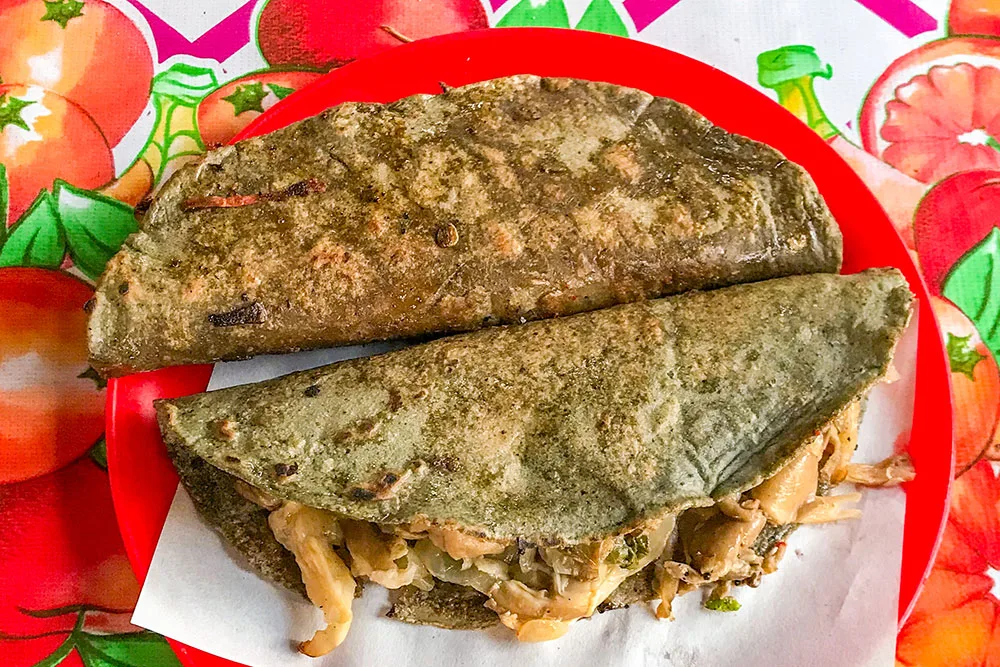
Corn tortillas are folded, stuffed with fillings and plenty of cheese, and then heated until the cheese melts and the tortilla turns crispy. The different fillings vary according to region and the seasons.
For example, during Dia de Muertos (Day of the Dead) celebrations, quesadillas are stuffed with flor de cempasúchil (marigold), an edible flower that blooms around that time of the year.
Other quesadillas often include meat, mushrooms, beans, and many other fillings that make this dish extremely versatile and always exciting.
Where to eat quesadillas in Mexico?
Quick, cheap and easy to grab on the go, quesadillas are easily found in markets, street food stands and hole-in-the-wall establishments all over the country.


If you are visiting Oaxaca, don’t miss the famous quesadilla stand Tacos del Carmen. Featured in the Netflix series Street Food: Latin America, their famous empanada (another name for quesadilla) de amarillo is a must try.
Filled with chicken or zucchini flower, mole amarillo (yellow mole) and quesillo (Oaxaca cheese) it will be one of the best traditional foods you will try in Mexico.
Chilaquiles
Another great traditional Mexican food is chilaquiles. Just like other corn-based foods, this one also dates back to the Aztec Empire.


Sharing the title of the most popular breakfast dish in Mexico together with huevos rancheros, chilaquiles are filling, so they will set you off with plenty of energy for the day.
It consists of fried tortilla chips soaked in salsa roja or salsa verde (red or green sauce). In a Mexican fashion, both sauces are made from crushed chilies.
The green sauce includes cilantro, green jalapeños and onions. The red sauce is made from tomatoes, garlic, onion and added broth. Other varieties of sauce also include mole.
This is then topped with cheese, onion, sour cream, and optionally, meat with sprinkled crispy radish and fresh cilantro.
Where to eat chilaquiles in Mexico?

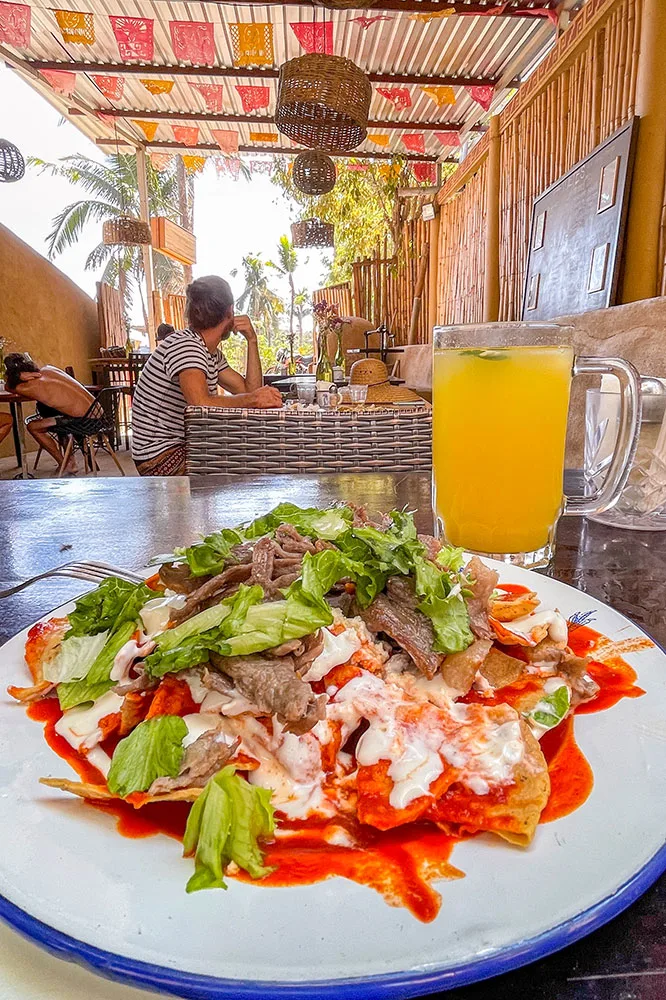
The best chilaquiles can be found in restaurants (or fondas) within local markets. El Rincón de Josefina in Tuxtla Gutiérrez, Chiapas, also known as La Casa de los Chilaquiles, offers delicious traditional chilaquiles recipes, friendly staff and a comfy interior.
Pozole
This warm soup is the closest thing to soul food for many Mexicans, even though it has quite a dark history.

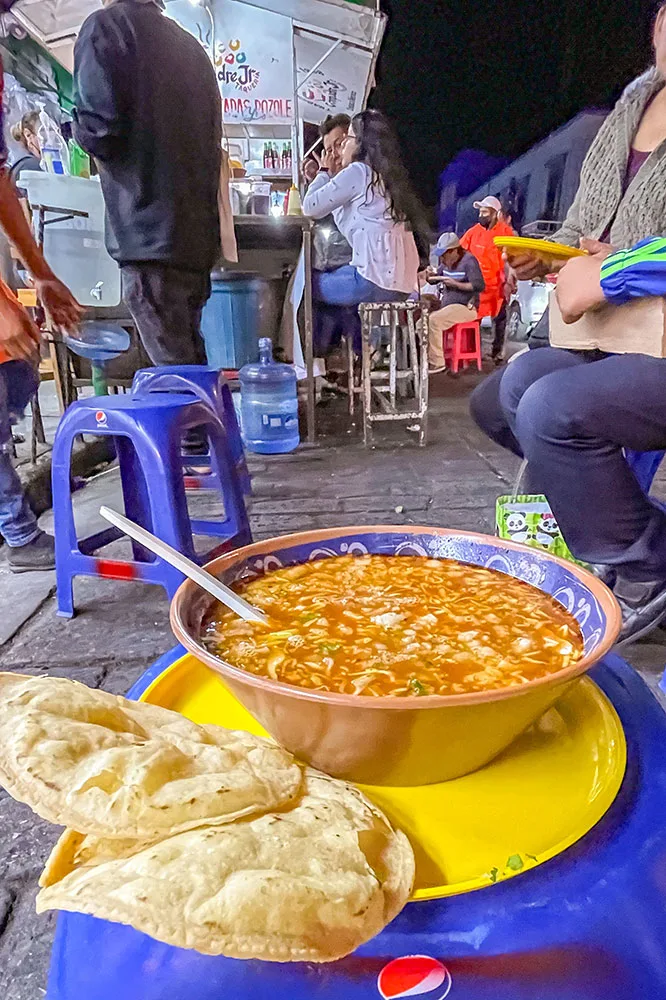
Although it is now made with hominy (dried and nixtamalized corn kernels), meat and chilies, it used to be made out of… human flesh! The soup was prepared as a form of ritual sacrifice led by the elites of the Aztec Empire.
Nowadays, apart from hominy, pozole also includes chicken, or sometimes pork, that is cooked in a rich broth. It is served garnished with shredded lettuce, radish, onion with fresh cilantro, and lime juice. Other garnishes include avocado or sour cream.
The three types of pozole mean that this dish is versatile, so there is a pozole for everyone.

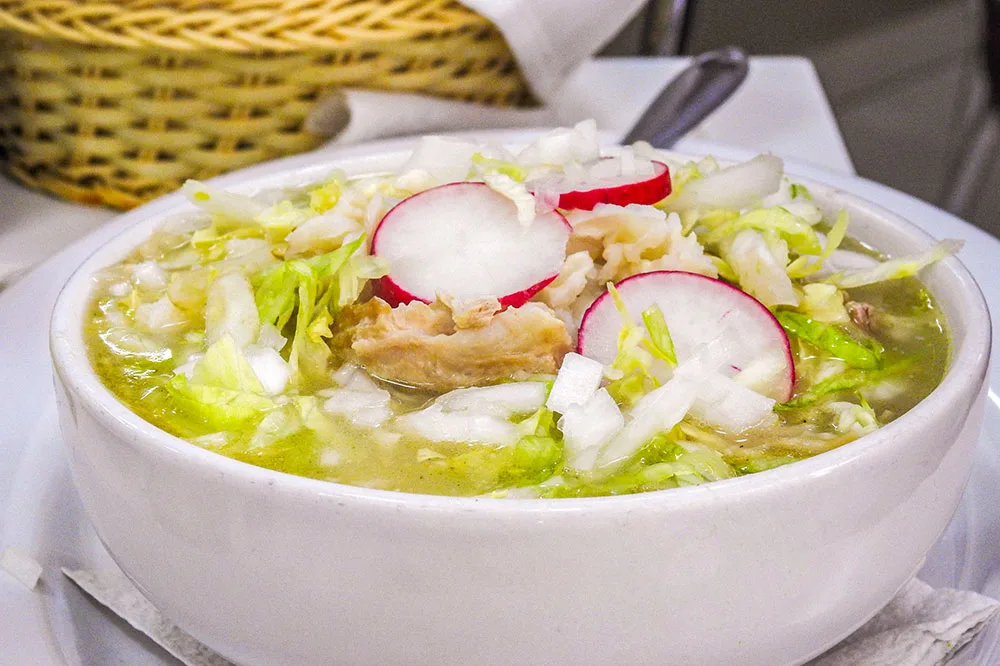
Pozole rojo (red pozole), uses a red salsa made from dried, red chilies and tomatoes, whilst pozole verde (green pozole), is made from green chilies, cilantro and tomatillos.
Pozole blanco (white pozole), is made without any of the red or green sauces, and it is therefore, milder in flavor.
Where to eat pozole in Mexico?
If you are staying in Oaxaca City, Tacos Roy is famous not just for tacos. They serve incredible pozole too, so don’t miss it if you are visiting this charming city.

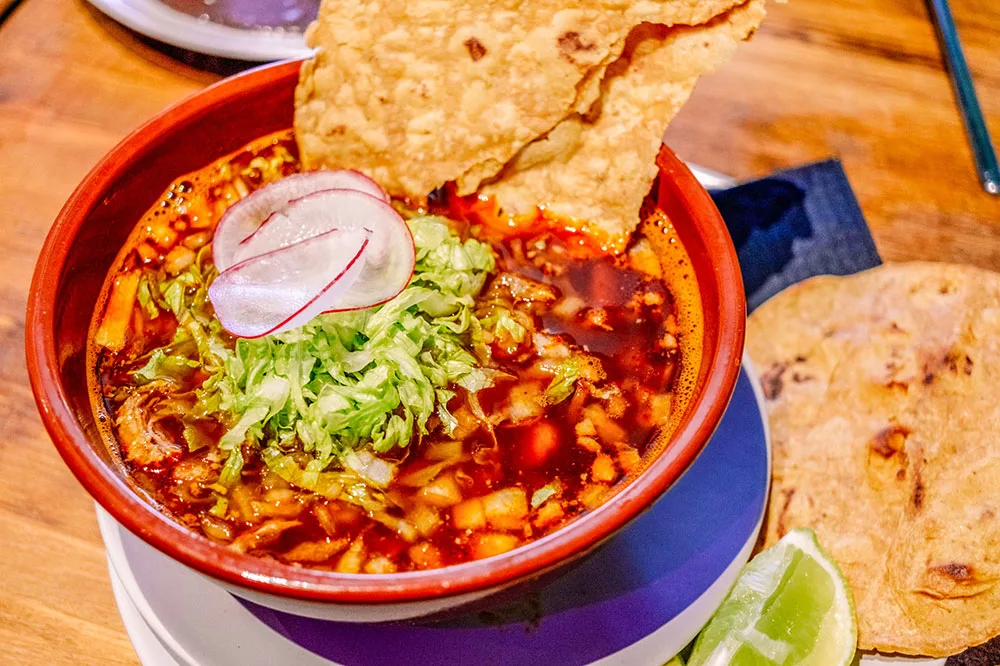
Pozole can also be found in local markets and restaurants, mostly in Central Mexico. Make sure to try it if you can!
Gorditas
A Mexican street food that comprises a fried tortilla made from corn that is thicker than a regular tortilla, hence the name of gorditas, which translates to ‘little fatty’.

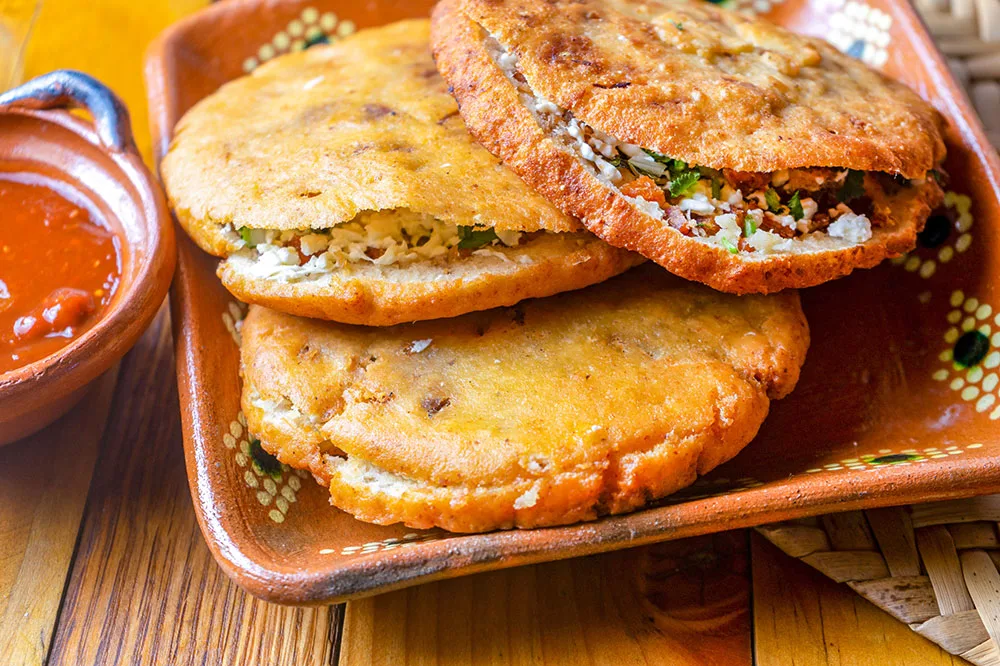
Its origins are unknown, but they are believed to date back to Mesoamerican communities, just like other traditional Mexican dishes. This is a lesser known meal that is delicious and healthy.
The thickness of the tortilla allows it to be sliced in half to create a pocket, a little bit like a pitta bread, that is then stuffed with various fillings.
The most traditional gordita is chicharrón con chile (fried pork with chili). Meat is often served in guiso, a sauce such as chipotle, or any other red sauce. This not only adds more flavor and a bit of a kick, but it makes gorditas more moist than other tortilla based meals.
Other fillings include tinga de pollo (shredded chicken in chipotle), or picadillo (ground beef with potatoes). Vegetarian options include refried beans or eggs.

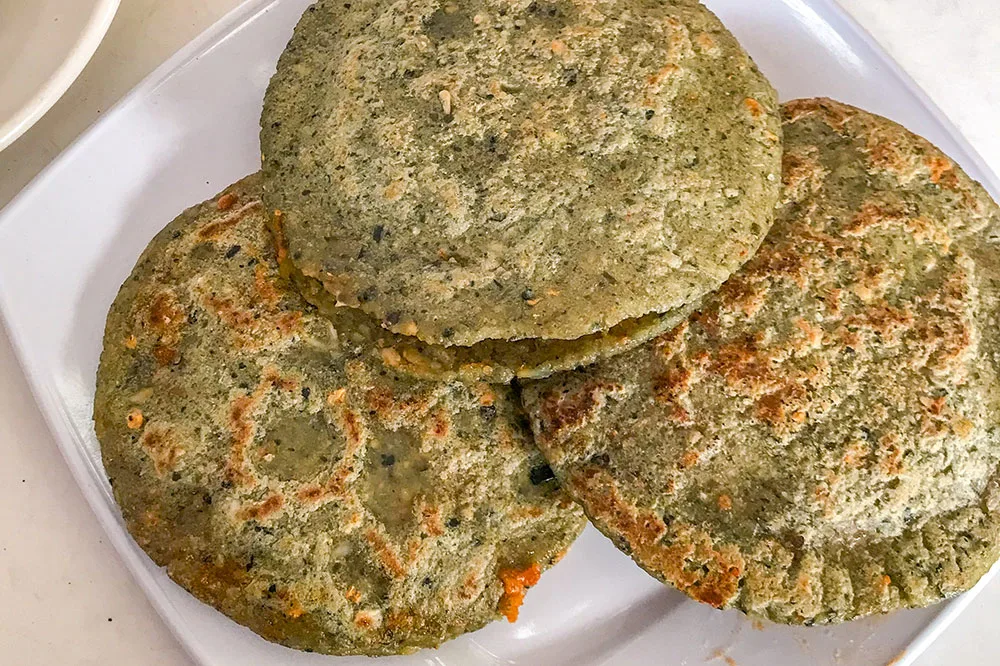
Just like other traditional food in Mexico, gorditas are very customizable and the possibilities for fillings are endless.
Gorditas dulces are a sweet and fluffy variety that is often served with lechera (sweetened condensed milk), jam, Nutella or dulce de leche (caramelised milk). They are often served outside churches and in busy parks.
Where to eat gorditas in Mexico?
Bernal, in the state of Querétaro, claims to be the birthplace of gorditas and this tasty snack is served in almost every street corner.

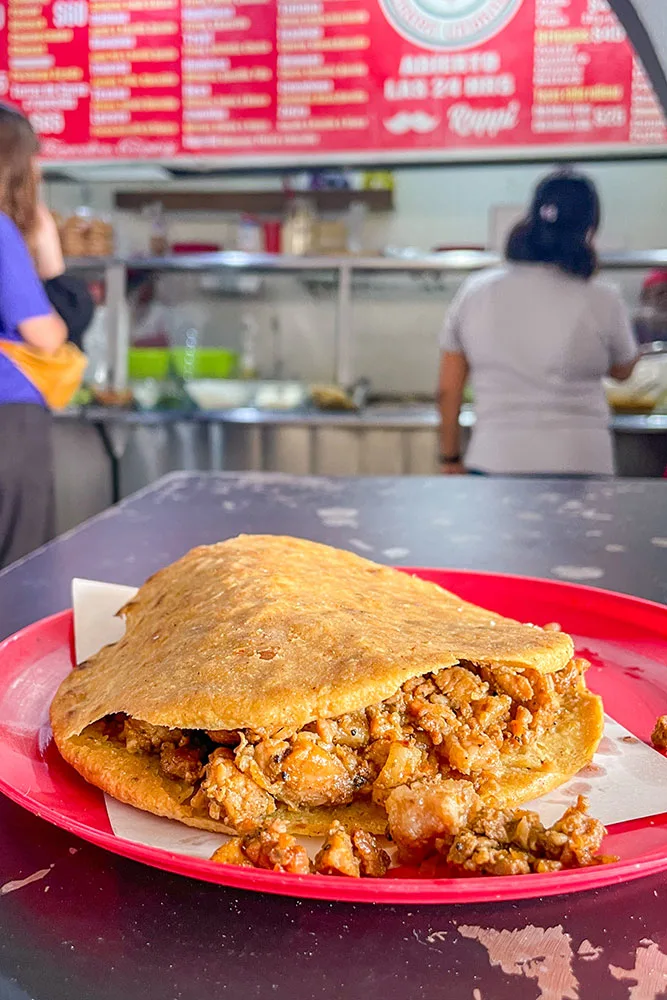
El Negrito Gorditas serves gorditas made from black corn tortillas, which are also unique to this region. Outside of this spectacular village in Northern Mexico, gorditas can be purchased from street food vendors.
Pan de elote
The list of traditional food in Mexico, could not be complete without a dessert. Pan de elote is a fluffy corn cake that is simply delicious.

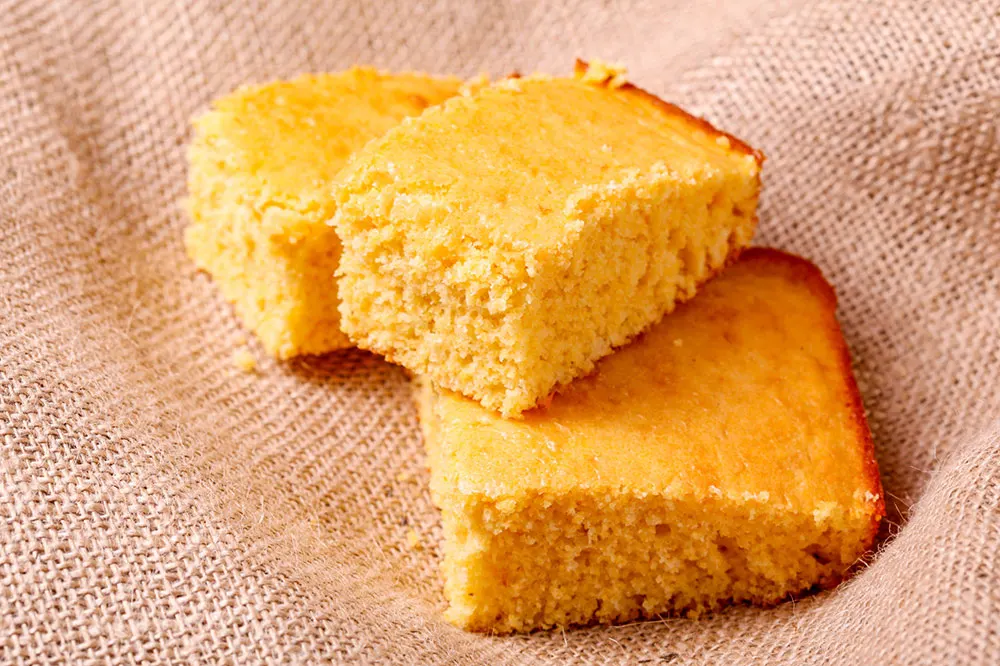
The main ingredient of pan de elote is sweet corn, to which flour, egg whites, and condensed milk is added. The mixture is blended together and baked for an hour.
It is even better when it’s made with slightly mashed sweet corn kernels, as they add an interesting texture change to the otherwise creamy and moist cake.
Some other traditional Mexican desserts include arroz con leche, rice with condensed milk that is sweetened with sugar and cinnamon. Sometimes fruit, chocolate, or nuts are added to this traditional dessert that is popular all over the country.
Mexican flan is also a very popular dessert. It is a festive dish, enjoyed during holidays and special occasions. Made of whole eggs, cream cheese and condensed milk, it is very creamy and has a rich and toasted flavor.
Where to eat pan de elote in Mexico?
You can get pan de elote from street vendors everywhere across the country. Small, local restaurants will also have this sweet corn cake on their menu.
FAQs about traditional food in Mexico
Whilst tacos are the most famous Mexican dish, it is mole poblano that is considered the national dish of Mexico.
It is important to Mexican people as it is a mix of Mexican and European ingredients which reflect a lot of different aspects of Mexican culture and history.
Traditional food in Mexico is pretty affordable, especially when purchased from street food vendors or local restaurants.
Smaller dishes such as tacos, gorditas, enchiladas can cost less than $1 USD each from a street food stand, whilst a plate of mole de pollo (chicken mole) can cost around $5 USD at a restaurant.

Traditional Mexican food is considered to be up there with the best food in the world.
It has been added to the UNESCO Representative List of the Intangible Cultural Heritage of Humanity for the farming, ritual practices, age-old skills, culinary techniques and ancestral community customs associated with it.
So make sure you include a culinary adventure as part of your Mexico experience!
Apart from the delicious food, Mexico is also known for drinks like tequila and mezcal, made from different agave varieties that grow in Mexico.
Looking beyond food, mariachis and Mexican music in general, Day of the Dead celebrations, and ancient civilisations like the Mayans and the Aztecs make Mexican culture very unique and worth diving into.
Mexico is also known for its breathtaking scenery including incredible beaches and rugged mountains, as well as its colourful colonial architecture found in its cities.
Have you tried any of this traditional food in Mexico?
Let me know in the comments below!
Like this post? Pin and save for later


