
Somewhere on the edge of the Baltic Sea, a tourism board has built the strangest hotel deal in Europe. Stay in a private beachfront cabin for free. No catch, no fine print. Just one rule: stay quieter than a whisper or you’re gone.
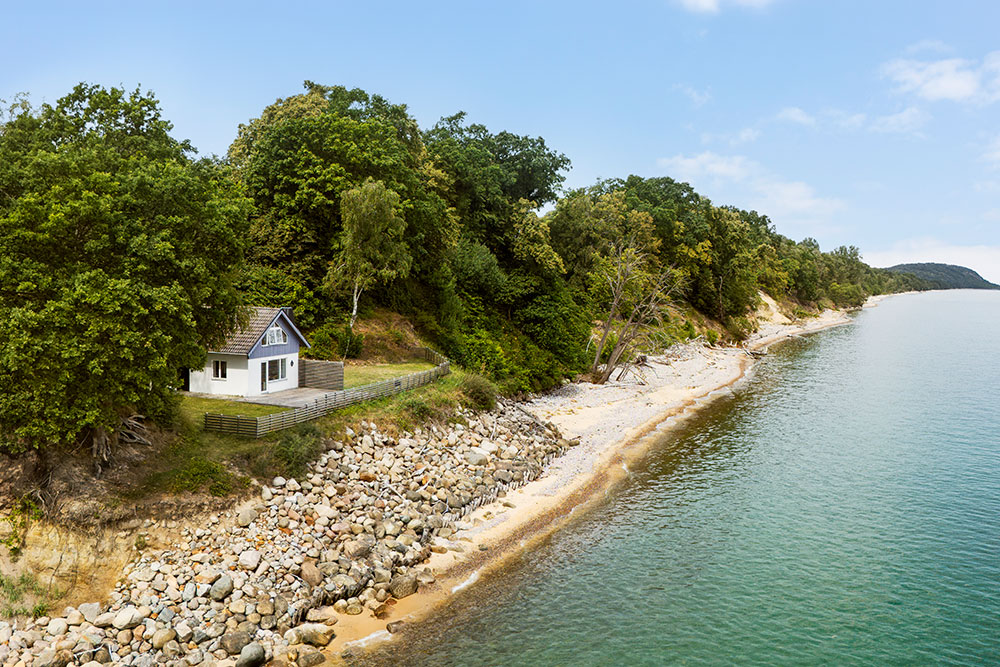
Visit Skåne, the tourism board for the southern tip of Sweden, is putting a decibel meter inside a remote coastal cabin this fall and daring guests to beat it.
Cross 45 decibels, roughly the volume of someone whispering across a table, and the free stay ends on the spot. Selected guests get their shot between September 29 and October 16.
It sounds like a prank. It isn’t. Behind the gimmick is a genuine bet that Americans, buried in notifications and traffic and noise they never asked for, are starving for the one thing money usually can’t buy: real silence.
The world has a noise problem, and it’s bigger than you think
The World Health Organization ranks environmental noise as the second biggest environmental threat to public health in Europe, right behind air pollution.
Traffic noise alone reaches roughly 100 million people across the EU, wrecking sleep, spiking stress hormones, and quietly wearing down the brain over time.
Skåne’s answer is blunt: go somewhere the noise can’t follow you.
The region claims to have ten times more genuinely quiet space than Germany, and it has the receipts to prove it.
Visit Skåne spent 2024 walking the countryside with sound meters, building what it calls the Map of Quietude, a guide to the region’s most silent corners, each one rated in decibels and paired with a full hour of recorded ambient sound.
Science says thirty minutes of quiet can reset your brain
This isn’t just a wellness slogan.
A 2025 review in the Journal of Environmental Psychology looked at the science of nature exposure and found something striking: working memory and attention span both bounce back after time spent in a natural setting, and the sweet spot for peak recovery is about thirty minutes.
Thirty minutes. That’s shorter than most people’s commute.
The five quietest spots in Sweden right now
Visit Skåne ranked its stillest locations by average decibel level. For reference, a library usually sits around 40 decibels. These places beat it.
Dörröds fälad, 37 decibels
A heathland of heather and ancient oaks where the whole point is doing absolutely nothing.
Håkull, 37 decibels
You’ll earn the silence here. Locals call it Skåne’s rooftop, and the climb to the top rewards you with a sweeping view over three separate coastlines.
Klöva hallar, 38 decibels
A ravine so dramatic it feels engineered, with wind diving through the gorge and rustling treetops doing all the work.
Natthall, 38 decibels
Overlooks a slow river that seems to stretch fifteen minutes into an hour.
Stockamöllan, 39 decibels
A lazy river ideal for a canoe and a soundtrack of birdsong.
Why this actually matters for US travelers
American travel habits have shifted hard toward restoration over ticking off landmarks. People aren’t just booking trips anymore, they’re booking an escape from their own phones.
Sweden’s quiet cabin stunt is a headline grabber, but the underlying pitch, that a small, remote, deeply uncrowded country can offer something no US destination currently can, is the real story.
Skåne isn’t the Sweden most Americans picture. It’s flatter, greener, and dotted with fishing villages instead of glaciers. That makes it an easy entry point for a first Scandinavian trip, and a strong contrarian pick against the usual Stockholm or Norwegian fjord itinerary.
The stunt ends October 16. The quiet, according to Visit Skåne, is available year round.
Find more information on how to apply here.
Where is Skåne, anyway?
Skåne is the southernmost region of Sweden, sitting directly across a narrow strait from Copenhagen, Denmark. It is closer to continental Europe than to Stockholm, connected to Denmark by the Öresund Bridge and served by its own international airport in Malmö.
The landscape leans flat and coastal rather than mountainous, with fishing villages, farmland, beaches, and forest making up most of the terrain. It is Sweden’s most densely populated region outside the capital, yet still holds some of the quietest countryside in Europe.