
The skiing world is paying attention to something happening right now in South America, and most American skiers have no idea. What’s unfolding in the Andes this winter could completely change your travel plans for the fall.
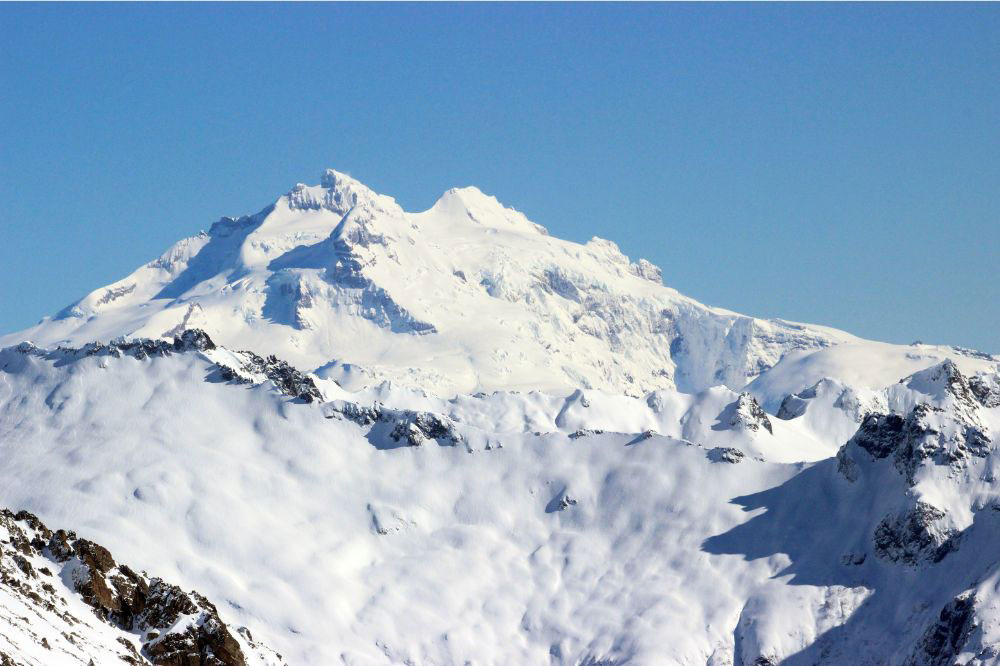
While much of the American West was dealing with a snow drought last season, the Southern Hemisphere quietly built up one of the most remarkable ski seasons in recent memory.
Resorts buried under more than 16 feet of fresh snow. Access roads forced shut by sheer volume. Helicopters deployed to ferry guests to mountain lodges cut off from the outside world.
This is the Andes in 2026.
After a punishing 2025-2026 ski season across much of the western United States, with warm temperatures and a snow drought that left resorts running thin snowpack and reduced terrain, South America stepped in with an answer nobody expected.
The reason for this extraordinary snowfall is largely down to El Niño.
The phenomenon occurs when unusually warm surface waters develop across the central and eastern tropical Pacific Ocean, disrupting normal atmospheric circulation, and experts say this year’s particularly strong El Niño has been a major factor in the volume of snow falling across the Andes.
The National Oceanic and Atmospheric Administration predicts that a strengthening El Niño will persist into 2027. That said, American skiers should not bank on this translating to a bumper winter back home.
El Niño’s effects vary considerably by region, and its influence on snowfall is notoriously difficult to predict, with current forecasts showing an uncertain pattern across the USA and no definite indication of how domestic ski resorts will fare.
For now, the Andes are the story. And there has never been a better time for American skiers to book a flight south.
Lift ticket prices trend significantly lower than those at US ski resorts, with many South American mountains costing under $100 per day.
Factor in the exchange rate, the long-haul novelty, and terrain that rivals anything in Colorado or Utah, and the value proposition is hard to ignore.
Here are the five resorts worth booking right now.
Cerro Catedral, Argentina
Argentina’s largest ski resort delivers 58 marked trails spanning 3,000 acres, with expansive views across Patagonia, lake vistas, and a classic ski-town experience inside the rugged Nahuel Huapi National Park.
Cerro Catedral is also one of the most logistically straightforward resorts to reach in South America. There is a nearby airport and plenty of hotels and rental options at the base of the mountain, making it a convenient entry point for first-time visitors to Andean skiing.
Getting there: Cerro Catedral is roughly 20 miles from San Carlos de Bariloche Airport (BRC).
Las Leñas, Argentina
For travelers seeking serious off-piste terrain, Argentina’s 43,000-acre Las Leñas is hard to beat. This is where winter-sport professionals from around the world come when they want dramatic couloirs and wide open bowls far from the groomed runs of mainstream resorts.
The remote resort’s terrain attracts pros from around the world, but its wide-open trails also provide solid options for beginner and intermediate skiers, and a compact village at the base offers a range of accommodation.
Getting there: Las Leñas is three hours from San Rafael Airport (AFA) by car, and the resort also offers overnight charter buses from Buenos Aires.
Nevados de Chillán, Chile
This one is genuinely unlike anything available in North America. At Nevados de Chillán, the skiing takes place on the slopes of an active volcano, and the resort offers natural hot springs to soak in at the end of the day.
The mountain also features rare South American tree skiing and Las Tres Marías, one of the continent’s longest runs at 8.1 miles. Two ski-in, ski-out hotels sit at the resort itself, with more options in the nearby village of Las Trancas.
Getting there: Carriel Sur International Airport (CCP) is about 2.5 hours away by car, and buses and trains from Santiago International Airport (SCL) take roughly six hours.
Valle Nevado, Chile
Chile’s largest alpine resort sits just over 40 miles from Santiago and covers more than 2,200 acres of skiable terrain. It draws a strong international crowd alongside Chilean locals, largely because of its easy access from the capital and a lively après scene.
For skiers already holding a Mountain Collective or Ikon Pass, this one makes particular financial sense. Valle Nevado is a member of both the Mountain Collective and the Ikon Pass, meaning a single pass can unlock access to this and dozens of other global resorts.
With its substantial base, Valle Nevado is projected to stay open through mid-October. That means the season window is longer than most American skiers realize.
Getting there: Valle Nevado is about a 1.5-hour drive east from Santiago International Airport (SCL).
Ski Portillo, Chile
Ski Portillo is arguably the most storied resort on this list, and right now it is also the most dramatic. The resort’s coveted off-piste terrain rises above the turquoise Laguna del Inca, about 100 miles from Santiago, and covers more than 1,200 acres with 35 marked runs.
The snowfall this season has been so extraordinary that officials were forced to close access roads for weeks, with some overnight guests relying on helicopter service to reach the mountain. The iconic, all-inclusive Hotel Portillo remains the main place to stay.
In recent days the road has been opened on select days, and Ski Portillo is working with government officials to allow day guests access as well. With so much snow in reserve, the resort is planning an extended season, with specific dates to be confirmed shortly.
Getting there: Ski Portillo is about a two-hour drive northeast from Santiago International Airport (SCL).