Puerto Rico isn’t just a tropical paradise, it’s a foodie island where every meal tells a story of African, Spanish, and indigenous influences creating flavors you won’t find anywhere else. From family recipes passed down through generations to modern twists on classics, these 10 essential dishes will show you why locals consider their cuisine the crown jewel of Caribbean cooking.
Puerto Rico is a paradise filled with cultural diversity that isn’t just known for its stunning beaches and vibrant music.
Its cuisine is a testament to the island’s rich history and the combination of flavors from Spanish, African, and Taino influences.
Embark on a culinary adventure as we explore all the food in Puerto Rico that takes us to the real boricua spirit.
Food in Puerto Rico is a harmonious blend of indigenous ingredients and techniques, interwoven with Spanish and African influences brought over centuries ago.

This fusion has birthed a cuisine that pays homage to its roots while embracing the diversity that shaped it.
To genuinely appreciate food in Puerto Rico, one must immerse in the island’s history.
From the native crops like plantains and cassava, to introduction of rice and spices by the Spanish, and the incorporation of culinary practices brought over by African slaves, every bite tells a story of the past.
Table of Contents
Must try food in Puerto Rico
Mofongo
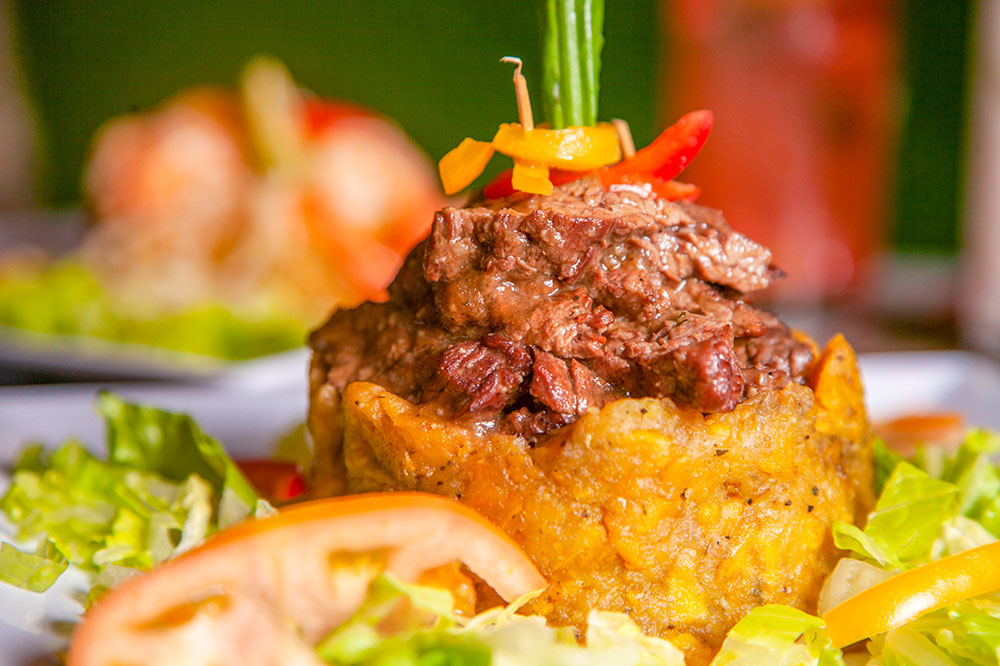
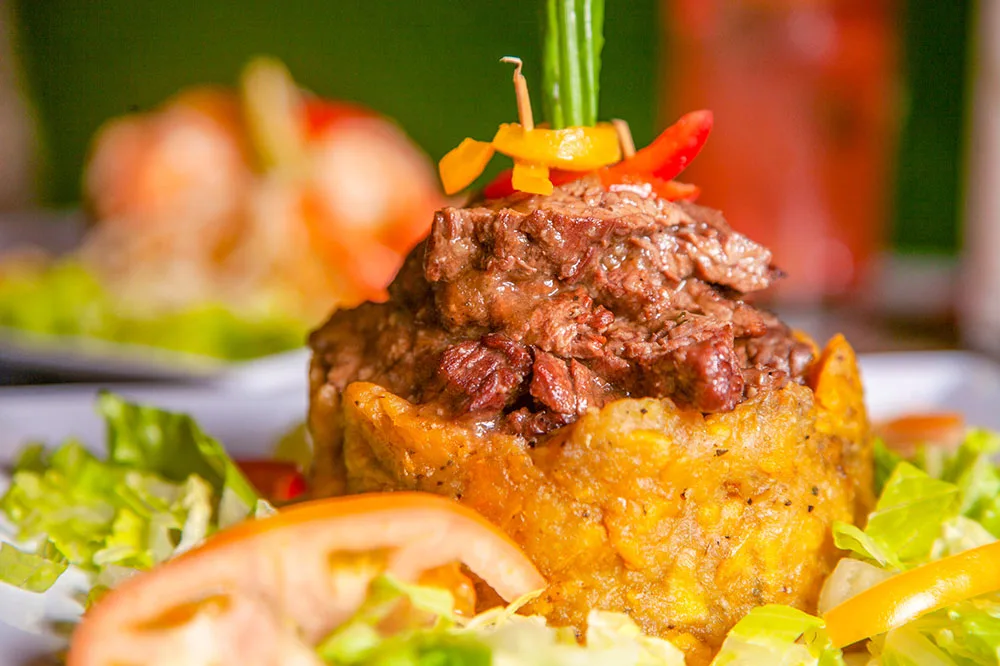
If we were to name a dish as the king of the food in Puerto Rico, that is mofongo.


Its Royal Highness, or King Mofongo, is a dish made with mashed fried plantain, pork rind, olive oil, and garlic that sometimes can come filled with meat, shrimp, or criolla sauce. Each bite unveils a new dimension of taste and texture.
Where to eat mofongo in Puerto Rico
Restaurant Don Tello in Cataño serves a stunning mofongo, but you can also try it during the Flavors of Old San Juan Food Tour.
Arroz con Gandules
Arroz con gandules is a cornerstone of the food in Puerto Rico during the holiday feasts. It brings together fluffy rice and tender pigeon peas.


The dish is not only a culinary masterpiece but also a symbol of unity and togetherness for Puerto Ricans on the island and abroad.
At the heart of arroz con gandules is sofrito, a fragrant blend of herbs, peppers, onions, and garlic. This aromatic base infuses the rice with layers of flavor that dance on the palate with each mouthful.
Sofrito is widely used in the food in Puerto Rico as a way to season dishes.
Where to eat arroz con gandules in Puerto Rico
La Casita Blanca in Santurce is one of the best places to go to try arroz con gandules.
Lechón
When it comes to food in Puerto Rico, lechón, a whole roasted pig, is a centerpiece of any celebration.

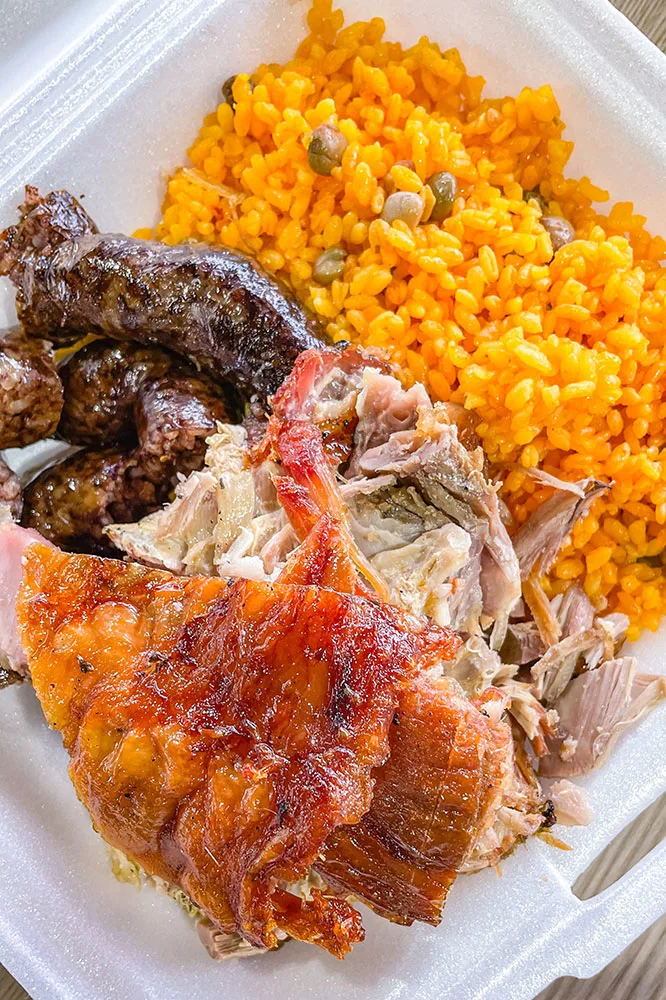
The pig is marinated with a mix of spices and herbs, then slow-roasted on an open flame or in a special box known as a caja china.
The process of roasting the lechón is not just about cooking; it’s an event in itself.


Friends and family gather to witness the transformation of the pig into a crispy, succulent masterpiece. The crackling skin and tender meat are the favorite delight of many Puerto Ricans.
Where to eat lechón in Puerto Rico
The best place to eat Lechon in Puerto Rico is in Guavate, which is known as “La Ruta del Lechon”. Make sure you include a stop here on your Puerto Rico itinerary.
Tostones
Tostones, or twice-fried plantains, are a beloved snack and side dish. Green plantains are sliced, fried, flattened, and then fried again to achieve the perfect balance of crunch and softness.


What makes tostones truly amazing are the accompanying sauces. Mojo is a garlic-infused oil, and mayo ketchup combines mayonnaise and ketchup for a tangy twist.
These sauces elevate the humble tostone to a culinary delight.
Where to eat tostones in Puerto Rico
The truth is, you can get tostones everywhere but if you ask me, the best place to eat Tostones are… CHINESE RESTAURANTS! They serve tostones in a delicious garlic sauce that you need to try.
Pastelillos
Pastelillos, are delectable turnovers filled with an array of ingredients. From savory options like ground beef to sweet ones like guava and cream cheese, pastelillos offer a delightful surprise with every bite.

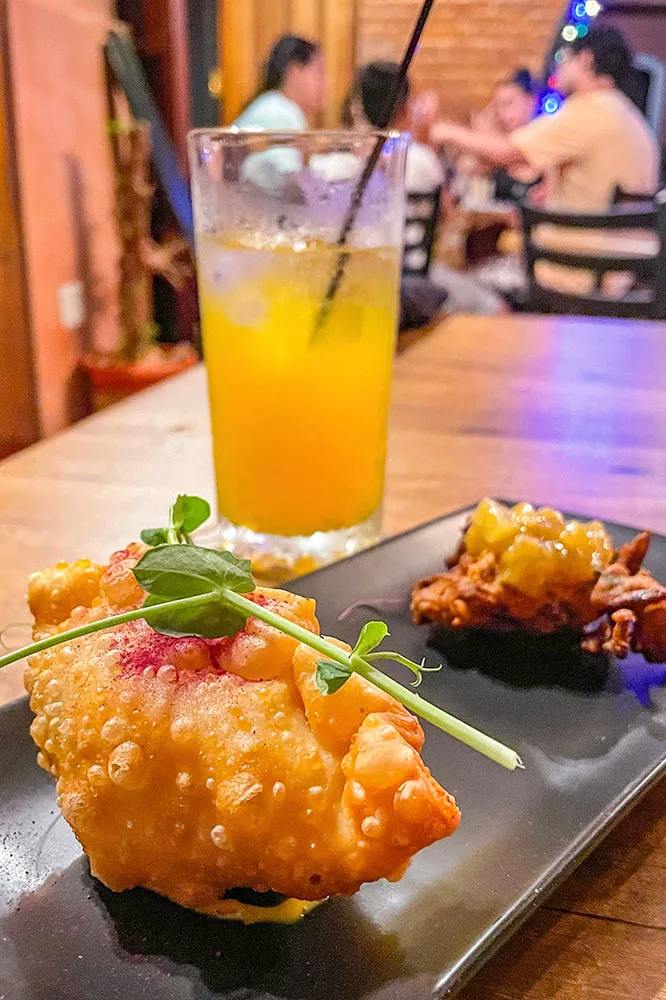
The dough is rolled out thin, folded over the filling, and sealed by crimping the edges. The result is a pocket of pure satisfaction that showcases Puerto Rican ingenuity.
Pastelillos are the stars of one of the biggest linguistic conflicts on the island.
For the people of the south coast, pastelillos are only the sweet ones and all the salty ones are empanadillas. In the north coast, pastelillos can be sweet or salty, normally in yellow dough and they are closed in the borders using a fork.
Many declare that there are no reasons to call these “pastelillos” but we can find traces in the Iberian peninsula, since in Portugal, salty or sweets, similar goodies are called “pasteis”.
All I know is that no matter what you call them, the most important thing is to try them!
Where to eat pastelillos in Puerto Rico
You can find pastelillos anywhere on the island, but we encourage you to try some while out at La Placita de Santurce.
Alcapurrias
Alcapurrias are fritters that showcase the Puerto Rican love for plantains and meat.


Grated plantains are combined with a seasoned meat filling, then shaped and fried. The result is a medley of textures and flavors that tantalize the senses. Sometimes they might be done out of beef, crab meat, or any other meat.
Legend says that alcapurrias carry the legacy of Taino influence, where similar techniques were used to create nourishing and flavorful dishes. This connection to history is what makes alcapurrias more than just a snack; they’re a direct link to the past of the food in Puerto Rico.
Where to eat alcapurrias in Puerto Rico
The best place to find these fried goodies is Pinones. It’s a beach community 20 minutes away from San Juan.
Bacalaitos
Bacalaitos are fritters made from salted codfish, flour, and seasonings. The fish is mixed into a batter that’s fried to golden perfection. The result is a crispy exterior with a delicate, flavorful interior.


Imagine yourself on a Puerto Rican beach, the sound of the waves and maybe “Despacito” in the background, while indulging in these savory treats.
Bacalaitos capture the essence of island life in every bite, making them a must-try delight.
Where to eat bacalaitos in Puerto Rico
As with Alcapurrias, Bacalaitos can be found in the stalls at that magical place called Pinones.
Rellenos de Papa
If there is a fried goodie that reminds me of the glorious days when my grandmother still cooked, this is it.


Rellenos de papa are deep-fried potato balls filled with seasoned ground beef. The potato exterior is a blank canvas that encases a savory filling with a rich flavor, creating a harmonious contrast. It’s a match made in heaven!
In Puerto Rico, rellenos de papa are comfort food at its finest. These golden orbs of flavor offer warmth and nostalgia, making them a cherished part of the food in Puerto Rico’s landscape.
Where to eat rellenos de papa in Puerto Rico
El Punto Sabroso en Cataño is said to serve the best (and biggest!) rellenos de papa in Puerto Rico.
Flan
Flan, a caramel custard dessert, is the perfect way to conclude a Puerto Rican feast. The creamy texture and delicate sweetness are perfectly complemented by the rich caramel topping.


The traditional flavors it has always been made of include cream cheese, vanilla, and coconut. Recently, Puerto Ricans have been experimenting with flan’s flavor and now you can find new flavors such as Nutella, guava, and pistachio.
Sharing a slice of flan is a communal experience, a moment of sweetness shared among loved ones. It embodies the essence of Puerto Rican hospitality and the bonds formed over a shared meal.
Where to eat flan in Puerto Rico
Siglo XX in Mayaqüez is the place to go for flan lovers, where they make a great variety of flavors. Flans are still made following a family recipe brought over from Cuba in 1971.
Arroz con Dulce
Among the captivating symphony of flavors that is Puerto Rican cuisine, arroz con dulce emerges as a harmonious dessert that evokes nostalgia and delights the senses. This is another dish that reminds me of my grandmother’s best cooking days.


Translating to “sweet rice”, arroz con dulce weaves together the warmth of rice with the richness of coconut milk, creating a dessert that’s both comforting and indulgent.
Fragrant spices like cinnamon, cloves, and nutmeg infuse every grain of rice with their aromatic embrace, while raisins and tropical fruits provide pockets of sweetness that dance on the palate.
Each spoonful of arroz con dulce is a sweet reminder of Puerto Rico’s deep-rooted traditions and its love for crafting dishes that speak to the heart as much as they do to the taste buds, especially during the holiday season.
FAQs about food in Puerto Rico
I would say that, from the one described above, mofongo is the national dish of Puerto Rico. However, if we were speaking about the Holiday season, I would say arroz con gandules and lechón were the national food in Puerto Rico during that time.


Food in Puerto Rico is as expensive or as cheap as the place you decide to go. For less than $10 in some places, you can still find a good meal, although eating out is becoming a lot more expensive lately.
I would say that one of the reasons why you should be considering a visit to Puerto Rico besides the beautiful sights and warm beaches, is the food.
Food in Puerto Rico, as we mentioned above, is a testimonial of its Spanish, African, and Taino past brought together in a dish.


Besides the stunning beaches, something that Puerto Rico is famous for is Bad Bunny. Bad Bunny mentions places in Puerto Rico in most of his songs, always giving ideas for those who want to visit.
Other things that Puerto Rico is famous for are the bioluminescent bays you can find in towns such as Fajardo, Lajas, and Vieques. Make sure to visit them whenever you have the chance to visit the island.
Do you have any questions about the amazing food in Puerto Rico?
Let me know in the comments!
Like this post? Pin and save for later


